Downloads
 Login
Login
 Register

Tags
Adopting climate-smart rice farming
Md Kamrul Bari, Saad Hasan and Nitai Pada Saha
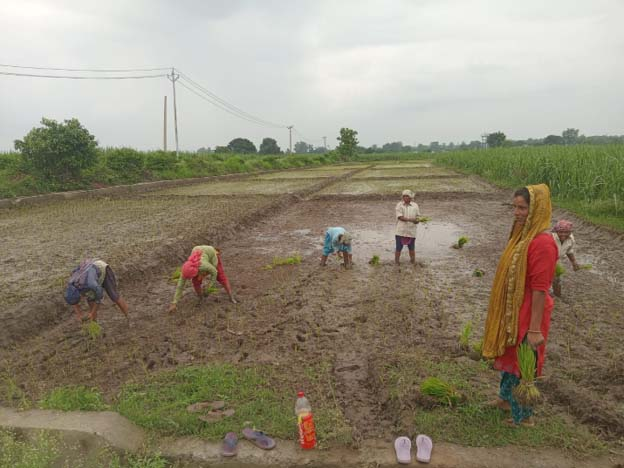
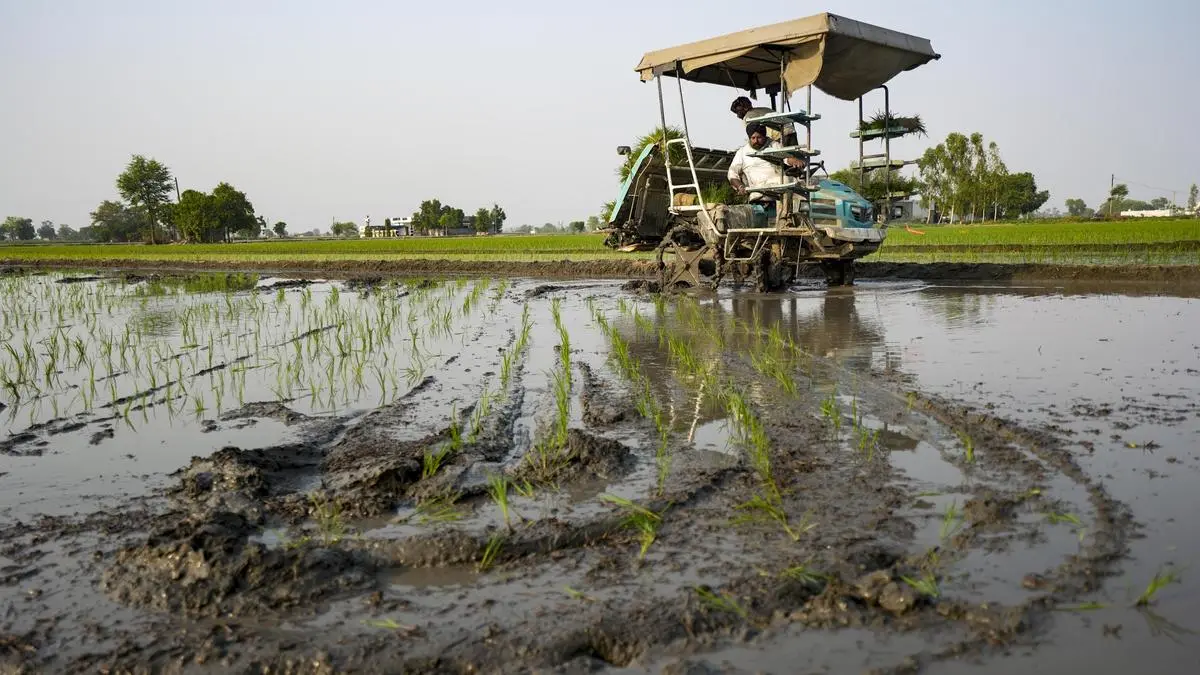
FEW crops are as important to Bangladesh as rice. It feeds the nation, sustains millions of farming families and powers the rural economy. Nearly 12 million hectares of land are cultivated with rice every year across the country’s three growing seasons. This vast agricultural landscape also represents one of Bangladesh’s greatest untapped opportunities to combat climate change. If climate-smart farming practices are adopted at scale, the country could significantly reduce greenhouse gas emissions, conserve water, strengthen food security and compensate farmers vulnerable to climate change through carbon credits.
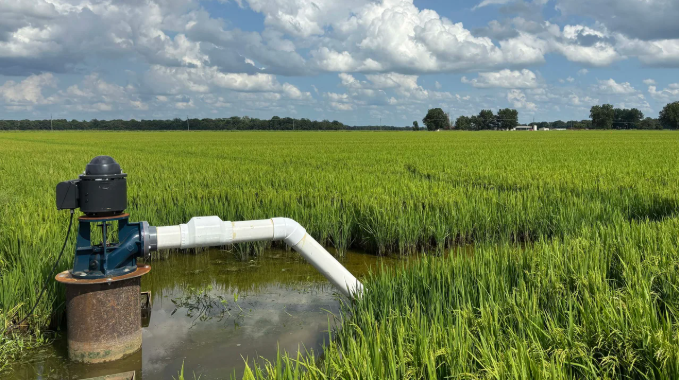
One such opportunity is emerging through climate-smart rice farming, where digital technologies are combined with improved irrigation practices to increase productivity while reducing environmental impacts. Rather than keeping rice fields continuously flooded, alternate wetting and drying allows fields to dry periodically without affecting crop growth. This simple change not only reduces irrigation water requirements but also suppresses methane emissions, one of the most potent greenhouse gases generated from rice cultivation.
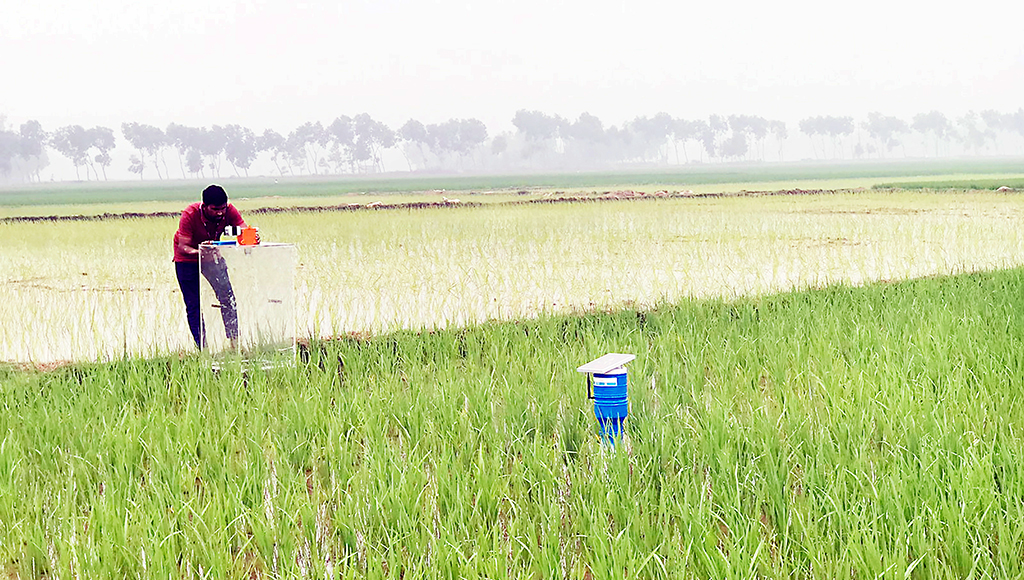
To evaluate this potential under Bangladeshi conditions, Rural Services Foundation and Nodes Digital Limited jointly implemented a carbon-smart rice farming pilot in Haluaghat, Mymensingh. Conducted across 16.65 hectares (41.15 acres) during the 2025–26 boro season, the project integrated IoT-enabled water-level monitoring, methane measurement, irrigation analytics and yield assessment to generate field-based evidence.
The findings were encouraging. Compared with conventional irrigation practices, the pilot demonstrated an estimated 16.35 per cent reduction in methane emissions, 27.8 per cent lower irrigation water use and an 18.7 per cent increase in rice yield. In other words, farmers were able to use less water, reduce greenhouse gas emissions and harvest more rice at the same time.
These findings are particularly significant for Bangladesh. Agriculture remains one of the country’s largest users of freshwater, while rice cultivation is a major contributor to agricultural methane emissions. As groundwater levels decline in many regions and climate change intensifies, technologies that improve irrigation efficiency while reducing emissions are becoming increasingly important.
Beyond improving farm productivity, climate-smart rice farming enables carbon credit trading.
Around the world, governments and companies are investing billions of dollars in carbon markets to offset unavoidable greenhouse gas emissions. Projects that can scientifically demonstrate measurable emission reductions can generate certified carbon credits, financially compensating project developers and participating farmers.
Rice farming has traditionally been viewed only as a source of food production.
However, with advances in IoT, satellite monitoring, artificial intelligence and scientific measurement, rice fields can generate environmental value.
The RSF–NDL pilot suggests that this opportunity is within Bangladesh’s reach. If climate-smart rice cultivation is expanded with robust measurement, reporting and verification systems and independently verified under internationally accepted standards, farmers could potentially earn additional income from voluntary carbon markets alongside their agricultural production.
Even conservative estimates indicate that verified climate-smart rice projects could generate approximately $30–50 per hectare in carbon credit value. Scaled across thousands of hectares, this could translate into millions of dollars in annual climate finance while creating strong financial incentives for farmers to adopt sustainable agricultural practices.
Realising this vision, however, requires coordinated action. Government agencies, research institutions, development partners, financial institutions and private sector innovators must work together to establish credible measurement, reporting and verification systems, strengthen digital agricultural infrastructure and develop national standards aligned with international carbon market requirements. The recent pilot provides valuable field evidence, but broader validation across multiple districts and growing seasons will be essential before large scale carbon credit issuance becomes feasible.
Bangladesh has repeatedly demonstrated its ability to innovate in agriculture — from achieving self-sufficiency in rice production to becoming a global leader in climate adaptation. Climate-smart rice farming represents the next chapter of that journey.
By combining digital technology, scientific monitoring and sustainable farming practices, Bangladesh has an opportunity to position itself as a regional leader in low-carbon agriculture. The implications extend far beyond carbon credits. Farmers benefit from higher productivity and lower irrigation costs. The country strengthens food security while conserving groundwater. Development partners gain measurable climate outcomes and investors gain access to scalable, high-impact climate solutions.
The future of Bangladesh’s rice sector should not be measured solely by the amount of rice it produces. It should also be measured by the climate value it creates. With the right policies, investments and partnerships, climate-smart rice farming can become a cornerstone of Bangladesh’s green economy, benefiting farmers, enabling climate finance and contributing meaningfully to global efforts to address climate change.
Md Kamrul Bari is chief financial officer and director of projects at Nodes Digital Limited. Dr Saad Hasan founder and chairman, Nodes Digital Limited. Nitai Pada Saha is chief executive officer at Rural Services Foundation.
https://www.newagebd.net/post/opinion/308874/adopting-climate-smart-rice-farmingPublished Date: August 7, 2026


 READ
READ