Downloads
 Login
Login
 Register

Tags
Rize Raises $31M To Accelerate Sustainable Rice Farming Across Southeast Asia

By Lynda Kiernan-Stone
As a primary food staple for more than half the world’s population, rice is arguably the most critical food crop on Earth. It is particularly important for food security across Asia, Latin America, and much of Africa, often providing more than 20 percent of total calories consumed.
However, rice cultivation is responsible for approximately 12 percent of global methane emissions, and in Southeast Asia, where rice is a major crop, rice cultivation is responsible for 25-33 percent of the region’s total methane emissions.
The flooded paddies needed to properly grow rice provide the ideal anaerobic conditions for bacteria that eat rice straw residue, releasing methane in the process. Compounding the situation is the practice of burning large volumes of residual rice straw and the overuse of nitrogen-based fertilizers due to poor absorption by rice plants, leading to higher nitrous oxide emissions, as well.
Addressing this situation at scale requires changing how millions of smallholder farmers grow the crop. Taking up the mantle is Singapore-based Rize, the leading sustainable rice platform in Asia, which announced the close of a $31 million Series B funding round comprising $20 million in equity and $11 million in debt financing.
The equity round was led by BNP Paribas Asset Management Alts, and included The Rockefeller Foundation, Temasek, and Breakthrough Energy Ventures, while the debt financing was catalysed by BIDV, Temasek Foundation, and UOB.
This is more than just a funding milestone,” said Dhruv Sawhney, co-founder & CEO, Rize. “It is recognition of the foundation Rize has built and a clear signal that we are ready to create a more connected, resilient, and sustainable food system for small holder farmers.”
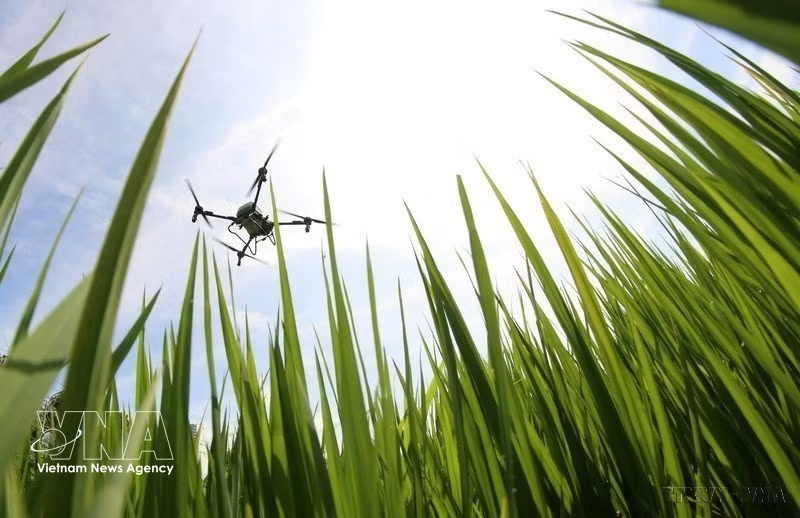
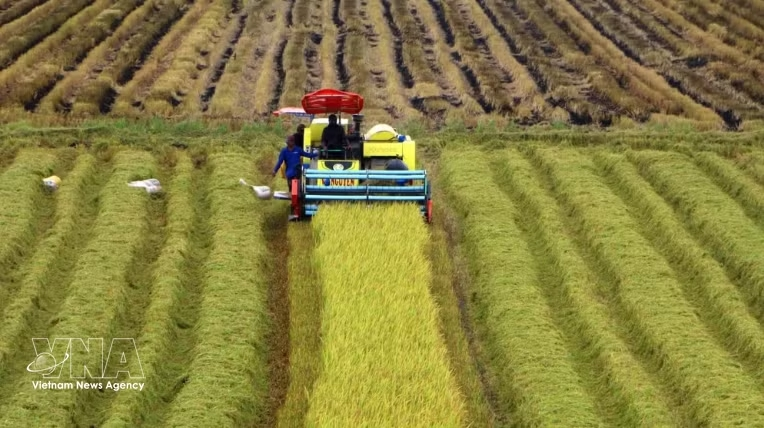
Founded in 2022 through a shared mission between Temasek, 100×100 and Breakthrough Energy Ventures, Rize works with nearly 17,000 smallholders farmers across more than 50,000 hectares in Vietnam and Indonesia deploying farming practices that reduce emissions by up to 50 percent, cut water use by 20-30 percent, and increase farmer income by up to 30 percent, without loss of yields.
“Small shareholder farmers across Asia face challenges with resource management, access to financing, and unreliable market access – leading to lower agricultural yields and reduced farmer welfare,” said Slav Gatchev, vice president of innovative finance at The Rockefeller Foundation.
“We are proud to support Rize’s efforts to promote the adoption of tech-enabled regenerative practices, ultimately driving higher yields and increasing incomes for those who need help the most.”
The company’s Sustainable Rice Production in South East and South Asia project has received a BeZero Carbon ex ante rating of ‘A.pre’ (An A.pre rating indicates a high likelihood that future issued credits will achieve one tonne of CO₂e avoided or removed) with Low project execution risk, and its emissions reductions are independently verified.
BeZero’s benchmarking indicates that an equivalent A rating is within the top 30 percent of ex post global Soil Carbon & Agriculture project ratings, and within the top 11 percent of ex post global Nature-Based Solutions ratings.
Additionally, the project is progressing through Gold Standard certification, with more than 1 million credits forecast over the next five years.
The resulting low-emission rice is fully traceable to the field level, showing Rize has already completed export shipments totalling 1,500 metric tons to buyers in Europe, Canada, Australia, and Singapore.
Since Rize’s successful Series A two years ago, the company has scaled operations more than tenfold. And with the capital gained through this Series B, the company plans to:
~ Strengthen market connections into export markets underpinned by traceability across the value chain and bringing low emission rice to market at no premiums.
~ Bring core practices that cut emissions and raise farmer income to more farmers, faster, while ensuring more of Rize’s rice meets the residue and safety standards required by demanding export markets.
~ Double down on innovation and modern farming practices – driving higher yields, lower emissions, and better outcomes for farmers.
~ Expand into new markets across borders and grow the company’s footprint beyond Vietnam and Indonesia.
~ Open the platform to new ecosystem partners so that input & services players and agri-tech providers can access Rize’s farmer network and help farmers grow more, and grow better.
“Our platform and approach for transforming and modernising rice cultivation by small holder farmers is getting a big thumbs up by all – the investors, partners, and farmers,” said Sawhney.
“The team at Rize has successfully woven together positive climate impact and improving farmer resilience into the fabric and foundation of our solutions and business. This investment allows us to unlock the next phase of growth by further expanding scale, investing in market linkage and exports, and cutting edge technologies to deliver better decision making, better productivity, and better outcomes across the whole value-chain.”
“We see our investment in Rize as reflective of our conviction that capital deployed into high-impact, durable platforms in underserved markets can deliver meaningful and measurable environmental outcomes to help address climate challenges,’ said Alexandre Martin-Min, head of natural capital & impact investments, BNP Paribas Asset Management Alts.
“Rize has positioned itself at the intersection of sustainable agriculture, carbon finance, and verified commodity trade; very much aligned to our strategy to protect, restore, and sustainably manage natural ecosystems while delivering competitive financial returns for investors.”
*The content provided by Agriculture Investment Marketplace and Westfall Rose LLC is intended for informational purposes only and does not constitute legal, tax, investment, or financial advice. Agriculture Investment Marketplace and Westfall Rose LLC are not financial advisors or fiduciaries. Readers should consult with qualified professionals before making any decisions based on the information presented here.
Published Date: July 17, 2026


 READ
READ