Downloads
 Login
Login
 Register

Tags
Why partnerships are essential to the future of rice breeding in Bangladesh
“Food security is everyone’s responsibility in Bangladesh. Every partnership contributes to that goal, and we value the opportunity to work with Breeding for Tomorrow because it brings together expertise that will help us deliver better rice varieties for farmers more quickly.” Pavel Khandakar Md. Iftekharuddaula, Chief Scientific Officer, Bangladesh Rice Research Institute.
CGIAR Breeding for Tomorrow
By Pavel Khandakar Md. Iftekharuddaula,Chief Scientific Officer, Bangladesh Rice Research Institute (BRRI).
To understand rice breeding in Bangladesh, you first need to understand our history. Food security is not simply one objective of the agricultural sector here: it is part of our national identity. The country has experienced devastating famines, and those memories still shape the way we think about agriculture today.
During the Bengal Famine of 1943, which took place during World War II, millions of people died after a combination of crop disease, poor harvests and wartimes struggles leading to severe food shortages. After Bangladesh gained independence, the country suffered another devastating famine in 1974. These events remain deeply embedded in the country’s collective memory and continue to shape its determination to achieve food security.
Today, Bangladesh faces a new set of challenges. Soil fertility is declining, temperatures are rising, water is becoming increasingly scarce, and climate change is making rice production more unpredictable. Already in 2017-18, the country experienced a food supply crisis and struggled to secure rice imports from international markets, reinforcing the importance of maintaining national self-sufficiency.
Since Bangladesh’s independence, the population has increased significantly by around two and half folds, but rice production has increased more than four folds reflecting glorious success of rice sector with respect to contribution towards national food security. Still, a lot of challenges have to be encountered in the coming future as food security is not a permanently achievable issue in a climate vulnerable country like Bangladesh. By 2050, our population is expected to reach around 215 million people. Meeting future demand will require increasing annual rice production from around 40 million tonnes today to approximately 57 million tonnes. Achieving this will depend on developing more productive, climate-resilient rice varieties.
That’s why at BRRI, we’re targeting a 1.5-2.0% genetic gain for yield increase per year. Partnering with international organizations is integral to this effort.

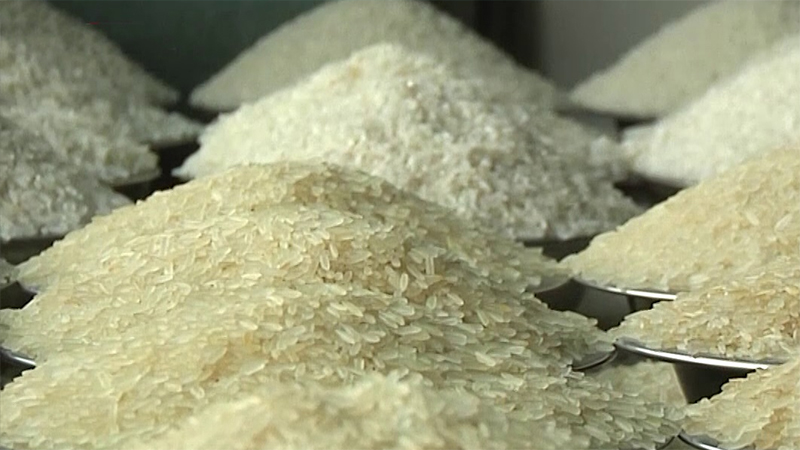
Rice varieties developed by BRRI under observation at BRRI headquarters in Gazipur.
About our recent engagement with CGIAR Breeding for Tomorrow
At Bangladesh Rice Research Institute (BRRI), we are overseeing 17 regional stations and 6 satellite stations across Bangladesh. We have our own breeding program, and we’ve already collaborated with the International Rice Research Institute (IRRI) of CGIAR, and developed 127 rice varieties so far, and we run many government and donor-funded projects. We are very advanced in terms of rice breeding pipelines and techniques particularly in forward breeding.
To help accelerate this effort, BRRI recently began working with Enable, the coordination and support engine of CGIAR Breeding for Tomorrow Science Program.
Under their guidance, we organized our very first Product Design Team (PDT) meeting. The gathering brought together farmers, processors, breeders, seed producers and other stakeholders to identify priority market segments for both inbred and hybrid rice across Bangladesh. Together, we defined the characteristics that future varieties should have to meet the needs of each of the segments we identified.
Building on this work, we developed Target Product Profiles (TPPs), the detailed descriptions of the ideal variety for each priority market segment. Key traits identified include resistance to biotic stresses, such as blast, but also higher yields and resistance to abiotic stresses, including salinity, heat and cold, depending on the region of the country.
Once approved by BRRI’s Director General, these profiles will guide the future breeding decisions of our breeders.
Beyond product design, discussions also focused on modernizing BRRI’s breeding program further. CGIAR Breeding for Tomorrow will support work on optimizing breeding operations, improving cost efficiency and introducing greater automation and mechanization. Training will also be provided to help staff operate and maintain new equipment and strengthen breeding operations.

Dr Parthiban Thathapalli Prakash quantitative genetics specialist with CGIAR Breeding for Tomorrow, walking research plots with the BRRI breeding team.
Going forward
Our collaboration with CGIAR Breeding for Tomorrow is only beginning, but we’re already seeing opportunities. One of our breeders will travel to Kenya for advanced training in quantitative genetics, while Breeding for Tomorrow will continue supporting capacity development in areas such as digital breeding, data analysis and modern breeding methodologies. We will be getting further support regarding quantitative genetics, and we also hope to strengthen collaboration with hybrid rice breeders across CGIAR network. Access to internationally recognised scientists and technical expertise will help us achieve operational excellence and accelerate genetic gain.
Food security is everyone’s responsibility in Bangladesh. Every partnership contributes to that goal, and we value the opportunity to work with Breeding for Tomorrow because it brings together expertise that will help us deliver better rice varieties for farmers more quickly.
One of our divisions works on the interactions between rice-based farming systems and other agricultural activities, notably fisheries and livestock; meanwhile, 17 other institutes conduct agricultural research across the country. I am therefore convinced that the partnership with CGIAR will yield many other benefits, including across our entire research portfolio.
***
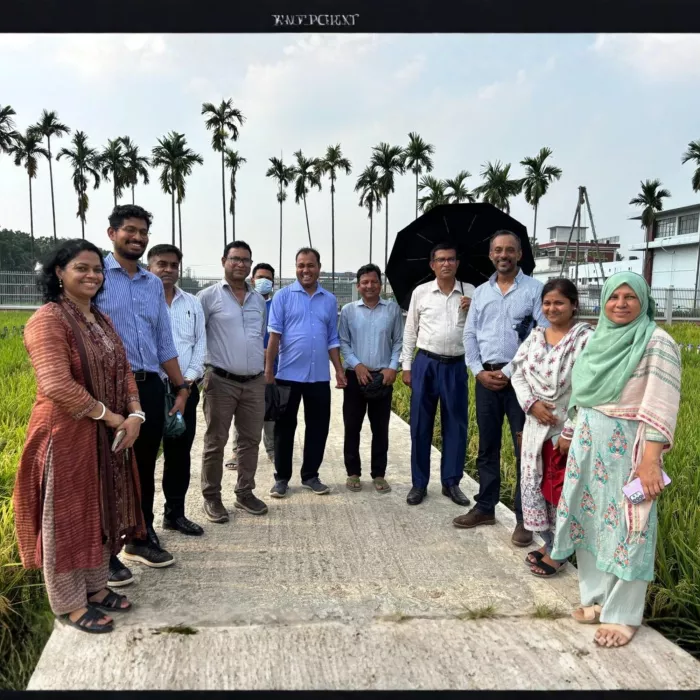
Main image: Group picture: BRRI and CGIAR Breeding for Tomorrow teams posing together, April 2026. Credits: CGIAR Breeding for Tomorrow. This work aligns with Breeding for Tomorrow Science Program. Written by Julie Puech.

Published Date: August 7, 2026


 READ
READ