Downloads
 Login
 Register


Tags
Sri Lanka Invites Pakistani Rice Exporters to Tap $19 Billion Import Market Under FTA
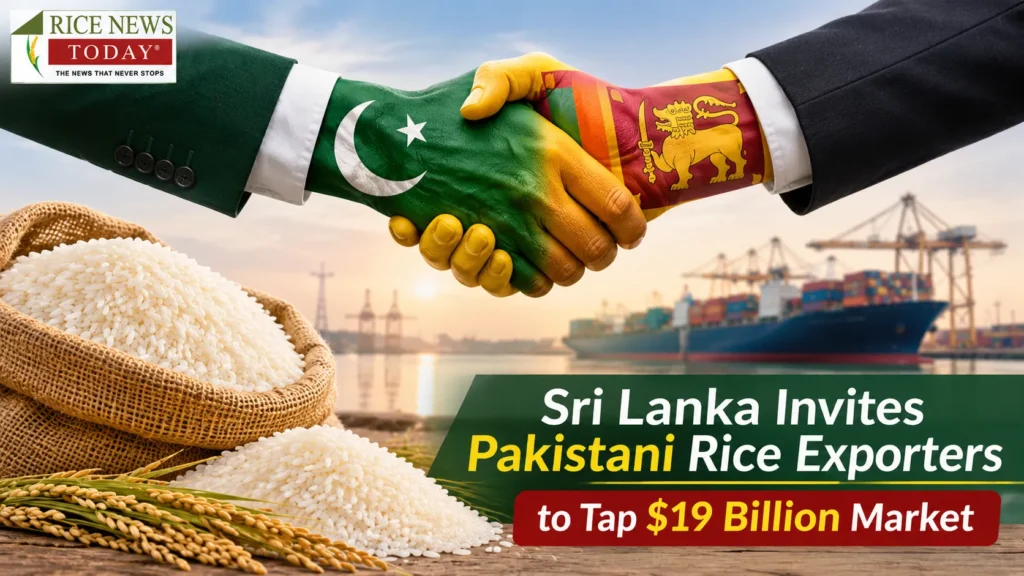
KARACHI: Sri Lanka has encouraged Pakistani exporters to expand their presence in its import market, valued at nearly $19 billion, by making use of the existing Free Trade Agreement (FTA). Rice, textiles and cement were singled out as key opportunities. For Pakistan’s rice sector, the most notable details were an import allowance of up to 6,000 metric tonnes and a tender system that opens recurring windows for suppliers.
Sri Lankan Consul General Sanjeewa Pattiwilla made the appeal during a meeting with industrialists and business representatives at the SITE Association of Industry (SAI) in Karachi. The discussions focused on expanding bilateral trade and investment.
Rice Import Allowance and Tenders
On agriculture, Pattiwilla said Sri Lanka has allowed rice imports of up to 6,000 metric tonnes from Pakistan. He noted that basmati rice has been gaining popularity in the Sri Lankan market.
He added that the Sri Lankan government issues rice import tenders every six months, which he said creates recurring opportunities for Pakistani exporters.
Participants at the meeting noted that Pakistan already exports basmati rice, oranges and engineering goods to Sri Lanka.
Textiles, Cement and Other Sectors
The envoy said both countries have long benefited from GSP and GSP+ market access and have complementary export strengths, particularly in textiles and garments, construction materials and pharmaceuticals.
Pakistani woven fabric, he said, has become an important input for Sri Lankan apparel manufacturers exporting to the European Union. Several Pakistani companies have also established manufacturing facilities in Sri Lanka.
Responding to a proposal from former SAI president Majyd Aziz, Pattiwilla agreed to work towards facilitating cement imports from Pakistan.
Expo 2027 and Business Delegation
Pattiwilla invited Pakistani businesspeople to Sri Lanka Expo 2027, scheduled for January 2027, to explore trade and investment opportunities. He also suggested that a Pakistani business delegation visit Sri Lanka to identify concrete prospects.
Answering a question from SAI President Abdul Hadi, he stressed the importance of promoting both imports and exports. He observed that commercial activity at the ports of Karachi and Colombo has increased. He also highlighted the longstanding defence relations between the two countries and thanked the Government of Pakistan and its armed forces for their continued support.
Business Community Seeks Fewer Barriers
Hadi said textiles account for the largest share of bilateral trade and that Pakistan is Sri Lanka’s second-largest trading partner in the SAARC region. He called for bilateral trade to grow beyond $500 million, said SAI is ready to act as a facilitator between the two business communities, and proposed regular business exhibitions in both countries.
Other business leaders raised practical concerns:
- Tender access: Nadeem Polani, chairman of the Diplomatic Affairs Committee, said new traders face difficulties when participating in Sri Lankan tenders. He asked that the issue be resolved at the government level.
- Freight costs: Polani said high freight charges continue to burden exporters despite the FTA. He also urged the envoy to explore greater market access for Pakistani textiles.
- Non-tariff barriers: Committee convener Junaid-ur-Rehman called for their removal. He said Pakistan has strong capabilities in textiles, surgical instruments and pharmaceuticals, and suggested measures to attract more Sri Lankan tourists to Pakistan.
- FTA review: Aziz said the FTA, operational since June 2005, should be revisited to make it more effective. He also proposed declaring Colombo Port and Karachi Port/Port Qasim “sister ports,” in the manner of sister cities.
Vice President Sheheryar Salim Shah, APTPMA Chairman Muhammad Rizwan Lakhany and other members also put questions to the Consul General.
What It Means for Pakistan’s Rice Sector
The meeting points to a tender-driven opening for Pakistani rice suppliers, with basmati noted as a growing seller. Exporters’ concerns about tender participation, freight costs and non-tariff barriers suggest the practical gains will depend on how those issues are handled. Sri Lanka Expo 2027 in January and a possible business delegation visit are the next opportunities for exporters to explore the market directly.
By RiceNewsToday | Sources: TheNews, Business Recorder, Investify
Published Date: November 21, 2026


 READ