Downloads
 Login
Login
 Register


Tags
Why Pakistan punishes its farmers
Dr Tasneem Ahmad
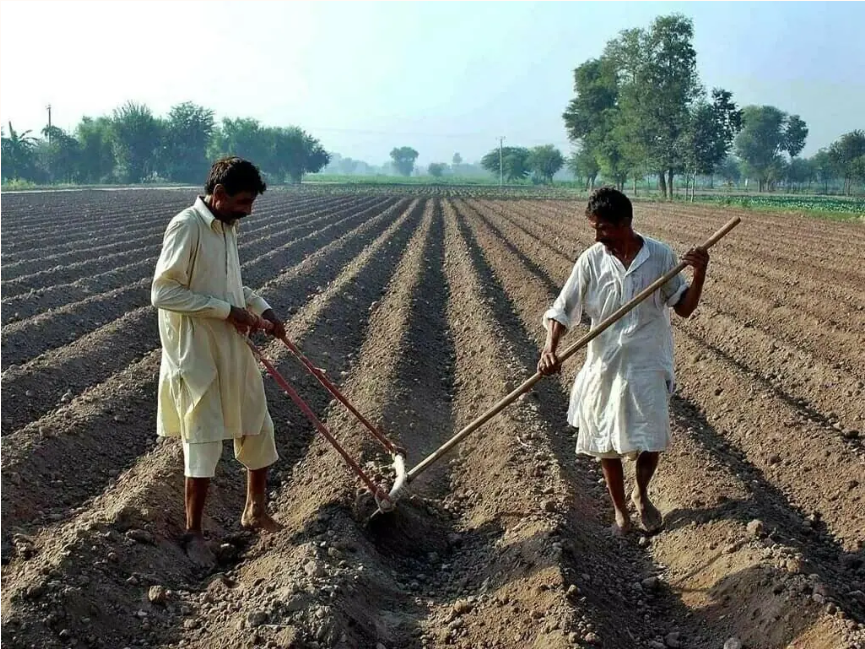
Farmers remain the backbone of Pakistan’s food security, rural employment and export economy, yet they continue to be the most exploited and neglected segment of the production chain. Despite agriculture contributing roughly a quarter of GDP, employing over one-third of the labour force and sustaining the livelihoods of a majority of rural households, economic returns to farmers have steadily eroded.
Rising input costs, erratic pricing policies, institutional confusion between federal and provincial authorities, and unchecked private-sector dominance across supply chains have pushed farmers into chronic distress—now posing a serious threat to national food security.
The confusion begins at the policy level. Agriculture and food were devolved to the provinces under the 18th Constitutional Amendment in 2011, yet the federal government later re-established the Ministry of National Food Security and Research without clearly defining its authority or long-term mandate, largely to accommodate political considerations.
Key agricultural functions were fragmented: cotton policy drifted towards the textile ministry, fisheries remained under Ports and Shipping, while plant and animal quarantine with food safety functions were shuffled across ministries/departments before being merged into the newly created National Agri-Trade and Food Safety Authority (NAFSA).
Although NAFSA was conceived to align Pakistan’s agri-trade and food safety regime with international standards, its formation and composition have raised serious concerns. Issues of overlapping mandates, weak scientific and technical capacity, poor federal–provincial coordination and unclear operational authority persist.
The dismantling of critical functions such as desert locust surveillance has further exposed institutional fragility, ultimately threatening food security. Market access for farmers’ produce in international markets remains a core federal responsibility and this challenge cannot be resolved merely by creating another authority.
The consequences of this policy incoherence are most visible in crop produce pricing and market management.
The withdrawal of the wheat support price in 2024 left farmers fully exposed to volatile markets, discouraging sowing and increasing uncertainty. Its partial restoration in 2025 offered limited relief but also underscored the damage caused by inconsistent policy signals.
Farmers cannot plan cropping patterns, investments or input use when the rules of the game change every season. Provincial governments continue to pursue divergent approaches, reflecting not only cost variations but also the absence of a harmonised national framework.
More disturbingly, the cruelty of policy inconsistency does not end with low prices; it resurfaces even more brutally in years of surplus. Pakistani farmers are repeatedly punished for producing more.
The wheat surplus last year left growers stranded without procurement, storage or export channels. This was followed by similar collapses in okra and then potatoes, where bumper harvests translated into distress sales, wastage and farmer indebtedness rather than income. This year, the cycle has repeated itself once again with surplus potato production, pushing farm-gate prices well below the cost of cultivation.
These are not acts of nature; they are failures of governance. International markets in the Near East, Russian Federation, Iran, Sri Lanka, Central Asia and even China were well within reach and should have been proactively accessed by the federal government through trade diplomacy, timely market access, phytosanitary approvals, residue compliance, market intelligence and export facilitation. This responsibility squarely falls within the federal domain, particularly institutions such as the Ministry of National Food Security and the newly created NAFSA. Yet, despite its stated mandate, NAFSA has so far failed to translate surplus production into export opportunity.
The absence of pre-negotiated market access and certification capacity, delayed approvals and lack of coordination with stakeholders meant that farmers were left without buyers, compensation or even an emergency intervention plan.
When scarcity triggers imports and surplus results in farmer ruin, the message conveyed is deeply perverse: productivity is punished, not rewarded. This is not climate misfortune; it is policy laziness, institutional paralysis and abdication of federal responsibility. A country that cannot convert agricultural surplus into export earnings does not suffer from over-production—it suffers from governance failure.
Beyond pricing and market access, the most damaging—yet least addressed—crisis confronting farmers is the unchecked sale of fake, adulterated and substandard agricultural inputs.
Counterfeit pesticides, impure and low-germination seeds, and adulterated fertilizers have flooded rural markets. Farmers pay premium prices for inputs that not only fail to protect crops but actively destroy yields, soil health and farm incomes.
Crop failures caused by fake pesticides and poor-quality seeds are routinely misattributed to climate change or farmer “mismanagement,” while the real culprits operate with impunity.
Prices of fertilizers remain among the highest in the region, while reports of adulteration and nutrient imbalance are widespread. Regulatory authorities lack manpower, testing facilities and—most importantly—political backing. Harsh and punitive legislation against counterfeit inputs is repeatedly hindered, delayed or blocked altogether.
This failure is not accidental. The political economy of agricultural inputs has created powerful lobbies that dominate policymaking.
Owners and heads of seed companies, pesticide importers and fertilizer manufacturers are present in national and provincial assemblies, either directly or through proxies. These vested interests actively resist strong legislation, meaningful inspections and exemplary punishments.
Regulatory capture has ensured that penalties remain mild, prosecutions rare and enforcement selective. The cost of inefficiency and corruption is transferred entirely to farmers, while profits are privatised.
At the farm gate, exploitation is further entrenched by the structure of agricultural markets.
Commission agents dominate procurement, extend informal credit at exploitative rates and dictate prices. Input dealers often double as lenders, locking farmers into cycles of dependency. Private firms increasingly rely on one-sided contract farming arrangements in which farmers bear most production risks without guaranteed returns or effective dispute-resolution mechanisms.
Information asymmetry remains acute, with farmers largely disconnected from real-time market prices, quality benchmarks and export requirements.
Yet the private sector need not be predatory. With an effective regulatory framework, it can become a genuine partner in agricultural transformation. Digital platforms for price discovery, input traceability and direct marketing are emerging.
Agri-startups focused on precision agriculture, soil diagnostics and advisory services offer promise, particularly when linked with public extension systems. Public-private partnerships in mechanization, storage, cold chains and logistics can significantly reduce post-harvest losses—provided farmer interests are protected and monopolistic practices restrained.
For farmers’ survival, reform must go far beyond symbolic subsidies and seasonal announcements. Pricing mechanisms must be transparent and predictable. Input regulation must be ruthless, not cosmetic.
The sale of fake seeds, pesticides and fertilizers should be treated as economic sabotage, with non-bailable offences, cancellation of licences/registrations and public disclosure of offenders.
Regulatory agencies must be insulated from political pressure, and conflict-of-interest rules strictly enforced for legislators and policymakers linked to agribusiness.
Affordable agricultural credit, crop insurance and climate-risk mitigation tools must be expanded through formal channels.
Cooperative models may be reviewed to strengthen farmers’ bargaining power and reduce dependence on middlemen. Farmer education is equally critical, enabling growers to identify certified inputs, understand quality standards and assert their rights.
Pakistan’s food security cannot survive on policy ambiguity, regulatory capture and input mafias. It requires institutional clarity, political courage and a decisive break from vested interests.
The soil that feeds the nation is under strain, and so are the hands that till it. Empowering farmers is not a slogan—it is an economic necessity and a strategic imperative. If Pakistan is serious about food security, rural stability and sustainable growth, protecting farmers from exploitation—whether by markets, mafias or policy failure—must become a cornerstone of national policy. The time for half-measures is long past.
Copyright Business Recorder, 2026
https://www.brecorder.com/news/40408642/why-pakistan-punishes-its-farmersPublished Date: February 25, 2026


 READ
READ