Downloads
 Login
Login
 Register


Tags
What happens when rice dryers close?
The 2026 rice harvest will look different for some farmers as the nation’s largest rice cooperative temporarily closes receipt of grain loads at nine locations in Arkansas and Missouri.
Whitney Shannon, Staff Writer, Farm Press
At a Glance
- Riceland Foods temporarily shutters nine rice-drying facilities in Arkansas and Missouri.
- Decision was made following Arkansas’ lowest planted rice acreage in nearly 50 years.
- Solutions remain scarce as production costs continue to increase.
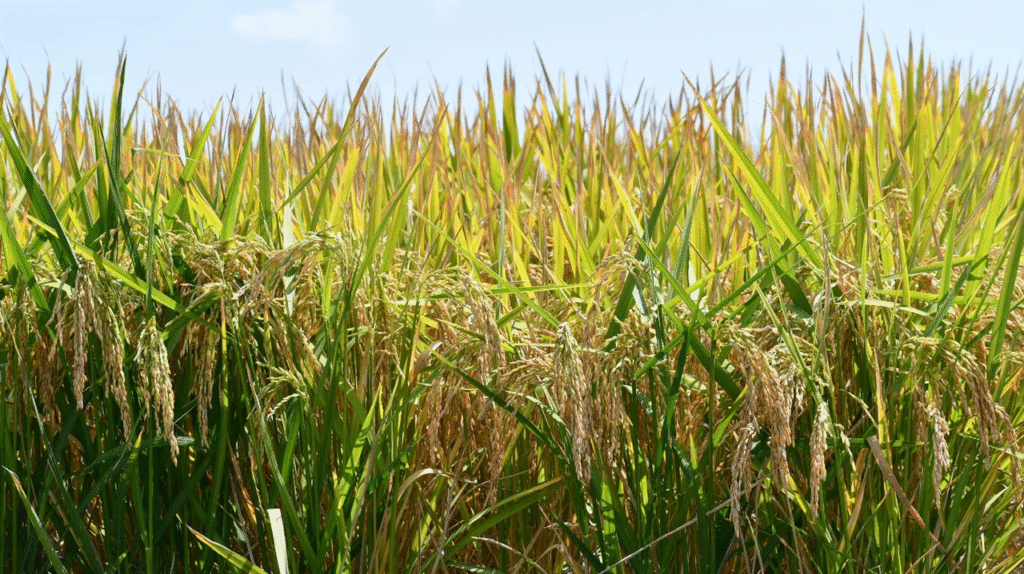
Arkansas farmers have been growing rice since 1910. By 1921, a grower cooperative was established that would later be recognized as the largest in the country: Riceland Foods. This cooperative now serves 5,500 farmer-members in Arkansas and Missouri, storing, transporting and processing over 2.5 million metric tons of grain that is marketed annually across the U.S. and to an estimated 75 countries worldwide.
Recently, Riceland announced that nine of its dryer facilities — eight in Arkansas and one in Missouri — would be temporarily closed to receiving rice for the 2026 crop. This decision is due to the lowest planted rice acreage in the Midsouth in nearly 50 years.
“At my request and with board approval, the Drier Division Team has developed a plan to serve the membership at the highest level possible while reducing the negative financial impact of maintaining a [dryer] network,” wrote Riceland CEO Kevin McGilton in a May update from the cooperative.
Industry is backed into a corner
For many farmers, Riceland board members and executives, this decision came as no surprise. From a business perspective, they had to come to terms with operating too many assets while anticipating too few bushels.
On June 30, the USDA National Agricultural Statistics Service confirmed the low planted rice acreage. Of all the rice grown in the U.S., long-grain acreage dropped by nearly 34% year over year. For Arkansas —the nation’s largest rice-producing state — that decline in long-grain acreage was even more significant, at 38%. Arkansas farmers planted 1.2 million acres in 2025 but put an estimated 730,000 acres in the ground this year.
Falling acreage is a direct result of high rice production costs, estimated at $1,411 per acre for the 2026 crop year, according to a report by the American Farm Bureau Federation. The report specifically mentioned that of all crops, rice had the greatest increase in production costs — $75 higher per acre — compared with the previous year due to fuel expenses that escalated by 34% and fertilizer prices that went up 11.7%.
With the acreage drop came tough decisions regarding infrastructure, which explains Riceland’s move to close facilities temporarily to patron receipts.
“Many factors were considered when determining which facilities to operate: bushel estimates, geographic location, dump speed, carry-in and facility operating costs,” McGilton wrote. “While it is a difficult decision to close facilities temporarily, we cannot continue business as usual with a 1970s rice crop.”
What does this mean for farmers?
In Jackson County, Ark., Tommy Young lives and farms in the heart of rice country. He, like many neighboring farmers, delivers his rice to Riceland, and he will immediately be affected by the cooperative’s decision to close the Tuckerman location to rice receipts.
While Tuckerman is not the only Riceland facility in the county, it primarily serves rice farmers in northern Jackson County and the neighboring counties of Lawrence and Independence. With rice-receiving facilities like Tuckerman’s being mothballed, farmers like Young are forced to adjust logistics, which will increase mileage, fuel costs and potentially the labor required to deliver the crop to the dryer.
“The rice industry is getting hit on the chin,” Young said.
Rice farmers and industry leaders have anticipated a decline in the industry for some time now, as USA Rice President and CEO Peter Bachmann penned in a recent article. “When the math of growing rice in Arkansas ‘isn’t mathing,’ the state, industry and country have a much bigger problem.
“Dryers aren’t built on a whim, and they aren’t closed on one either,” he continued. “When the people running these operations look at the numbers and conclude that idling capacity is the responsible move, they are telling us, in the clearest language that a balance sheet can speak, that there isn’t enough rice in the ground to justify keeping the lights on.”
Bachmann also pointed out that other milling facilities, such as Producers’ Rice Mill, “may pause operations at two of their dryers,” confirming that this is a wake-up call for policymakers.
This leaves us to ask, where did the breakdown happen? And what is the solution? Producing bushels is not a problem; instead, quality is of top concern, especially for the long-grain white rice market, which represents around 80% of the rice grown in the U.S.
“What it boils down to is the rice industry has to find a way to fix the long-grain white rice market, which carries the bulk of our industry,” said Scott Matthews, rice farmer and industry advocate in Poinsett County, Ark. “Otherwise, we are looking at forward-contract-only rice,” he added.
Another option is for rice farmers to switch to specialty rice varieties, like medium grains and aromatics. However, as one farmer mentioned, “Once everyone switches to specialty rice, it will suddenly not be so ‘special,’” noting the impact on marketability.
On-farm grain storage is another consideration, but it’s also costly and not a decision that can be impulsively made between now and harvest.
For now, Arkansas rice farmers and the entire rice industry are hanging in there and modifying production, storage, logistics and marketing costs.
Rice is the money crop in many areas of the Arkansas Delta, just like cotton was once king. Under their breath, farmers are praying that closed rice dryers do not become the new norm, like the closed cotton gins sitting vacant around the state.
https://www.farmprogress.com/rice/what-happens-when-rice-dryers-close-Published Date: July 7, 2026


 READ
READ