Downloads
 Login
Login
 Register


Tags
Solar-powered farming is digging Pakistan into a water catastrophe
By Nazrin Azizli
Punjab’s rice farmers are increasingly turning to solar-powered tube wells, boosting irrigation efficiency and cutting energy costs, but the rapid shift is raising concerns over groundwater depletion and Pakistan’s long-term food security.
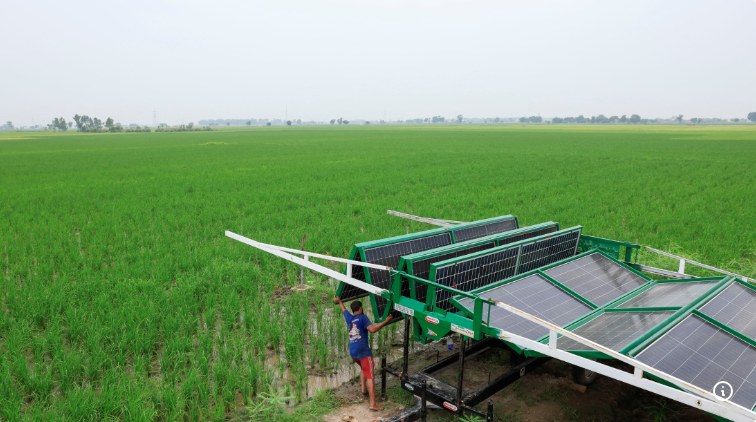
In Punjab, Pakistan’s most populous province, rice farmers are increasingly using solar panels to power tube wells—motorised groundwater pumps that make irrigation easier and reduce reliance on erratic electricity and costly diesel.
Rice Farmer Karamat Ali said, “Water supply to my paddy feed is smoother than before,” highlighting the convenience of solar irrigation.
He added that the solar helps them save money and avoid fuel costs.
“It keeps my costs low because it runs without diesel and keeps my water supply running smoothly.”
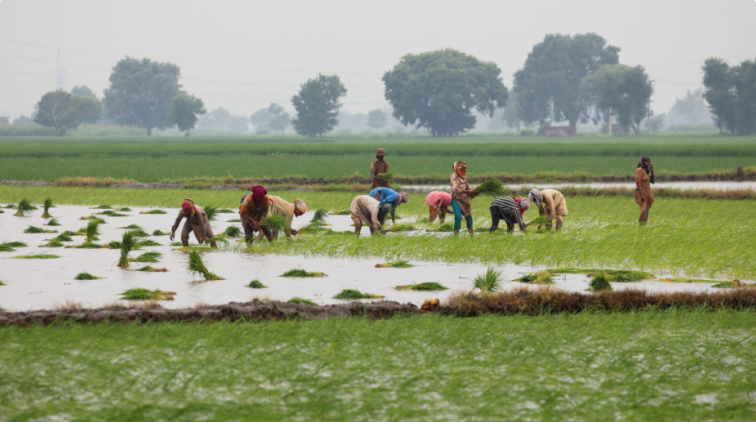
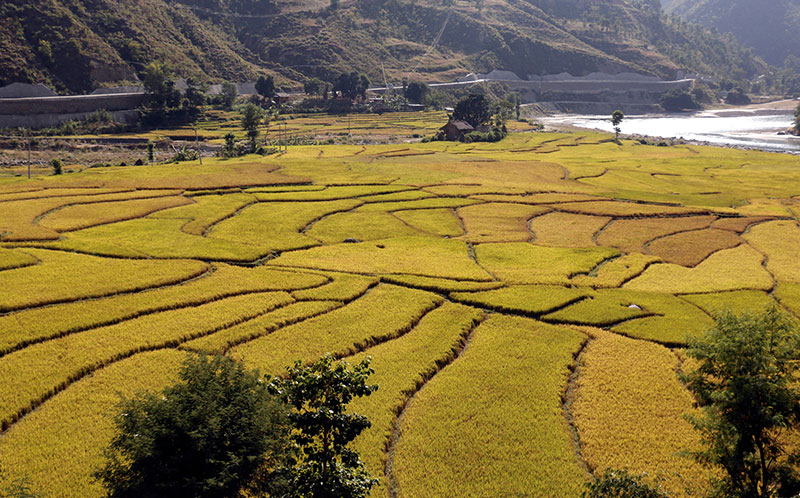
As Pakistan embraces a solar revolution, Punjab farmers are using sun-powered tube wells for more frequent irrigation, expanding rice fields by 30% between 2023 and 2025, while maize cultivation has dropped 10%.
Although exact numbers are unclear, some 400,000 tube wells previously running on grid electricity have now switched to solar, with an estimated additional 250,000 purchased since 2023, totalling around 650,000 solar-powered wells.
Some farmers said they’re making large profits from the switch.
Mohammad Naseem is a 61-year-old farmer and said, “In four years, I have made a profit of between $7,000 and $8,000. Even if it is $177 per month, it is around $2,000 per year.”
Analysts say this transition could reduce the agriculture sector’s grid electricity use by 45% by 2025.
While solarisation lowers energy costs and reduces diesel use, it has coincided with a rapid decline in Punjab’s groundwater.
Internal Punjab water authority maps show water tables dropping below 60 feet across 6.6% of the province, a 25% increase since 2020, and deeper aquifers beyond 80 feet more than doubling in size.
Officials say solar irrigation doesn’t increase water use, though Punjab’s irrigation minister acknowledges it impacts water levels. Measures such as aquifer-recharge projects and old infrastructure restoration aim to slow depletion.
Researcher for Punjab’s Irrigation Department, Adnan Hassan said, “We have to pay special attention to the water quality. What we are injecting in the aquifer, that quality must be equal to the drinking water quality. If you inject polluted water from the roads to the aquifers, then the next generation will suffer the consequences.”
Farmers benefit financially and in crop quality, with some pooling resources to share panels. Experts warn that without better governance and monitoring, groundwater depletion could threaten Pakistan’s agriculture and food security.
https://anewz.tv/world/world-news/13800/solar-powered-farming-is-digging-pakistan-into-catastrophe/newsPublished Date: October 2, 2025


 READ
READ