Downloads
 Login
Login
 Register


Tags
Madagascar’s rice sector raises concern over surge in imports
The concern comes as the country remains heavily dependent on rice for food security, even as efforts continue to strengthen domestic production.
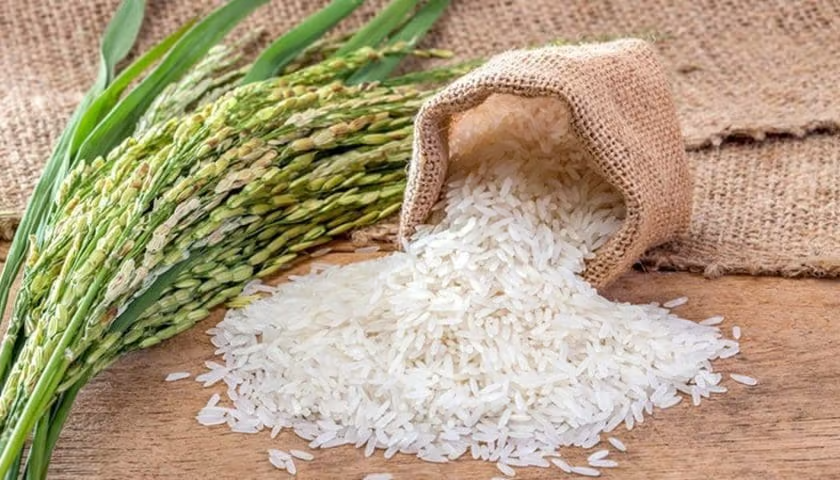
MADAGASCAR – Madagascar’s rice sector is raising concerns over the rapid increase in rice imports, warning that growing volumes of foreign rice are putting pressure on local producers and making it more difficult for farmers to market their harvests.
As the third-largest rice producer in Africa, Madagascar considers the staple crop crucial to its national food security and rural livelihoods.
However, recent economic, trade, and climate pressures have opened the floodgates to foreign grain, driving local producers into a fragile financial state.
Official data highlights a dramatic shift in market dynamics. According to reports from the National Agency for Measurement of Results and Analysis of Public Policies (ANMCC) and food security tracking bodies, rice imports into Madagascar jumped significantly from 262,002 tonnes in 2024 to over 800,812 tonnes in 2025.
Projections from the US Department of Agriculture (USDA) indicate that Malagasy import volumes could rise even further to 850,000 tonnes in 2026.
The sudden influx has left domestic processors operating at reduced capacity, with local sales falling by more than 25% over the same period.
Agricultural associations and industry representatives argue that cheap imports are undercutting local production prices.
Malagasy farmers face rising input costs, including high prices for fertilizer, seed, and labor, alongside climate shocks like drought and cyclones that have periodically disrupted harvests.
Smallholders struggle to compete with low-cost imported white and broken rice, which floods urban markets and depresses farmgate prices.
Sector leaders warn that without immediate market protections, thousands of agricultural jobs are at risk, threatening the long-term goal of national food self-sufficiency.
In response to the sector’s outcry, the Malagasy government has taken regulatory action. Officials recently notified the World Trade Organization (WTO) of a safeguard investigation regarding imports of husked rice, semi-milled or fully milled rice, polished or glazed rice and broken rice to evaluate unfair market disruption.
Additionally, policy adjustments under the Revised Finance Law increased import tariffs on key rice categories to 20% to level the playing field and incentivize domestic consumption.
The import surge comes despite government efforts to boost local output. Under the National Strategy for Rice Cultivation Development (SNDRIII), adopted in 2023, Madagascar aims to achieve rice self-sufficiency by 2027 and produce 6 million tonnes annually by 2024, eventually reaching 11 million tonnes by 2030.
Earlier this year, Madagascar launched a strategic partnership between the Programme de Développement de Filières Inclusives (DEFIS), the International Crops Research Institute for the Semi-Arid Tropics (ICRISAT), and the Centre National de Recherche Appliquée au Développement Rural (FOFIFA) to strengthen food security and climate resilience in the southern regions.
However, challenges including climate shocks, low productivity, and competition from cheaper imported rice have hindered progress.
The Food and Agriculture Organization (FAO) reported that Madagascar’s rice production declined in 2025, while imports increased considerably. The FAO also noted that rice prices in November 2025 were around 12% higher than a year earlier, highlighting continued pressure on the domestic market.
For the rice sector, the challenge is to balance affordable food supplies for consumers with protection of local farmers. Madagascar’s government has also been pursuing measures to raise productivity and strengthen the domestic rice value chain.
In September 2026, the Ministry of Agriculture launched PAPRIZ 4, a five-year programme designed to improve rice productivity and quality in key producing regions.
The ongoing safeguard investigation could therefore become an important policy tool as Madagascar seeks to manage import competition, improve domestic production, and protect the livelihoods of rice farmers.
https://millingmea.com/madagascars-rice-sector-raises-concern-over-surge-in-imports/Published Date: September 8, 2026


 READ
READ