Downloads
 Login
 Register


Tags
Rice Futures Ease from Highs While Asian FOB Prices Hold Firm
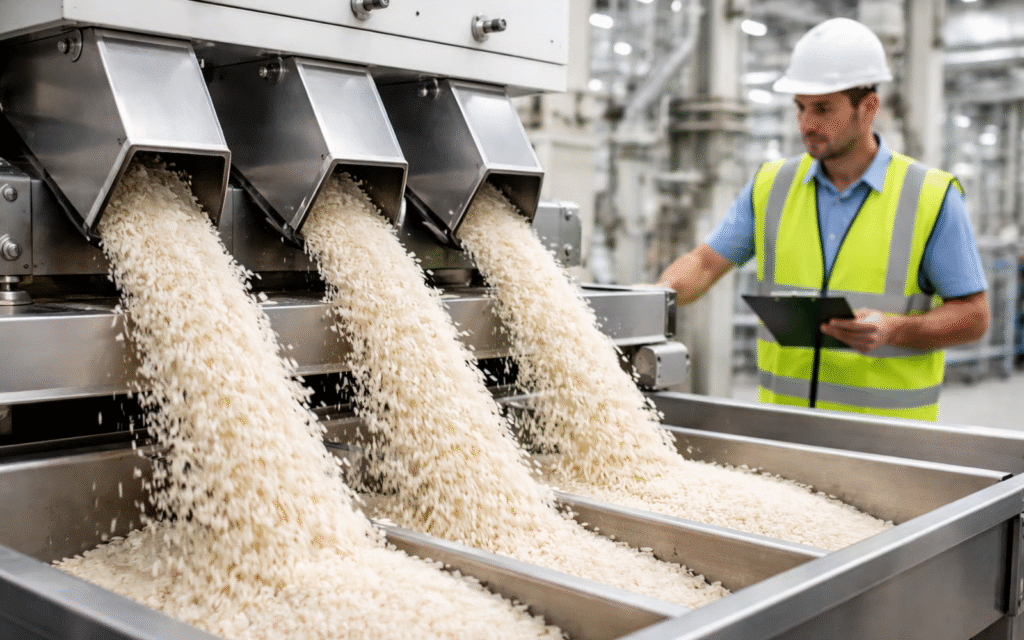
CBOT rough rice futures slip into mild backwardation while Vietnamese and Indian FOB prices stay firm. Concise view on prices, supply-demand and short‑term outlook.
CBOT rough rice futures have retreated modestly from recent highs and moved into slight backwardation, while physical FOB prices in Vietnam and India are broadly steady to firm, signaling a market that is consolidating rather than collapsing after this year’s strong rally. Rice markets enter mid‑November with CBOT rough rice off its peak but still historically elevated, underpinned by tight US balance sheets and weather‑related risks in key Asian origins. Export quotations from Vietnam and India remain competitive yet firm, helped by solid import demand and lingering policy controls. With El Niño‑linked rainfall deficits projected for parts of Southeast Asia and India, traders are weighing improved new‑crop availability against the risk of yield losses later in the 2026/27 season. Volatility is likely to stay elevated around key policy headlines and weather updates, even as nearby futures consolidate.
Prices
CBOT rough rice futures show a mildly softer tone after this year’s sharp rally. The Nov 2026 contract last settled at 17.76 USD/cwt on November 9, down 0.09 USD and 0.48% on the day, while Jan 2027 stands at 18.15 USD/cwt, unchanged in the latest session. Further out, Mar 2027 and May 2027 are at 18.57 and 18.81 USD/cwt respectively, with Sep 2027 notably lower at 16.46 USD/cwt, confirming a backwardated curve led by nearby tightness and less concern about longer‑term supply.
Physical quotations in Asia remain firm. Vietnamese 5% broken white rice recently traded in the mid‑400s USD/tonne FOB, close to the highest levels in nearly two years, while fragrant and Jasmine segments command notable premiums. Indian basmati and non‑basmati offers are also holding up, supported by continued export policy scrutiny and robust demand from Africa and the Middle East. Against this backdrop, our own FOB quotations in EUR show a broadly stable to slightly softer short‑grain complex in Vietnam, while premium basmati and specialty segments in India and Vietnam remain clearly elevated.
| Origin | Type | Delivery | Latest price (EUR, FOB) | 1–3 week change |
|---|---|---|---|---|
| Vietnam – Hanoi | Rice, Jasmine | FOB | 0.36 EUR/kg | steady vs. early Nov |
| Vietnam – Hanoi | Rice, long white 5% | FOB | 0.34 EUR/kg | steady vs. early Nov |
| Vietnam – Hanoi | Rice, paper dried | FOB | 1.66 EUR/kg | slightly lower vs. late Oct |
| Vietnam – Hanoi | Rice, red | FOB | 0.62 EUR/kg | slightly lower vs. late Oct |
| India – New Delhi | Rice, white basmati (organic) | FOB | 1.55 EUR/kg | slightly lower vs. late Oct |
| India – New Delhi | Rice, white non‑basmati (organic) | FOB | 1.25 EUR/kg | slightly lower vs. late Oct |
| India – New Delhi | Rice, white sella 1121 creamy | FOB | 0.675 EUR/kg | flat vs. early Nov |
Supply & Demand Drivers
Global fundamentals remain relatively tight. Strong import requirements from key Asian and African buyers continue to absorb available exportable surpluses, especially in medium‑ and long‑grain segments. In the US, reduced 2026/27 rough rice supplies and firm domestic demand have contributed to this year’s sharp futures rally, even though absolute stock levels are not critically low.
In Asia, Vietnam and Thailand have benefited from higher world prices, while India’s continued focus on managing domestic inflation keeps a policy overhang on export volumes. Recent Indian policy updates extended certain export‑related flexibilities but retained a generally cautious stance toward unrestricted shipments. Overall, the seaborne market is still highly sensitive to any signals of new export restrictions or tenders from large public buyers, with relatively thin spot liquidity amplifying price swings.
Weather & El Niño Outlook
The ongoing El Niño event is a key medium‑term risk factor. Seasonal forecasts for November 2026 to January 2027 indicate an enhanced probability of below‑normal rainfall across parts of mainland Southeast Asia and sections of the Maritime Continent, including areas important for Vietnamese, Thai and Cambodian rice production. This pattern follows earlier reports of delayed sowing and moisture stress across several Southeast Asian origins during mid‑2026.
In India, El Niño typically increases the risk of an erratic or weaker monsoon, raising uncertainty over late kharif and early rabi rice yields. While near‑term harvest flows are cushioning export availability, any renewed rainfall deficits or heat waves toward the end of the season could curb yield potential and sustain the premium for high‑quality milled rice. Weather therefore remains skewed toward upside price risk for late 2026 and early 2027, particularly if combined with renewed policy interventions.
Fundamentals & Policy
The current CBOT forward curve, with Nov 2026 above Sep 2027, reflects a market pricing near‑term tightness against expectations of some supply rebuilding in 2027. Fund positioning has swung from net short to net long over the course of the year, amplifying the upward move in futures and leaving the market more vulnerable to profit‑taking on bearish news. Nonetheless, the absence of a clear bearish supply shock limits the downside for now.
On the policy side, India’s Directorate General of Foreign Trade has just extended certain rice export inspection exemptions through April 2027, a move that supports continued flows but does not amount to full liberalisation. Many import‑dependent countries continue to operate with heightened food‑security vigilance, adjusting tariffs or procurement strategies in response to international benchmarks, often linked explicitly to Vietnam 5% broken export prices. This policy‑driven demand, together with structurally tighter stocks in some importing regions, underpins a higher price floor than in previous years.
Trading Outlook
- Short‑term (next 1–2 weeks): Expect choppy, range‑bound CBOT trading as the market digests recent gains. Nearby futures may oscillate around current levels, with weather headlines and any new policy moves from India or Southeast Asian exporters likely to trigger brief spikes.
- Importers: Use current consolidation in futures and relatively stable Vietnamese FOB offers to layer in coverage for Q1 2027, focusing on core grades such as 5% broken and Jasmine. Avoid being under‑covered given El Niño‑related risks and ongoing policy uncertainty.
- Exporters & origin sellers: Maintain disciplined offer levels for premium and specialty segments (basmati, fragrant, black and specialty dried rice), where EUR‑denominated FOB prices remain well supported. Consider incremental forward hedging on rallies if CBOT Nov/Jan retest recent highs.
- Speculative participants: Given the backwardated curve and weather skewed to the upside, dips in deferred contracts may still offer selective long opportunities, but tight risk management is essential as volatility around policy headlines can be abrupt.
Published Date: November 10, 2026


 READ