Downloads
 Login
Login
 Register

Tags
Indigenous paddy varieties disappearing
The Rising Nepal
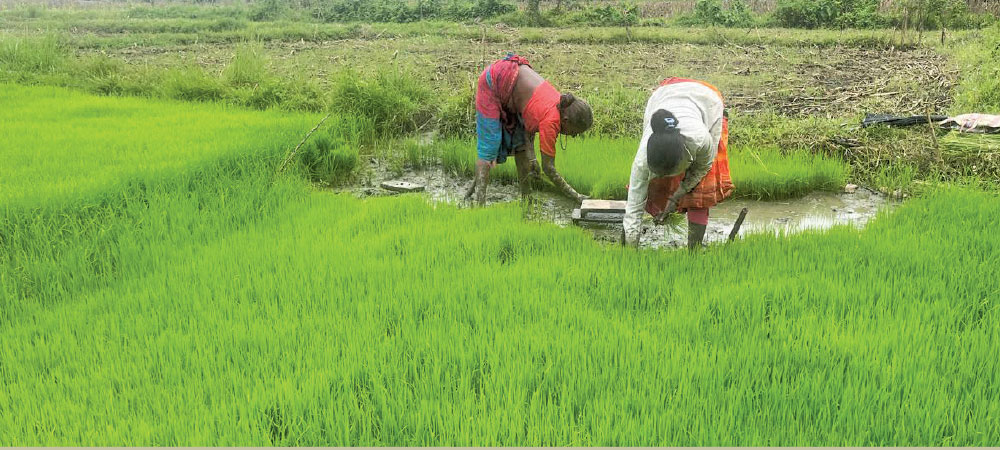
By Baburam Karki,Barahakshetra, June 29: Indigenous paddy varieties are gradually disappearing from the fertile farmlands of Sunsari, Morang and Jhapa districts in eastern Nepal as improved and hybrid seeds increasingly replace traditional strains that have been preserved by farming communities for generations.
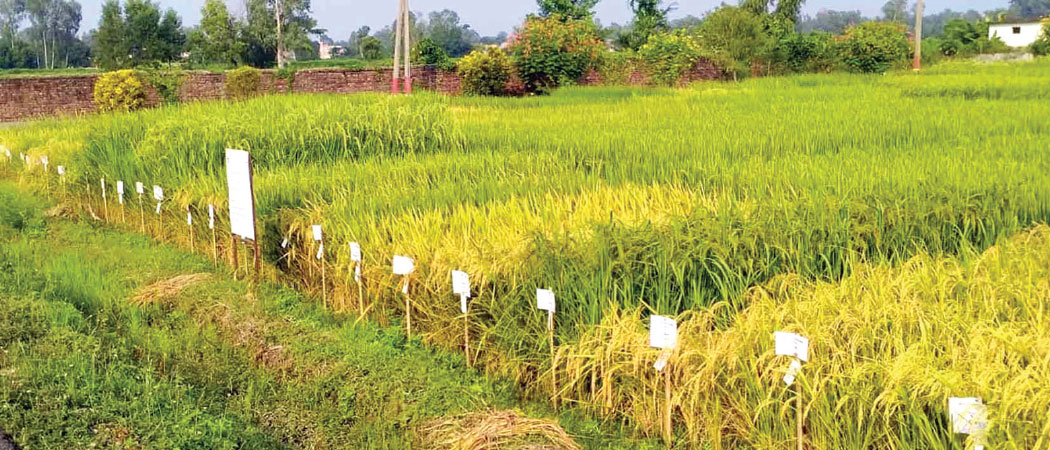
The expansion of improved and hybrid paddy cultivation in one of Nepal’s most productive agricultural regions has led to the steady displacement of native paddy varieties. Farmers have shifted towards high-yielding seeds, resulting in traditional varieties gradually vanishing from cultivated fields.
There was a time when indigenous paddy varieties such as Balamsar, Bindeshwar, Kalo Nuniya, Andi, Jhinuwa, Gauriya, Dudharaj and Jhapa Mansuli were commonly stored in household granaries across the three districts.
“During festivals, while entertaining guests and preparing special dishes, the aroma of paddy from these traditional varieties filled our homes. Today, they are difficult to find,” said elderly farmer Sher Bahadur Thapa of Barahakshetra Municipality-5.
According to him, every household once preserved its own rice seeds, whereas farmers now mostly rely on purchased improved varieties.
“Paddy from the Balamsar variety had a unique taste, but farmers have stopped cultivating it because of its low yield,” he said. Hom Paudel, a resident of Haldibari Rural Municipality-2 in Jhapa, said that most farmers have now adopted improved rice varieties, making indigenous seeds increasingly scarce in villages.
He said farmers have largely switched to the Ranjit variety because it produces significantly higher yields than traditional rice.
Farmer Bedhnidhi Paudel of Barahakshetra Municipality-10 in Sunsari said improved varieties have become the preferred choice among growers.
“No matter how much effort is invested in indigenous varieties, the yield remains low,” he said. “The same amount of work on improved varieties results in much higher production. That is why farmers are increasingly attracted to them.”
Binod Yadav, Technical Officer at the Directorate of Agricultural Research, Koshi Province, Tarahara, said several indigenous rice varieties have been preserved in seed banks as part of conservation efforts.
He said traditional varieties have steadily disappeared from villages as farmers increasingly cultivate improved and hybrid rice to maximise production.
Rice cultivation in Nepal is believed to date back thousands of years and remains deeply embedded in the country’s culture, traditions and daily life. Rice is used in religious rituals, as well as in traditional foods such as beaten rice and puffed rice, and plays an important role in ceremonies including weddings, sacred thread ceremonies and the Dashain festival. However, the expansion of production-oriented farming has accelerated the displacement of traditional seed varieties.
According to Prabin Lal Shrestha, Crop Development Officer at the Agriculture Knowledge Centre, Sunsari, indigenous rice varieties are valued for their taste, aroma, nutritional qualities and natural resistance to diseases. However, farmers are abandoning them because they mature later, grow taller and produce lower yields than improved varieties.
Improved and hybrid paddy varieties such as Ranjit, Swarna Sub-1 and Sawa Mansuli Sub-1 are now spreading rapidly across the eastern Tarai. While these varieties have boosted production, they have also placed the region’s agricultural biodiversity under increasing threat.
Agricultural experts say protecting indigenous rice varieties will require expanding community seed banks, providing incentives to farmers who continue cultivating local varieties, and promoting their commercial production.
They warn that unless such efforts are strengthened, the traditional rice varieties that once defined the villages of eastern Nepal may disappear forever as improved seeds continue to dominate the country’s farmlands.
https://risingnepaldaily.com/news/82653Published Date: June 29, 2026


 READ
READ