Downloads
 Login
Login
 Register


Tags
Fertiliser shortage grips Bangladesh, with Boro season fears already brewing

On one side of the Brahmaputra River is Paglar Haat village in Kurigram’s Bhurungamari, and on the other is Telteli in Rowmari Upazila. Farmers on both sides are struggling to get fertiliser.
Farmers in Bhurungamari’s Shilkhuri Union broke into a fertiliser dealer’s warehouse and took supplies after failing to get enough fertiliser on time.
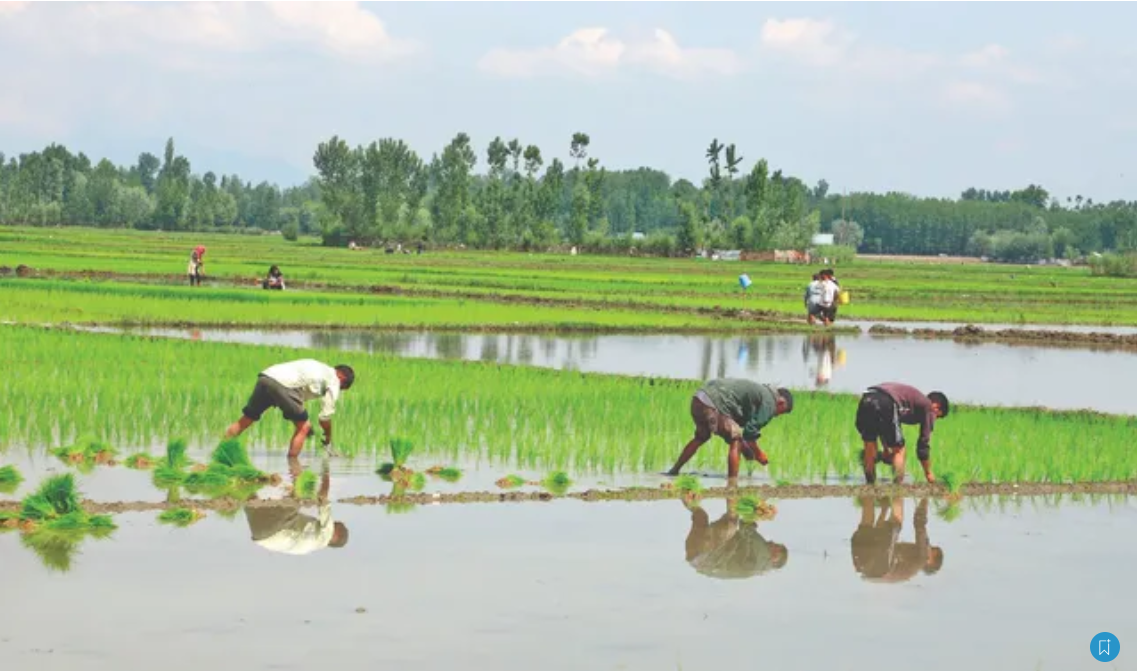
Farmer Md Jashim Uddin of Paglar Haat has planted Aman rice seedlings on 12 bighas of land, or about 1.6 hectares.
He told bdnews24.com that fertiliser needs to be applied within three weeks of planting, but he could not get any a month after planting and was forced to buy it from the open market at a higher price.
Meanwhile, farmer Ershadul Haque of Telteli said he had finished planting and it was time to apply fertiliser, but supplies were unavailable and, when found, were being sold at high prices.
He said the government-set price for a 50kg bag of diammonium phosphate (DAP) fertiliser is Tk 1,050, but he has to pay Tk 1,600 to Tk 1,700 to buy it at shops on the black market.
Farmers in Bhurungamari’s Sona Haat market blocked a road on Wednesday demanding fertiliser.
They withdrew the blockade about an hour later after the administration assured them that fertiliser would be distributed.
The problem is not limited to Kurigram. Demand for fertiliser is high across the country, including in northern districts such as Gaibandha, Rangpur, Dinajpur, Rajshahi and Bogura.
Farmers say fertiliser needs to be applied several times between planting rice and the emergence of the flower cluster.
So why is there a shortage when the government says stocks are adequate?
Farmers, dealers and officials point to three main reasons: irregularities in allocation, problems with distribution, and black-market sales or illegal stockpiling by some dealers.
Some dealers, however, say demand is also rising because farmers are buying fertiliser in advance for potato and onion cultivation from November.
Bimol Kumar Saha, a fertiliser dealer in Gobindaganj Union, Gaibandha, said he was receiving enough fertiliser and had not seen a shortage in his area. But farmers were buying triple super phosphate (TSP) in advance for potato cultivation, pushing up demand.
He said some farmers were also stocking up for onion and maize cultivation, adding further pressure on supplies.
If the situation continues, some agricultural experts fear a major fertiliser shortage during Boro, the country’s biggest rice-producing season.
How Much Is Being Misallocated?
Data from the Rajshahi district unit of the Bangladesh Fertiliser Association (BFA) show that the district has more than 412,000 farmers and about 185,000 hectares of cultivable land.
For September, Rajshahi has been allocated only 1,045 tonnes of TSP.
If each farmer received one 50kg bag, the supply would cover only about 20,900 farmers.
The allocation also includes 1,629 tonnes of muriate of potash (MOP) and 3,015 tonnes of DAP.
BFA Rajshahi district unit President Md Osman Ali said the current allocation would amount to roughly 2.5kg of TSP, 4kg of MOP and 7kg of DAP per farmer if divided equally.
He said allocations should be increased based on farmers’ actual needs.
About 14,000 hectares of ponds in Rajshahi are used for fish farming, and he also called for separate fertiliser allocations for those ponds.
Rajshahi District Fertiliser and Seed Monitoring Committee Chairman and Deputy Commissioner Kazi Shahidul Islam, however, said there was no fertiliser shortage in the district.
He said Aman had been cultivated on 83,600 hectares in Rajshahi this season. Although there is also demand for fertiliser in ponds, there is no separate allocation for it.
The deputy commissioner acknowledged that this puts additional pressure on supplies allocated for farmland and said the district had already written to the ministry seeking an additional allocation.
Problems in Assessing Demand
A senior official of the Department of Agricultural Extension involved in fertiliser and seed monitoring also blamed agricultural officials for the shortages.
The official, who did not want to be named for fear of facing the ire of senior and field-level officials, said agricultural officers at Upazila level did not properly plan fertiliser demand.
He said demand remained almost the same across regions even though cultivation patterns differed sharply, with farming activity currently lower in the Haor areas while Rajshahi, Kurigram and Dinajpur were at peak demand.
The official said fertiliser allocations are made according to an annual calendar.
At the start of the year, fertiliser and seed management committees collect demand estimates, while district fertiliser and seed monitoring committees use those figures to prepare the calendar.
But Upazila agricultural officers do not properly verify the demand on the ground, he said, resulting in routine estimates rather than allocations based on actual needs.
He said this creates problems because not all areas within an Upazila grow rice at the same rate, yet fertiliser allocations are often divided almost equally among them.
There is therefore a gap between actual demand and the allocation and distribution of fertiliser, he said.
The timing of Aman cultivation also varies by 10 to 15 days in different areas, and supplies should be arranged accordingly.
A Spate Of Seizures In August
An analysis of information from district and Upazila administrations shows authorities have been conducting raids and seizing fertiliser across the country over allegations of overpricing, illegal hoarding, unlicensed trading and sale of adulterated fertiliser.
The government-fixed price for urea at farmer level is Tk 22 per kg, or Tk 1,100 for a 50kg bag.
TSP is priced at Tk 27 per kg, or Tk 1,350 per bag. DAP costs Tk 21 per kg, or Tk 1,050 for a 50kg bag, while MOP is priced at Tk 20 per kg, or Tk 1,000 per bag.
Farmers on the ground allege they are unable to buy fertiliser at government rates from dealer shops, forcing them to pay more in the retail market.
They say a 50kg bag of TSP is going for Tk 1,700 to Tk 1,800, an overcharge of Tk 350 to Tk 450 per bag, while DAP is fetching Tk 1,600 to Tk 1,700, an extra cost of Tk 550 to Tk 650 per bag.
Mobile court raids have confirmed allegations of overpricing.
In Pabna Sadar Upazila’s Sadullapur Union, dealer Messrs Aftab Traders was found selling fertiliser priced at Tk 1,050 for Tk 1,530 to Tk 1,550.
Upazila executive magistrate and Upazila administrator (UNO) Tamara Tasbiha fined the dealer on Aug 27 for overpricing.
Similar raids in Dinajpur, Pabna, Chapainawabganj, Jashore, Jamalpur, Magura and Manikganj led to large-scale seizures of illegally hoarded fertiliser through August alone.
Mobile courts found evidence of illegal hoarding of 13,550kg in Jashore’s Chaugachha and around 32 tonnes in Ishwarganj.
Dinajpur’s Fulbari UNO Ahmed Hasan told bdnews24.com that raids consistently uncovered farmers’ allocated fertiliser being diverted to the black market, with illegal fertiliser shops found operating in unions and selling at inflated prices.
As chair of the Upazila fertiliser and seed monitoring committee, Hasan pointed to several causes behind the shortage on the ground.
He said under new guidelines, his Upazila should have 24 dealers across the municipality and seven unions, but until this year all dealer shops were concentrated in the municipality.
Aloary Union, 25km from Fulbari Municipality, meant farmers there had to travel that distance just to collect fertiliser.
Another problem, he said, was that main dealers were keeping unauthorised “sub-dealers”, with fertiliser also being sold through pesticide shops that collected stock under the main dealer’s name and sold it in the open market at higher prices.
Hasan also pointed to another problem: there are two types of dealers, Bangladesh Chemical Industries Corporation (BCIC) and Bangladesh Agricultural Development Corporation (BADC).
BADC dealers do not receive urea allocations. They receive TSP, DAP and MOP, but many BADC dealers operate in each Upazila.
Why the Crisis Despite Rising Stocks?
The country’s fertiliser demand is expected to reach 6.77 million tonnes in the 2026-27 fiscal year, according to the Department of Agricultural Extension.
Demand includes 2.622 million tonnes of urea, 901,500 tonnes of TSP, 1.356 million tonnes of DAP and 970,000 tonnes of MOP, with another 921,300 tonnes needed for other fertilisers.
Agriculture ministry data show stocks of urea, TSP, DAP and MOP stood at 1.286 million tonnes on Aug 31, up 86,100 tonnes, or 7.17 percent, from a year earlier.
But experts say adequate stocks do not guarantee timely delivery to farmers.
Agriculture and food security expert Golam Rasul said the crisis stems from failures in distribution and oversight, rather than a lack of fertiliser.
National stock data may be available, he said, but there is no public system showing how much reaches each dealer or whether it reaches farmers, allowing black-market operators to profit.
Rasul, a professor at the International University of Business Agriculture and Technology, also rejected claims that farmers’ excessive fertiliser use is causing the shortages, calling such blame-shifting an institutional failure of the Department of Agricultural Extension.
A Bigger Crisis Ahead?
Rasul warned of a bigger crisis looming.
He said the upcoming Boro season could see the situation turn severe, given that the bulk of the country’s total food production comes from Boro rice, which alone accounts for around 60 percent of total fertiliser use nationwide, with preparations for the season beginning as early as November.
He cautioned that if the current Aman season shortage was not swiftly brought under control, and if regional or local shortages were not administratively addressed now, the entire country’s agricultural output could collapse during the Boro season.
His recommendations for the government include activating district and Upazila monitoring committees immediately, ensuring transparency by publicly displaying dealers’ stock and sales data at the local level, promptly redistributing surplus fertiliser from areas with excess to those facing shortages, and taking strict action against dishonest black marketeers to control prices.
https://thefinancialexpress.com.bd/national/fertiliser-shortage-grips-bangladesh-with-boro-season-fears-already-brewingPublished Date: September 3, 2026


 READ
READ