Downloads
 Login
 Register


Tags
Rice Contract Farming Linked to Increased Assets for Senegalese Farmers
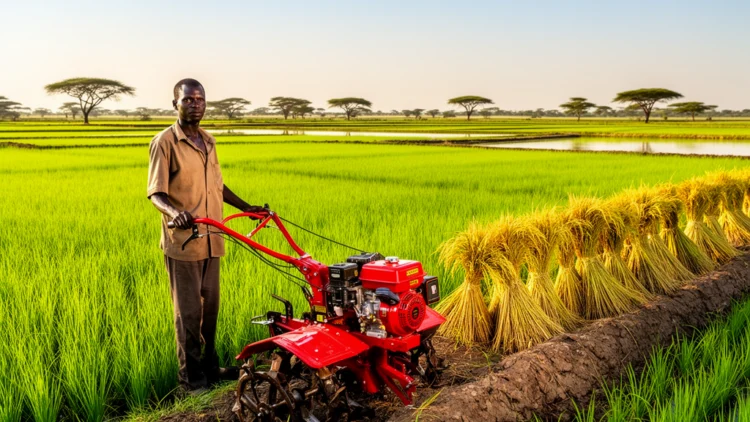
Contract farming arrangements in the rice sector of Senegal are associated with significant increases in household assets, according to a new study published in Agriculture & Food Security. The research, conducted by Francis E. Ndip and Takeshi Sakurai, provides new insights into the welfare impacts of contracting staple crops, a topic that has received less attention than high-value or industrial commodities. By analyzing data from rice-producing households in the Senegal River Valley Area, the study finds that participation in contract farming is positively linked to asset accumulation per capita, although it does not show a similar association with total household expenditure.
The study addresses a gap in the existing literature, which has largely focused on the welfare effects of contract farming for specialty crops such as fruits, vegetables, and industrial commodities like sugarcane and oil palm. Staple crops, which are produced by a larger number of smallholder farmers, have been overlooked despite their potential to make agricultural value chains more inclusive. The authors note that staple crop contracts are often viewed with skepticism by processors and researchers alike, who argue that farmers may side-sell produce or that the high costs of inputs like seeds and fertilizers may negate any benefits. This study aims to clarify whether these arrangements actually improve the welfare of smallholder farmers in a developing country context.
To evaluate these impacts, the researchers employed a cross-sectional dataset from 260 rice-producing households in the Podor and Dagana Departments of Senegal. The sample was selected through a multistage sampling approach, involving the purposive selection of departments, random selection of villages, and random selection of farmers, some of whom were chosen from farmer organizations. This design was necessary because many contracts in the region are awarded on a collective liability basis through these organizations. The study specifically focuses on rice, a key staple crop in Senegal and West Africa, where the government has implemented various self-sufficiency programs to boost domestic production and reduce reliance on imports.
A central challenge in studying the effects of contract farming is endogeneity, as farmers who are more entrepreneurial or motivated may be more likely to participate in contracts, and those with more assets may be better positioned to join. To address this, the authors used instrumental variable two-stage least squares (IV-2SLS) regressions. The instrument used was the proportion of contract farming participants in a village, excluding the household of interest. This approach helps isolate the effect of contract participation from other factors that might influence both the decision to contract and household welfare. The relevance of this instrument was supported by a high first-stage F-statistic and Cragg-Donald statistic, indicating a strong correlation with contract participation.
The primary findings indicate that participation in contract farming is associated with a 287% increase in assets per capita. Assets were measured as the monetary value of items acquired over the last 12 months, including household items like bicycles, radios, and televisions, as well as agricultural equipment such as tractors and water pumps. Livestock was excluded from this measurement because most households keep livestock over longer periods, and detailed price data was unavailable. The study found no significant association between contract farming and total expenditure per capita. However, when expenditure was broken down into categories, a positive association was observed with food expenditure, specifically a 38% increase, while no association was found with non-food expenditure.
These results suggest that contract farming in staple crops can improve farmers’ welfare, particularly through asset accumulation. Assets are considered a forward-looking measure of welfare because they can be used to smooth consumption and engage in productive activities in the long run. In rural areas where banking services are often absent, wealth is frequently stored in the form of physical assets. The increase in food expenditure was accompanied by no association with non-food expenditures such as education, clothing, or health services.
The study also examined the heterogeneity of these benefits across different welfare groups using quantile regression models. The analysis revealed that contract farming benefits poorer farmers more significantly in terms of assets. Specifically, the positive association with assets was found across all quantiles except the highest (0.9), suggesting that the arrangement is pro-poor. For food expenditure, positive associations were found only at the lowest quantile (0.1), indicating that the poorest households benefit most in this category. Conversely, for non-food expenditure, negative associations were found at the lowest quantiles (0.1, 0.25, and 0.5), suggesting that participation in contract farming may make poorer households worse off in terms of non-food spending. This pattern is plausibly explained by the fact that poor households are likely to prioritize food over other items when additional income is available.
The context of the study is important for understanding these findings. The Senegal River Valley Area is a major rice production zone, characterized by three production seasons and ample irrigation water. Despite these favorable conditions, smallholders face constraints such as lack of finance for inputs and machinery. Contract farming schemes emerged in this area to address these challenges by providing farmers with improved seeds, fertilizers, technical support, and a steady output market for millers. The study distinguishes between two types of contracts: tripartite marketing contracts involving banks, millers, and farmers, and production contracts with private millers. However, the data did not allow the authors to disaggregate the analysis by contract type, which is noted as a limitation.
The authors acknowledge several limitations in their study. First, the use of cross-sectional data makes it difficult to fully address endogeneity concerns, and the estimates should be interpreted with caution regarding causal claims. Second, the study focuses on a specific area in Senegal with a relatively small sample size, which may limit the external validity of the results. Third, the lack of detailed data on contract types prevents a deeper analysis of how different arrangements affect welfare. Despite these limitations, the study contributes to the growing body of evidence on the welfare impacts of staple crop contracts, suggesting that they can be a valuable tool for poverty reduction and rural inequality reduction in developing countries.
The findings have important policy implications for development initiatives in Senegal and other developing countries. The results suggest that promoting staple crop contracts could lead to broader welfare gains, particularly through asset accumulation, which may have long-lasting effects on poverty reduction. Since many farmers already produce staple crops, integrating them into contract farming arrangements could make these value chains more inclusive. The study also highlights the potential for public-led contract schemes to fill gaps left by profit-led private models, which may not always target staple crops. By understanding the specific welfare impacts of these arrangements, policymakers can design more effective interventions to support smallholder farmers and enhance food security.
The broader context of Senegalese agriculture underscores the strategic importance of rice in national development. Agriculture contributes more than 16 percent of Senegal’s gross domestic product and employs over 30 percent of its workforce, with smallholders frequently combining crop cultivation and livestock production. While millets and groundnuts remain dominant traditional crops, rice has become a nutritional cornerstone. Annual per capita consumption reached approximately 85 kilograms and is projected to expand to 95 kilograms by 2027. Domestic production has consistently lagged behind this demand, generating only about 1.5 million tonnes in 2023, approximately half of national requirements. To bridge the gap, the country imported more than 70,000 tonnes of rice in 2021 valued at 278 million dollars, ranking as Africa’s third-largest rice importer behind Nigeria and South Africa. Government initiatives launched in 2009 and 2014 attempted to achieve self-sufficiency through irrigation, modern processing mills, and area expansion, yet national yields dropped from 4.1 tonnes per hectare to 3.3 tonnes per hectare before partially recovering to 3.8 tonnes per hectare in 2023.
Descriptive data from the 2021 survey illustrate the baseline living conditions of the sampled households. Across the retained sample of 260 households, only about 23 percent participated in contract farming schemes. The average household possessed an asset value of roughly 109,130 West African CFA francs, or about 208 dollars per capita, alongside an average 12-month total expenditure of 47,620 CFA francs, or roughly 82 dollars. Families allocated slightly more spending to food, at 23,840 CFA francs, than to non-food needs, at 23,770 CFA francs. Household heads were predominantly married men over 57 years of age who had completed at least primary schooling. Over 16 percent of households engaged in off-farm employment, and families maintained an average livestock holding exceeding 4.1 Tropical Livestock Units. Direct mean comparisons revealed no statistically significant baseline differences between contract participants and non-participants in assets, total expenditures, or food spending, highlighting the necessity of econometric controls to isolate contract impacts from confounding factors.
To evaluate model stability, the researchers complemented their external instrumental variable with a heteroskedasticity-based Lewbel instrumental variable framework using generated internal instruments. In this joint specification, participation in contract schemes remained positively associated with per capita household assets but showed no significant relationship with per capita expenditure, confirming that the central welfare associations were robust across distinct identification procedures.
Subject of Research: Welfare impacts of contract farming in rice production in Senegal
https://bioengineer.org/rice-contract-farming-linked-to-increased-assets-for-senegalese-farmers/Published Date: November 13, 2026



 READ