Downloads
 Login
Login
 Register


Tags
Farmer Transitions from Omahangu to Rice Production
By: Loise Shiimi
A northern small-scale pearl millet (omahangu) producer has converted half of his one-hectare field for rice cultivation.
Frans Amutenya, a farmer and a Bachelor of Science student in Crop Production at the University of Namibia’s Ogongo Campus in the Omusati Region, recently shared his agricultural journey with Eagle Media House.
Amutenya explained that his interest in agriculture was sparked during his time as an unemployed electrician.
“In 2023, I decided to embark on horticultural production. By 2024, after establishing my farm, I enrolled at UNAM while continuing to cultivate vegetables such as tomatoes, green peppers, onions, and butternuts on a one-hectare plot I am renting, which was previously used for millet,” he said.
A year in, he says, he realised he could not fully utilise the land during the rainy season due to waterlogging issues. Thus, he conducted research to identify crops that could thrive in such conditions, ultimately settling on rice production.
To maintain his production as a beginner, he benefitted from training at Ogongo, where he also received rice seeds to help with initial production.
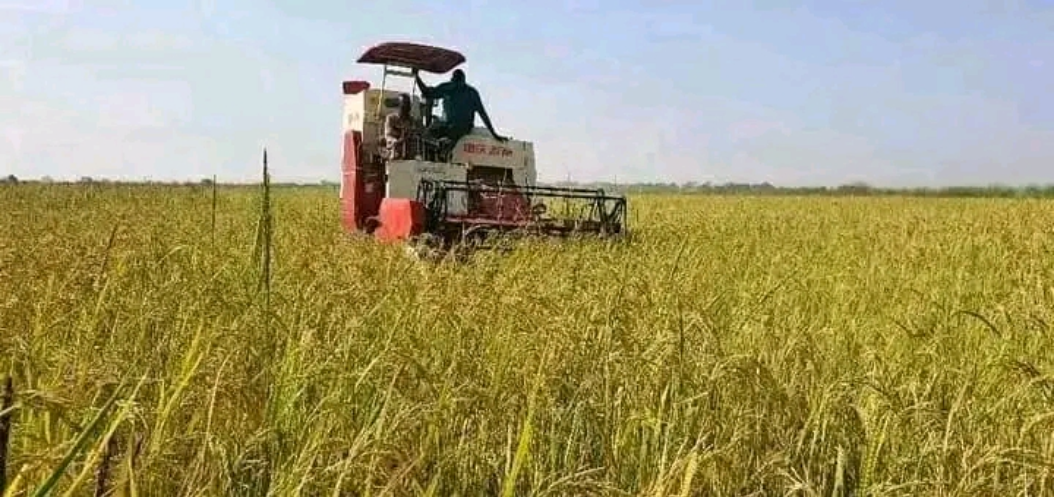
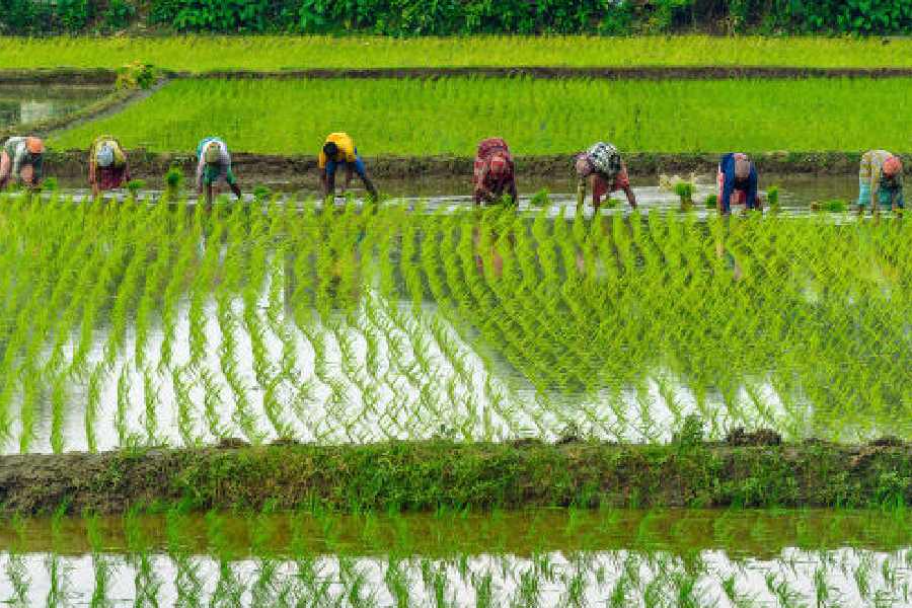
“In November 2025, I achieved a good germination rate and successfully planted 0.5 hectares of rice. I am committed to working hard during this journey to ensure a fruitful harvest in May 2026,” he stated.
Adding on to anticipating a positive yield, Amutenya noted that “One advantage of rice production is that it requires minimal maintenance, provided there is enough water. The main challenge is that rice takes about six months to mature, although certain varieties grow faster, which presents different challenges such as water management.”
Regarding pests, he mentioned that rice crops typically face fewer pest problems. However, he advised farmers to regularly inspect their rice fields and address any pest issues promptly.
“As a student who has engaged in research and practical training, I found it easy to apply the knowledge I gained in school. I encourage all students fortunate enough to receive practical training to utilise the skills shared with them,” he added.
Speaking to how he balances farming and academics, Amutenya shared that he employs a permanent worker to manage the farm during his classes or other commitments. Upon harvest, Amutenya plans to utilise the processing machines available on campus, as he does not own any at present.
“Once processed, I will package the rice and begin selling. I am aware of the demand for rice; even during our campus harvest, we received numerous requests from buyers and local residents visiting our shop,” he indicated.
Moreover, he mentioned the numerous opportunities available for youth in the country beyond job hunting.
Last year, Ogongo Campus hosted its annual rice harvesting festival aimed at educating local farmers and students about rice cultivation, covering the entire process from soil preparation to harvesting. During his welcoming remarks at the festival, UNAM Vice Chancellor Kenneth Matengu noted the abundance of rainfall last year, predicting a 20-tonne harvest – an increase of 15 tonnes from 2024.
Matengu also highlighted a notable increase in rice yields, with the cultivated area expanding from 4.1 hectares in 2024 to 6.7 hectares in 2025.
“We are located in a flood-prone area. However, rice is a crop that thrives in water. It is not merely a plant, but a pathway to food security, economic empowerment, and climate resilience,” he stated.
In terms of training initiatives, Matengu reported that over 4,000 farmers have been trained, with 1,000 actively engaged in rice production. He mentioned that in 2025 alone, 20 new farmers received training in rice cultivation.
He also encouraged the youth, stating that agriculture is no longer merely a subsistence activity; it has evolved into a science, a business, a technology, and a catalyst for economic growth. “To the farming community, let us transform flooded fields into thriving rice paddies and turn rice production into profit, while education leads to sustainable livelihoods,” he concluded.
Loise Shiimi
https://www.thevillager.com.na/top-stories/2026/farmer-transitions-from-omahangu-to-rice-production/Published Date: March 10, 2026



 READ
READ