Downloads
 Login
 Register

Tags
Creating a sustainable value chain for Vietnamese rice
Strengthening supply chain linkages and deep processing will contribute to increasing the value of rice grains and boosting farmers’ incomes. This step paves the way for the rice industry to effectively adapt to climate change and develop a green, sustainable economy.
Báo Cần Thơ
Launchpad from key areas
Vietnam continues to affirm its position as one of the world’s leading rice producers and exporters. Last year, the rice cultivation area reached over 7.1 million hectares with a production of 43.5 million tons. The Mekong Delta region plays a pivotal role, contributing nearly 60% of the country’s rice production and over 90% of its rice exports. In 2025 alone, the Mekong Delta is expected to supply over 7.5 million tons of rice for export, with high-quality and fragrant rice accounting for approximately 75%. The total export value of the entire sector has remained stable at over US$3 billion annually since 2020.
Despite a decrease in cultivated area, the rice industry has maintained its production and increased its value through improved quality. However, under pressure from climate change, farmers’ incomes, and stringent international market standards, shifting towards green, clean production and reducing emissions has become a matter of survival.
To realize the Sustainable Development Project for 1 million hectares of high-quality, low-emission rice cultivation linked to green growth in the Mekong Delta by 2030 (the 1 million hectare rice project), the entire agricultural sector needs to remove bottlenecks in capital and infrastructure. Simultaneously, promoting value chain linkages and applying modern technology to deep processing are key factors in helping Vietnamese rice reach further into the global market.
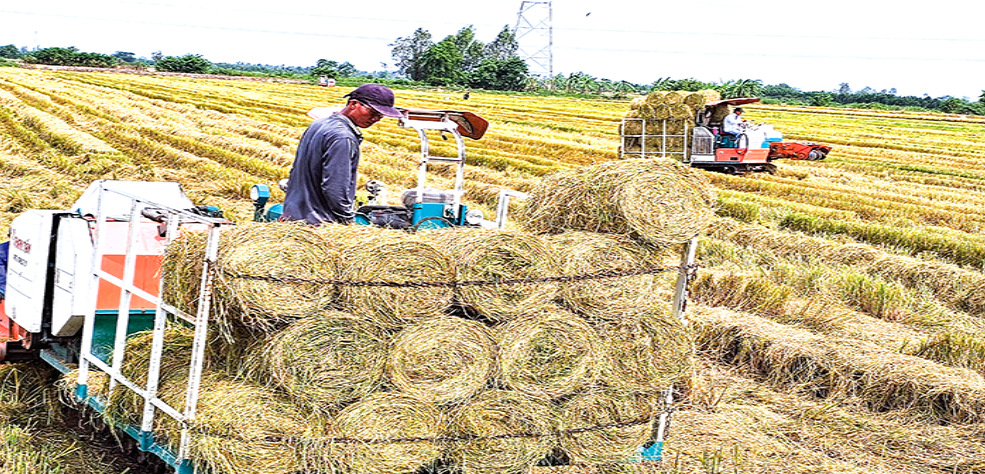
According to Mr. To Van Huan, a specialist at the Department of Crop Production and Plant Protection under the Ministry of Agriculture and Environment , Vietnam ranks 6th globally in rice cultivation area and 5th in total production. Among the 11 largest rice-producing countries in the world, Vietnam ranks 2nd in yield. Average national rice yield has increased from 53.4 quintals/hectare in 2010 to 61.1 quintals/hectare in 2025 thanks to improved varieties and the application of advanced techniques. However, the rice industry still faces difficulties due to fierce competition in the international market, increasing technical barriers and tariffs from other countries. Harvesting, drying, processing rice, and utilizing straw and by-products remain challenging, especially during the rainy season, due to infrastructure and technological limitations. In recent years, the Mekong Delta region has also been increasingly affected by climate change and saltwater intrusion, impacting rice cultivation for farmers.
The mandate for green transition and supply chain integration.
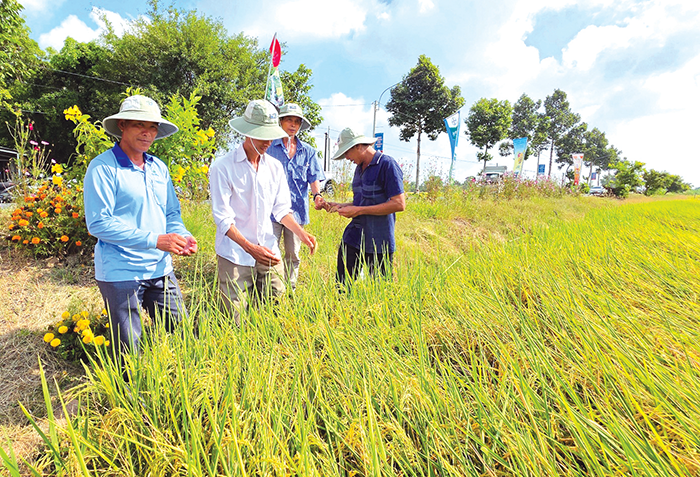
Over the past two years, the government ‘s 1 million hectare rice cultivation project has proven its validity and urgency, yielding initial positive results in developing modern, sustainable agriculture that adapts to climate change. High-quality, low-emission rice models have helped increase farmers’ profits by 1.5-9.3 million VND/hectare/crop and reduce emissions by 3-4 tons of CO₂ equivalent/hectare/crop. Businesses, cooperatives, and farmers have focused more on production linkages, improving product quality, and transitioning to sustainable farming practices. From these high-quality, low-emission rice models, Vietnam has produced over 70,000 tons of rice bearing the “Green, Low-Emission Vietnamese Rice” logo, making Vietnam the first country to produce and export low-carbon rice on a large scale.
However, the 1 million hectare rice project still faces obstacles due to the lack of synchronized irrigation infrastructure and the difficulty for cooperatives to access preferential capital for technology investment. Linkages between farmers in cooperatives and businesses in many areas are not strong enough and have not created sustainable supply chains. Therefore, coordinated efforts are needed to strengthen linkages, unlock capital, promote the application of modern machinery and technology to effectively utilize by-products, diversify processed products, and thereby generate higher added value.
Ms. Nguyen Thi Hoang Yen, Deputy Director of the Department of Cooperative Economics and Rural Development under the Ministry of Agriculture and Environment, said: “To promote chain linkages in the implementation of the 1 million hectare rice project, the Department is coordinating and strengthening consulting and training activities for relevant parties. We are providing consulting and support to improve capacity building in chain linkages, developing production organization plans, and digital transformation for rice-growing cooperatives in the Mekong Delta region.”
Chain linkage is a key task in helping the rice industry develop sustainably, achieve green growth, and reduce emissions. According to Mr. Le Thanh Tung, Chairman of the Vietnam Rice Industry Association, to promote chain linkage, develop livelihoods, and increase profits for rice farmers, the Association is promoting the formation of an alliance of agricultural enterprises to serve the Sustainable Development Project of 1 million hectares of high-quality, low-emission rice cultivation associated with green growth in the Mekong Delta by 2030. This aims to bring together businesses, cooperatives, banks, and financial institutions to facilitate credit access for rice value chain linkages. The Association proposes that banks implement flexible financial mechanisms or temporary pilot policies for each rice crop and specific geographical area to remove collateral requirements when borrowing capital.
Text and photos: KHANH TRUNG
Source: Báo Cần Thơ
https://www.vietnam.vn/en/kien-tao-chuoi-gia-tri-ben-vung-cho-hat-gao-vietPublished Date: October 27, 2026


 READ