Downloads
 Login
 Register


Tags
Cheaper bigas for Pinoys? India’s rice glut rattles Thailand, Vietnam
India’s record rice production and cheaper exports pressure Thailand and Vietnam, two major Philippine rice suppliers, as global rice prices weaken.
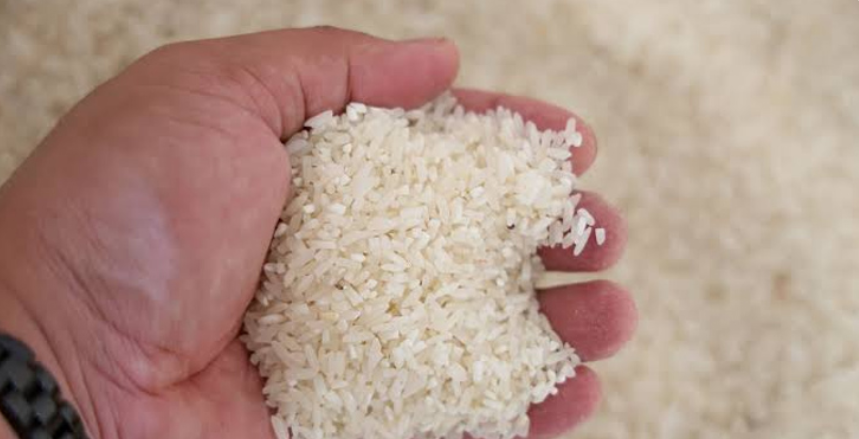
SISONEE, India (Reuters) – India has become the world’s dominant rice exporter after decades of government subsidies and advances in farming technology helped transform the country from a food-deficient nation into a major producer.
But its success has created a new problem: India is producing far more rice than it consumes, filling warehouses, straining government finances and driving down prices for competing exporters, including Thailand and Vietnam, two major rice suppliers to the Philippines.
A Reuters review of government correspondence and interviews with officials and scientists found growing concern within Prime Minister Narendra Modi’s administration over the cost of subsidizing rice that is increasingly sold overseas.
Rice subsidies account for more than two-thirds of India’s federal food subsidy bill, which has more than doubled over the past decade to 2.28 trillion rupees ($24.1 billion) in the 2025/26 fiscal year.
“In effect, we are using taxpayers’ money to subsidise foreign consumers,” said Ashok Gulati, an agricultural economist and former government adviser on crop prices.
He said India’s surplus rice was being “dumped on global markets at prices that undercut competitors.”
India’s rice production has increased 50% over the past decade to a record 154 million metric tons in 2025/26, compared with domestic consumption of 107 million tons.
Exports doubled over the same period to 22.3 million tons in 2025, giving India about 40% of the global rice trade.
Indian rice was selling at a discount of about $110 per ton to benchmark Thai rice, which traded at around $497 per ton in mid-November.
Cheaper Indian rice could push Vietnam and Thailand, two major suppliers to the Philippines, to lower their prices. But that does not guarantee cheaper rice for Filipinos, as import costs and local distribution also affect retail prices.
Thailand has raised concerns about falling prices and called for cooperation with India and Vietnam to stabilize the market.
The growing supply of cheaper Indian rice is reshaping competition among Asian exporters, particularly Thailand and Vietnam, whose rice industries are important to regional trade.
From food shortages to overflowing warehouses
India’s transformation began in the 1960s, when the government introduced guaranteed minimum prices to encourage farmers to produce enough rice to feed the population.
In 1965, food shortages were so severe that the government urged Indians to skip dinner one day a week.
Today, the country has more rice than it can comfortably store.
“We have run out of space,” said Navin Aggarwal, a private rice miller in Odisha, eastern India.
“We have been waiting for government agencies to lift the rice they have already bought from us.”
Government rice stocks reached a record 55.47 million tons on October 1, more than four times the official target.
The government plans to add 13.1 million tons of storage capacity to accommodate the growing surplus.
Production has also benefited from new rice varieties that can withstand flooding, particularly in eastern India.
One such variety, Swarna-SUB1, was released for commercial use in 2009 and has helped farmers grow rice more reliably in flood-prone areas.
In Bihar, production surged 182% over 15 years to 8.75 million tons in 2025/26. Output in neighboring Odisha increased 50% to 10.2 million tons.
“There were years when we barely grew enough rice to feed our family, and sometimes the floods wiped out the entire harvest,” said Chandramohan Yadav, a farmer in Bihar.
“Now, we grow more rice than we can eat.”
Researchers expect newer varieties to add at least 10 million tons to India’s annual rice production over the next five years.
Government projections show output could reach 171 million tons by 2036, against domestic demand of just 110 million tons.
Subsidies under scrutiny
India’s federal government sets a Minimum Support Price for rice each year, guaranteeing farmers a minimum return based on production costs.
Several rice-producing states offer additional payments, known as bonuses, to encourage farmers to grow more.
The incentives have helped boost production but have also contributed to the surplus and discouraged farmers from switching to crops such as oilseeds and pulses, which India continues to import.
The federal government has repeatedly urged state administrations to stop offering the additional payments.
Officials say the bonuses increase government spending and worsen the mismatch between production and demand.
But state governments are reluctant to remove them because farmers represent an important voting bloc.
“State governments see bonuses as a tool to win elections,” said Abhishek Govilkar, head of agribusiness at consultancy BigMint.
That makes it “difficult for the government to check its runaway expenditure,” he said.
India imported $22.7 billion worth of oilseeds and pulses in 2025, up 120% over the past decade, while rice exports earned $12 billion.
Rice cultivation also requires substantial water and fertilizer, adding pressure to government spending and natural resources.
India’s fertilizer subsidy bill is expected to exceed 3 trillion rupees ($31.8 billion) in 2026/27, four times its level a decade earlier.
Trade tensions grow
India’s rising rice exports have drawn complaints from competing producers.
U.S. President Donald Trump accused India in December of dumping rice, or selling it below cost.
New Delhi rejected the accusation, saying its shipments to the United States consisted largely of higher-priced premium basmati rice.
U.S. rice industry group USA Rice said in April that “unfair competition from bad actors like India” threatened American producers.
Thailand has also warned that India’s large rice stocks are putting pressure on international prices.
The U.S. Department of Agriculture expects India’s rice exports to increase over the next two years despite a projected decline in the country’s 2026/27 harvest because of poor rainfall linked to El Niño.
https://bilyonaryo.com/cheaper-bigas-for-pinoys-indias-rice-glut-rattles-thailand-vietnam/Published Date: November 18, 2026


 READ