Downloads
 Login
 Register


Tags
Kerala’s Extra Rice Demand Highlights Festive Tightness in Indian Market
Kerala’s request for extra OMSS rice highlights festive-season tightness. Analysis of prices, policy delays, and short-term trading outlook for Indian rice.
Kerala’s bid for an additional 25,000 tonnes of rice under India’s Open Market Sale Scheme (OMSS) underscores tight local festival-season supplies and persistently high retail prices. A nationwide doubling of OMSS rice volumes should ease the broader Indian balance, but procedural delays around Kerala’s request risk postponing price relief for consumers. Across India, export and FOB prices have recently stabilised after earlier gains, yet Kerala’s domestic market remains under pressure as households prepare for Christmas and New Year spending. The state’s plan to channel extra volumes through ration shops and government-linked outlets, including up to 10 kg of additional rice per eligible household, is designed to blunt inflation for vulnerable consumers. However, implementation speed and last‑mile logistics will determine how much of the national OMSS expansion translates into effective local supply and softer retail prices.
Prices
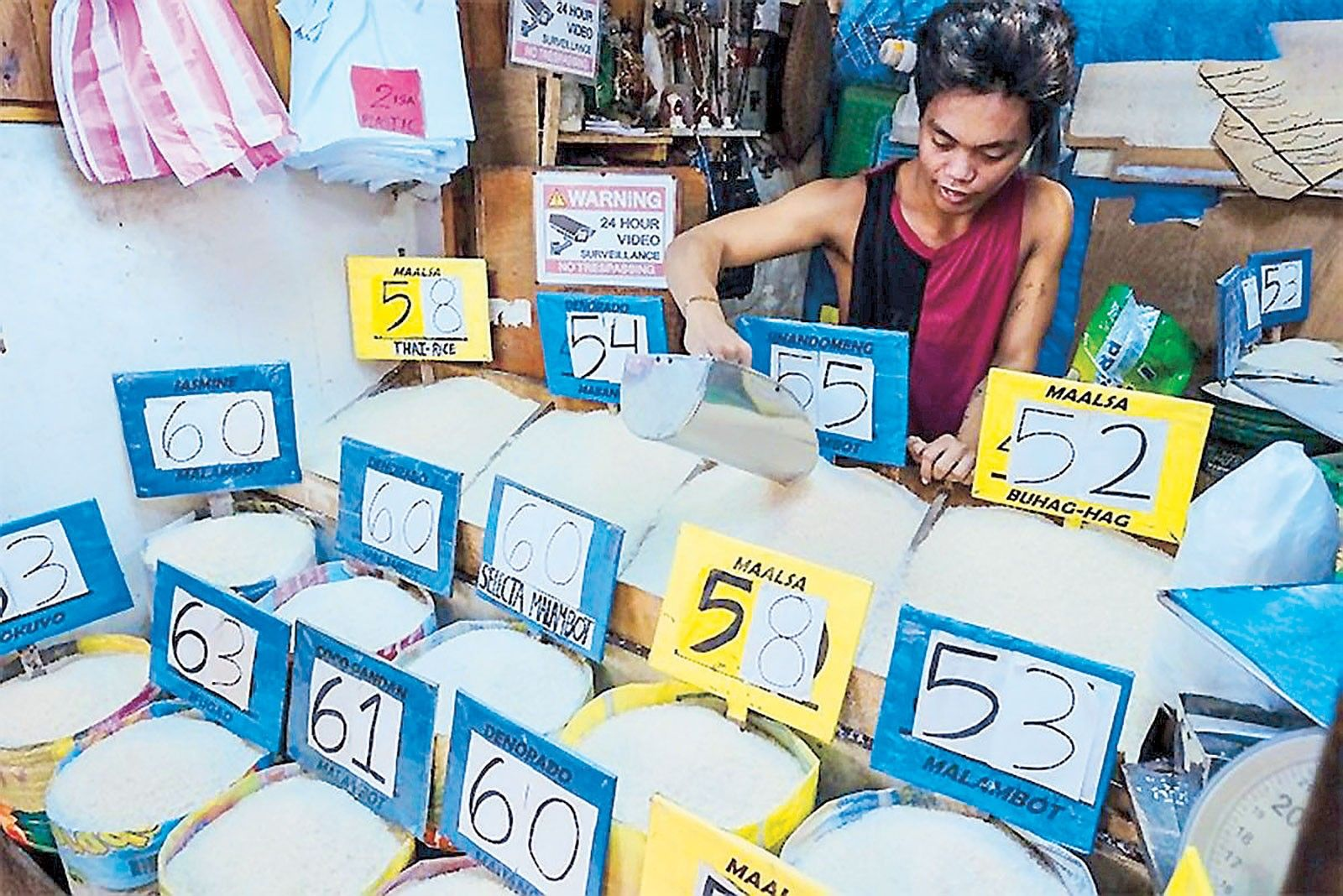
Retail rice prices in Kerala remain elevated, despite the central government’s efforts to expand OMSS rice sales across India. Local authorities face mounting pressure as festive demand lifts consumption while traders test how far households will accept higher prices before switching varieties or cutting discretionary spend.
By contrast, export-linked quotations have recently levelled off. Indian FOB prices in New Delhi for key non-organic grades are steady, with rice all steam PR11 at EUR 0.39/kg, Sharbati steam at EUR 0.51/kg and 1121 steam at EUR 0.77/kg (FOB). Organic basmati and non-basmati remain at a premium, at EUR 1.55/kg and EUR 1.25/kg respectively (FOB New Delhi). Vietnamese long white 5% is indicated at EUR 0.34/kg (FOB Hanoi), providing a competitive benchmark for Asian buyers.
| Origin / Type | Location | Delivery term | Current price (EUR/kg) | Previous price (EUR/kg) |
|---|---|---|---|---|
| India, Rice all steam PR11 | New Delhi | FOB | EUR 0.39/kg | EUR 0.39/kg |
| India, Rice alı steam Sharbati | New Delhi | FOB | EUR 0.51/kg | EUR 0.51/kg |
| India, Rice all steam 1121 steam | New Delhi | FOB | EUR 0.77/kg | EUR 0.77/kg |
| India, Rice all golden Sella | New Delhi | FOB | EUR 0.87/kg | EUR 0.87/kg |
| India, Rice white sella 1121 creamy | New Delhi | FOB | EUR 0.675/kg | EUR 0.675/kg |
| India, Rice white basmati (organic) | New Delhi | FOB | EUR 1.55/kg | EUR 1.55/kg |
| India, Rice white non-basmati (organic) | New Delhi | FOB | EUR 1.25/kg | EUR 1.25/kg |
| Vietnam, Rice long white 5% | Hanoi | FOB | EUR 0.34/kg | EUR 0.34/kg |
Supply & Demand
Kerala’s food department has requested about 25,000 tonnes of additional rice from the central pool under OMSS to meet heightened seasonal demand and reduce retail price pressures. The proposal focuses on moving extra volumes through ration shops and government-linked outlets, where administrative pricing can more directly support low‑income households.
At the national level, the central government has doubled the overall OMSS rice offer from roughly 2.5 million tonnes to 5 million tonnes, significantly enlarging potential availability to states and private buyers. This step follows active e-auctions and aims to cool spot prices without undermining buffer stock objectives. For Kerala, however, the key constraint is not national availability but compliance with new procedural rules that require a detailed, formally notified distribution plan before extra allocations are approved.
Local demand in Kerala is also shaped by demographic and consumption patterns: high per-capita rice use, strong preference for region-specific varieties and a tendency for festive and wedding-related consumption peaks. Without timely public-sector inflows, urban and poorer consumers are particularly vulnerable to opportunistic mark-ups and informal rationing in the open market.
Fundamentals & Policy
The central government’s nationwide OMSS expansion materially loosens the fundamental balance by making an additional ~2.5 million tonnes of rice available to the domestic market. This move leverages comfortable central stocks and follows already active e-auction sales to private traders, indicating official willingness to trade stockholding margins against consumer price stability.
For Kerala, the policy bottleneck lies in programme design and execution. Authorities must first finalise a distribution plan that specifies quantities, channels and target groups, then formally notify it before Delhi reconsiders the state’s request. The plan reportedly includes an extra allocation of up to 10 kg of rice per eligible household, which, if swiftly rolled out, would directly dampen local retail prices and relieve pressure on wage negotiations and state subsidy budgets.
In the interim, the risk is that traders price in expected public-sector purchases or delayed arrivals, keeping retail tags high despite softer export and wholesale indicators elsewhere in India. The government’s communication challenge is to signal that sufficient national stocks are available and that enforcement will target hoarding and misinformation that could fuel speculative spikes.
Weather & Crop Context
India’s broader rice outlook remains underpinned by sizeable production, but recent assessments point to a weather-affected 2026/27 crop, with the southwest monsoon finishing notably below long‑term averages in several key belts. This has trimmed expectations after a decade-long run of production growth, though large carry‑in stocks still provide a buffer against extreme internal shortages.
For Kerala specifically, domestic cultivation plays a secondary role relative to inflows from other Indian states. As a result, local availability and prices are more sensitive to central allocation policies and interstate flows than to Kerala’s own weather. Near-term price relief therefore depends more on the pace of OMSS-driven movements than on any late-season meteorological shifts.
Short-Term Outlook & Trading Takeaways
Market sentiment around Kerala’s rice availability hinges on how quickly the state meets the central government’s procedural requirements and secures its requested 25,000 tonnes. If the distribution plan is approved promptly, incremental OMSS arrivals ahead of Christmas and New Year could cap further retail gains and trigger modest declines in headline rice prices.
However, if bureaucratic steps or logistics delay deliveries into January, elevated retail prices are likely to persist and may even edge higher in key urban centres. The nationwide OMSS expansion should still anchor wholesale and export-linked benchmarks, but the timing mismatch between policy decisions and state-level implementation will remain a key risk for local inflation and social spending.
Trading outlook
- Importers and regional buyers supplying Kerala should anticipate firm local demand in the near term and consider locking in volumes while FOB Indian prices remain stable in EUR/kg terms.
- Domestic Indian millers and traders may see improved offtake into Kerala once the state’s OMSS-linked distribution plan is cleared; maintaining flexible inventory and logistics capacity into December–January is advisable.
- Retail-focused businesses in Kerala should prepare for possible short-lived price corrections if additional OMSS rice lands quickly, but plan cautiously for a scenario of sustained high retail prices if approvals lag.
3-day directional view (key benchmarks)
- FOB New Delhi (India, key steamed and sella grades): Sideways; prices such as PR11 at EUR 0.39/kg and 1121 steam at EUR 0.77/kg show no immediate pressure to move sharply.
- FOB Hanoi (Vietnam long white 5%): Stable at around EUR 0.34/kg, keeping Asian export competition steady in the very short term.
- Kerala retail market: Mild upward bias until confirmation of additional OMSS allocations; sentiment could turn neutral to slightly softer once concrete state-level distribution details are announced.
Published Date: November 18, 2026



 READ