Downloads
 Login
 Register


Tags
Pakistan Wins GI Recognition for Basmati Rice in Türkiye
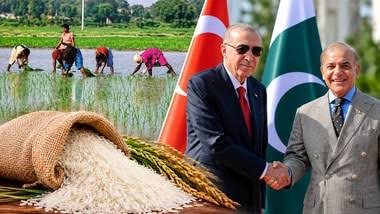
Pakistan basmati GI recognition in Türkiye gives Pakistan a new legal and branding advantage in its rivalry with India over premium rice. Türkiye has recognised Pakistani basmati as a geographical indication (GI) after India also applied to the Turkish Patent Office for exclusive rights over basmati. The decision does not by itself change tariffs, volumes or contracts. It does clarify origin rights in a gateway market linking the EU, the Middle East and the CIS.
What Türkiye’s GI decision covers
The Pakistani specification covers Punjab, Sindh, Khyber Pakhtunkhwa and parts of Balochistan. An earlier reference to Azad Kashmir was removed from the final documentation.
India applied to the Turkish Patent Office in April 2023, seeking exclusive rights over basmati. It had not secured equivalent approval at the time of reporting.
Pakistan’s response drew on legal experts from the Trade Development Authority of Pakistan (TDAP) and an 18,000-tonne Tariff Rate Quota. Reported results include initial orders from A-101, a leading Turkish retailer, and promotional activities in Ankara. Pakistan had registered “Basmati” as a GI under its Geographical Indications (Registration and Protection) Act, 2020, in January 2021, with TDAP as the registrant.
Wider basmati GI disputes and diplomatic support
Pakistan has also challenged India’s 2018 application to the European Union for exclusive Protected Geographical Indication (PGI) rights over basmati.
In August 2026, the Federal Court of Australia dismissed an appeal by India’s Agricultural and Processed Food Products Export Development Authority (APEDA) over its attempt to register “Basmati” as a certification trademark. The court recognised that the rice is also grown in Pakistan.
On 4 November 2026, Türkiye’s Trade Minister Ömer Bolat met Pakistan’s Commerce Minister Jam Kamal Khan during a COMCEC session in Istanbul. Bolat pledged support for Pakistan’s basmati claims and called for stronger promotion and branding in the Turkish market.
Impact on trade and branding
The GI decision mainly affects branding and potential future labeling disputes rather than customs treatment. It lets Pakistan market basmati as an origin-protected product in Türkiye. It also gives Pakistan legal grounds to challenge “basmati” labels from outside its registered regions, at least within Türkiye. Over time, this may support price premiums for compliant Pakistani shipments in Turkish retail and foodservice channels.
For India, the lack of a parallel approval means exports to Türkiye rely more on commercial reputation, bilateral contracts and non-GI quality assurances. The decision does not alter Indian access or tariffs. It could, however, influence future disputes over labeling, origin certification and enforcement if Turkish authorities scrutinise basmati claims more closely.
Indian and Vietnamese FOB price quotations
Indian FOB quotations in New Delhi were unchanged from prior quotations:
- Organic white basmati: EUR 1.55/kg
- All-golden sella basmati: EUR 0.87/kg
- 1121 steam: EUR 0.77/kg
- 1509 steam: EUR 0.70/kg
- 1121 creamy white sella: EUR 0.675/kg
- Sharbati steam: EUR 0.51/kg
- PR11 steam: EUR 0.39/kg
- Organic non-basmati white rice: EUR 1.25/kg
In Hanoi (FOB), Vietnamese long white 5% was quoted at EUR 0.34/kg, jasmine at EUR 0.36/kg and Japonica at EUR 0.45/kg. Specialty types were black rice at EUR 0.87/kg and paper-dried rice at EUR 1.66/kg.
Pakistan crop weather outlook
The Pakistan Meteorological Department’s outlook for October–December 2026 points to generally above-normal precipitation in northern basmati-growing areas, including Khyber Pakhtunkhwa, northern Punjab and Azad Jammu and Kashmir. Parts of Sindh and Balochistan are expected to be drier. Rice and other late Kharif crops are in late maturation and harvest, so short dry windows are important for efficient harvesting.
What traders should watch
Importers and retailers in Türkiye may need to align procurement with Pakistan’s registered production map. Contracts that use a generic “basmati” description may need tightening around provincial and district-level sources. Traders should also follow the GI and PGI proceedings in Türkiye and the EU, as changing definitions of basmati production areas could affect labeling and documentation requirements.
By RiceNewsToday | Sources: CMB News
Published Date: November 18, 2026



 READ