Downloads
 Login
 Register


Tags
Farmers in the U Minh Thuong region are planting rice on shrimp farming land, worrying about costs and market access.
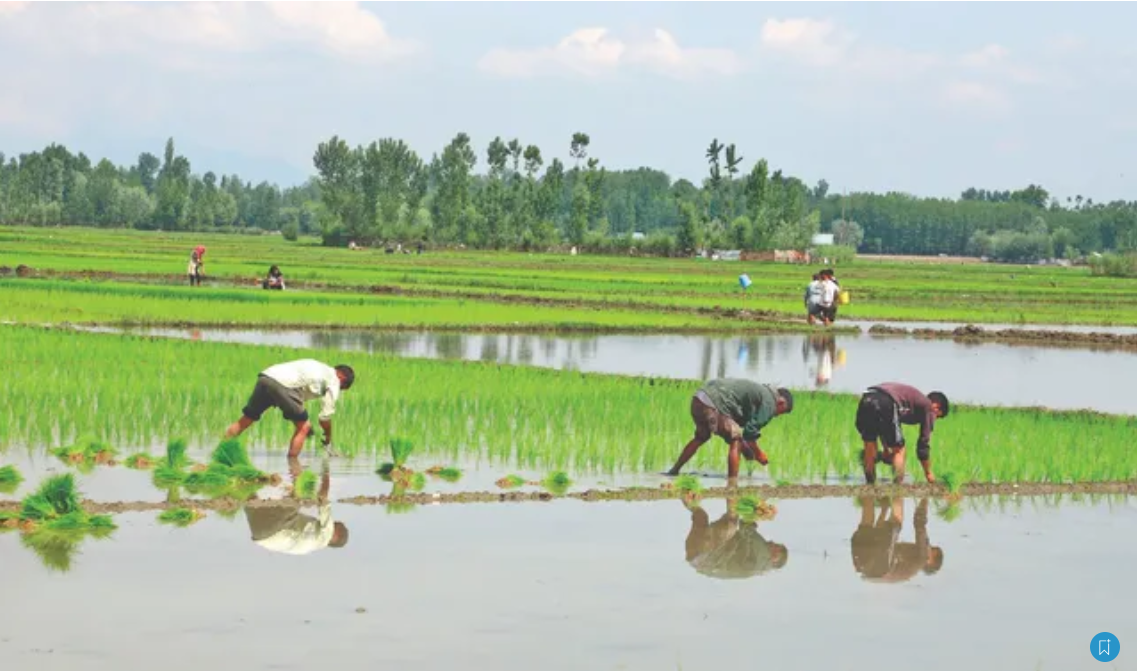
Farmers in An Bien and U Minh Thuong districts (An Giang province) are planting rice on shrimp farming land, promoting mechanization, selecting quality seeds, and reducing input costs. However, with rice prices around 5,800-6,200 VND/kg, high input costs, and the risk of drought and saltwater intrusion, production efficiency continues to be a challenge.
Báo An Giang
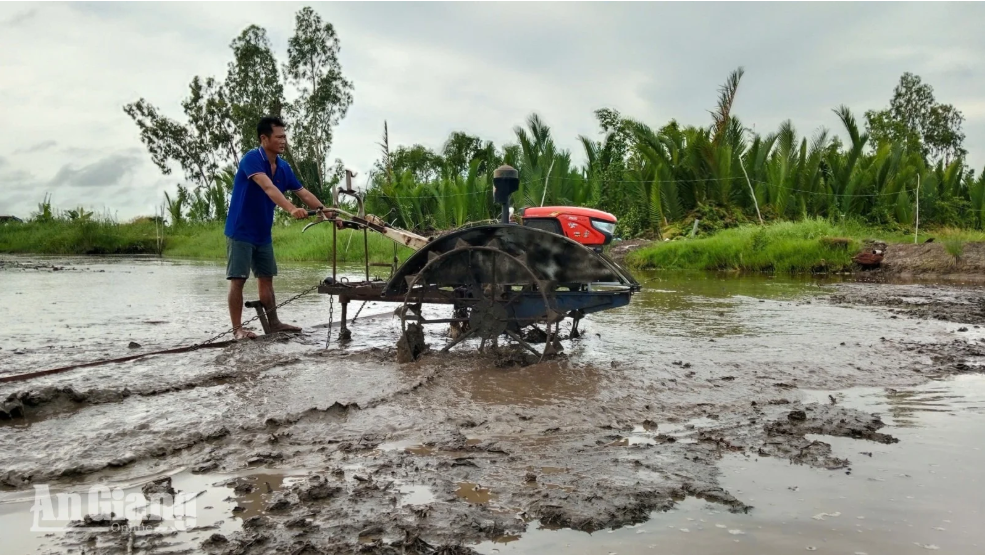
After months of shrimp farming, farmers in the U Minh Thuong region begin planting rice on the land previously used for shrimp farming. These days, people focus on preparing the land, getting the seeds ready, checking the water source, and planting according to the seasonal schedule. The RVT, ST24, and ST25 varieties are preferred to ensure fragrant rice quality and meet market demands.
Before sowing, farmers focus on plowing, removing acidity and salinity from the soil, leveling the field surface, and regulating water appropriately. Low rainfall during the sowing period helps to minimize seed damage and washing away, resulting in relatively uniform germination across many areas.
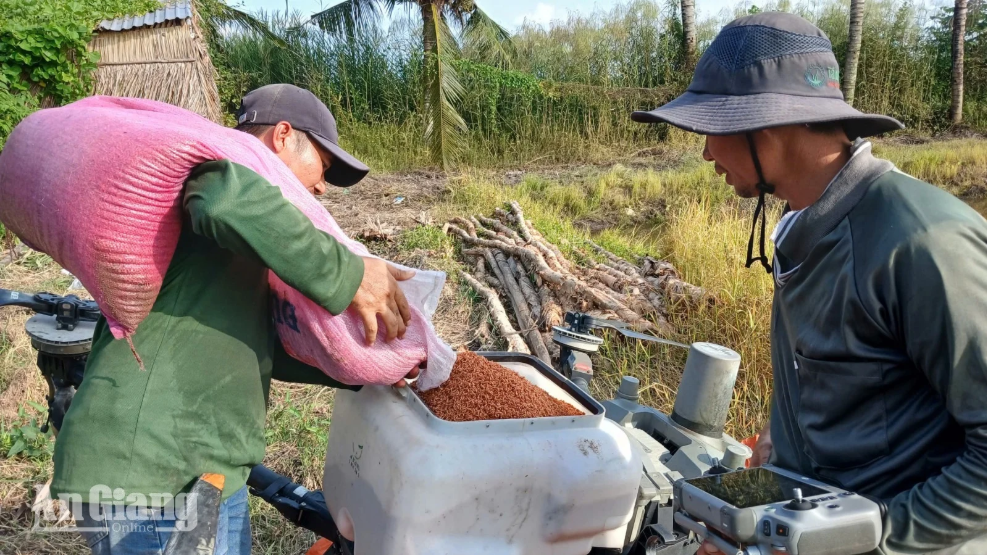
In Hamlet 15, An Bien Commune, Mr. Nguyen Van Cuong monitors the weather via a mobile application, adheres to the planting schedule, and proactively manages irrigation water. He also uses drones for sowing, helping to distribute seeds evenly, reducing the amount of seeds and labor required.
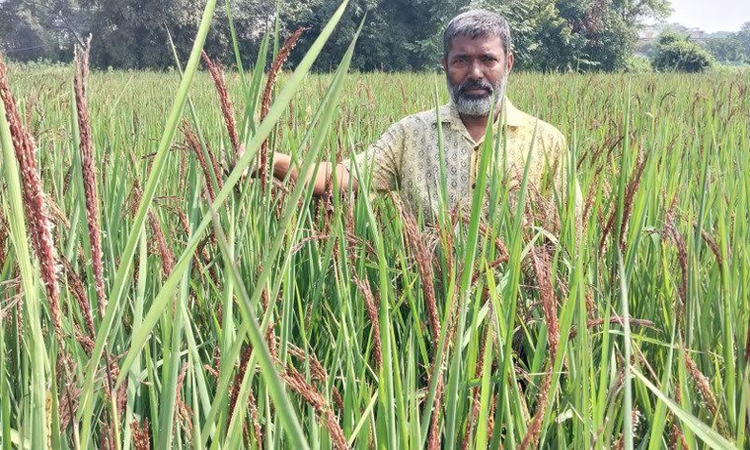
“Thanks to careful land preparation and timely planting, the rice fields are developing quite well, requiring little replanting. This season, I chose the RVT variety because of its fragrant rice quality, hoping to sell it at a good price and increase my family’s income,” Mr. Cuong said.
Reduce costs to maintain profitability.
Even with favorable planting conditions, the effectiveness of the rice crop depends on selling prices, fertilizer and pesticide costs, and labor. Therefore, many farmers are recalculating the amount of supplies used, combining farming experience with soil improvement solutions to reduce costs.
Mr. Nguyen Van Khoi, residing in Xeo Duoc hamlet, An Bien commune, said that he focuses on thorough land preparation, sparse sowing, supplementing with organic fertilizers, and using biological products to support rice root development, contributing to soil improvement and reducing acidity. According to him, uniform rice growth and efficient utilization of soil nutrients will help reduce the amount of chemical fertilizers and save costs.
However, the ability of individual households to reduce costs is limited due to high input material prices. Mr. Khoẻ hopes that the government will implement solutions to regulate the market and support raising the price of commercial rice so that farmers can make a profit and feel secure in their production.
With his newly sown rice crop, which is over 10 days old, Mr. Ho Van Sang, residing in Xeo Duoc hamlet, An Bien commune, said that the rice is developing relatively well. However, the current rice price fluctuates around 5,800 – 6,200 VND/kg, depending on the variety and quality, forcing him to carefully consider the cost of care in the coming months.
Mr. Sang suggested that it is necessary to boost consumption and strengthen trade promotion to help businesses expand rice export markets, while stabilizing the prices of fertilizers and input materials to help farmers ensure profits after each harvest.

Farmers in An Bien commune are using drones to reduce labor costs and shorten the time needed for early-season planting.
Proactive response to drought and salinity
Besides cost and output considerations, weather patterns are also a factor that needs to be taken into account right from the start of the season. According to the meteorological and hydrological forecast cited in the article, El Niño is likely to maintain a very strong intensity from late 2026 to early 2027, increasing the risk of rainfall shortages, drought, and saltwater intrusion in some areas of Southern Vietnam.
According to the Department of Agriculture and Environment of An Giang province, for the 2026-2027 crop season, the province plans to plant nearly 79,080 hectares of rice, with an estimated yield of over 446,100 tons, concentrated in rice-shrimp farming areas and single-crop production areas. The recommended planting schedule is from August 25th to October 20th, 2026.
The agricultural sector advises farmers to continue monitoring weather forecasts, proactively store freshwater, check salinity levels, and regulate water use according to each stage of rice plant growth.
Sustainable rice production on shrimp farming land requires a combination of quality seed selection, mechanization, rational use of materials, and market linkages. When costs are controlled, output is stable, and production adapts well to weather conditions, farmers’ incomes have a chance to improve.
Text and photos: AN LAMSource: Báo An Giang
https://www.vietnam.vn/en/nong-dan-vung-u-minh-thuong-vao-vu-lua-tren-dat-tom-lo-chi-phi-va-dau-raPublished Date: October 22, 2026


 READ