Downloads
 Login
 Register

Tags
Making paddy pay: SKUAST-K’s bid to stem Kashmir’s rice cultivation decline
Khalid Gul
Mechanised farming promises 50% lower cultivation costs, while improved varieties target higher yields
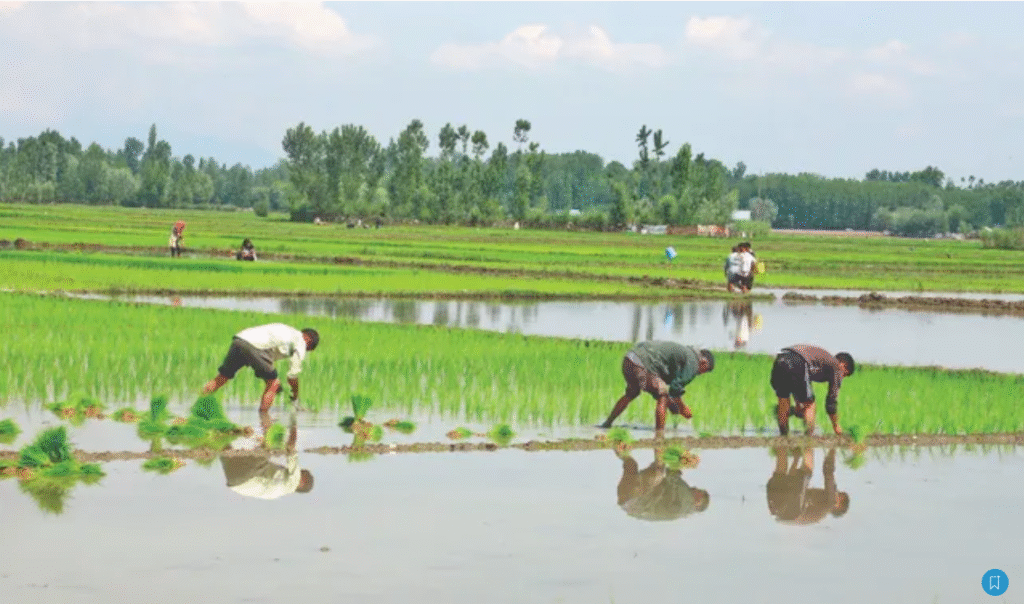
Srinagar, Oct 18: Construction and expanding apple orchards are eating into Kashmir’s paddy fields, while rising rice imports point to growing dependence on supplies from outside Jammu and Kashmir.
The Sher-e-Kashmir University of Agricultural Sciences and Technology of Kashmir (SKUAST-K) is exploring ways to make rice cultivation more profitable through mechanisation, disease-resistant varieties and improved traditional rice.
At its Mountain Research Centre for Field Crops (MRCFC) in Khudwani, Kulgam, the university has demonstrated mechanised dry direct-seeded rice (DSR), which scientists say can reduce cultivation costs by around 50% and water use by 30–40%.
DrTasneem Mubarak, professor of agronomy at MRCFC, said the demonstration compared DSR with conventional cultivation, assessing both yield and production costs.
“We demonstrated DSR on a large scale by mechanising it completely and then compared it with traditional rice cultivation practices. We studied not only the yield but also its economics,” Mubarak said.
Machinery was used for tilling, sowing, basalfertiliser application, harvesting and threshing, reducing dependence on manual labour.
“The objective was to reduce labour cost and ensure overall sustainability of rice cultivation using technology. So, the cost of cultivation came down substantially,” Mubarak said.
DSR involves sowing seeds directly in the field instead of raising seedlings in a nursery and transplanting them.
Dr Mubarak said the method could also ease pressure on irrigation resources.
“Since water availability for irrigation remains a major problem during rice cultivation, particularly at the sowing and transplanting stages, this technology needed less water with climate change and depleting water resources. So, we can conserve 30 to 40 per cent of water,” he said.
Dr Mubarak said DSR could also reduce greenhouse gas emissions by limiting prolonged flooding of rice fields, though the extent of the reduction would depend on field conditions and cultivation practices.
Weed control remains a challenge in direct-seeded rice.
Dr Farooq Ahmad Sheikh, professor of plant breeding and genetics at SKUAST-K, said timely herbicide application was important to protect yields.
“Herbicides, or weedicides, can help control weeds and reduce the need for manual labour. However, their effectiveness depends on timely and appropriate application. Poor weed management can reduce yields and offset the savings from mechanisation,” Dr Farooq said.
Dr Mubarak said the university’s extension wing and the Agriculture Department would reach out to farmers promote the technology.
Its performance and economic benefits will need to be assessed on farmers to’ fields.
Disease-resistant varieties target crop losses
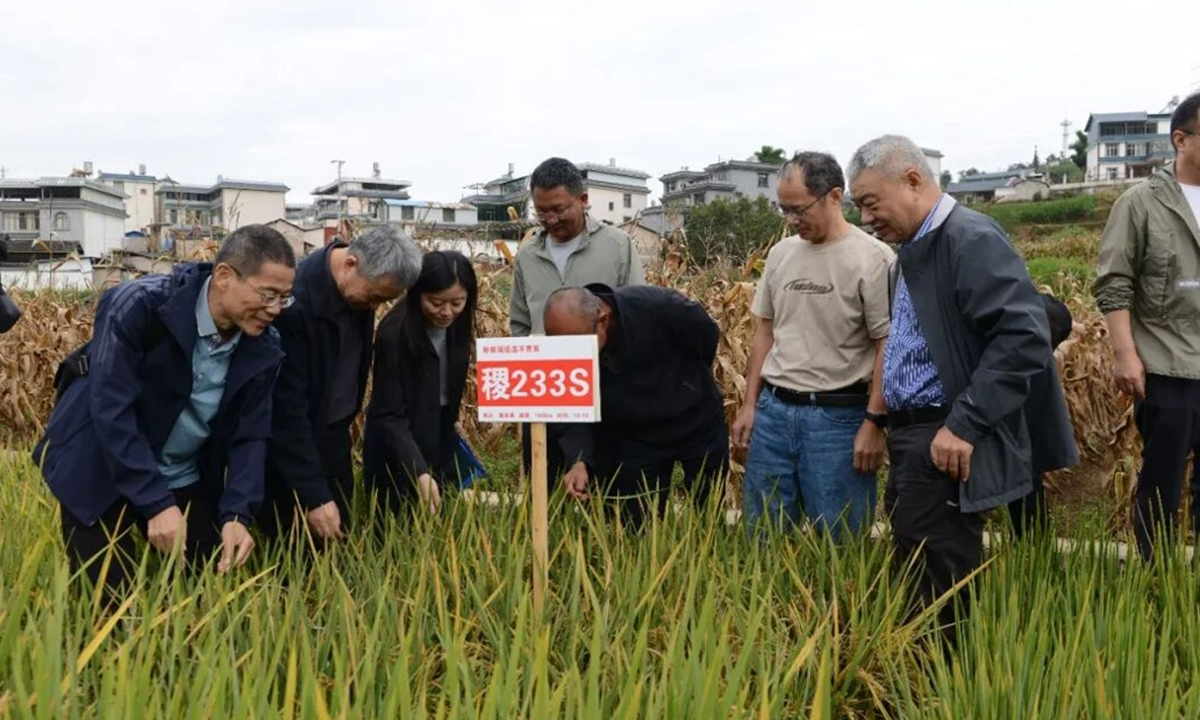
SKUAST-K is developing rice varieties suited to Kashmir’s plains and mid- and high-altitude areas, focusing on yield, grain quality and resistance to rice blast, a fungal disease that can damage crops.
Dr Farooq said Shalimar Rice 4, popularly known as the “10-tonne variety”, had a potential yield of around 10 tonnes per hectare under suitable conditions.
The university has also developed improved genetic lines resistant to blast.
“A proposed blast-resistant Kashmiri Basmati variety, Sugan-1, is undergoing mini-kit trials with the Agriculture Department in Tanghdar, Kupwara.”
“We will send a proposal, following which it would be released by next year, 2027,” Dr Farooq said.
He said Sugan-1 could fetch around Rs 100 per kilogram, depending on grain quality and market conditions.
SKUAST-K is also working to revive a blast-resistant red rice variety that could potentially command around Rs 150 per kilogram.
These are indicative prices, not guaranteed farm-gate rates.
The university is also working to conserve and expand traditional varieties, including Mushkbudji, an aromatic rice associated with Sagam in Kokernag, and Kashmiri Basmati.
Paddy acreage falls as apple cultivation expands
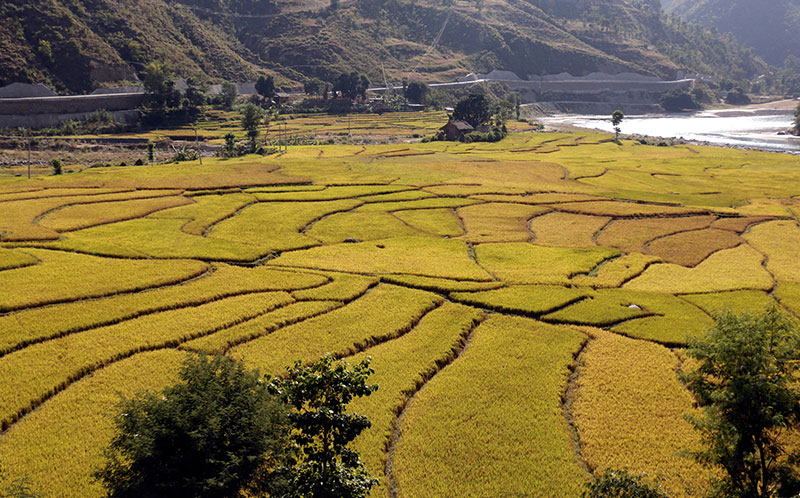
Jammu and Kashmir’s paddy area declined from 304,500 hectares in 2015-16 to 258,840 hectares in 2024-25, a loss of 45,660 hectares, or nearly 15%.
Over a longer period, apple cultivation increased from 107,930 hectares in 2004-05 to 173,073 hectares in 2024-25, a rise of around 60%.
Dr Mubarak said not all paddy fields were suitable for orchards.
“Low-lying land with high moisture content often favours rice, while excess moisture in orchards could cause root rot and other diseases,” he said.
A Landsat-based study published in 2019 found that agricultural land in the Kashmir Valley declined by around 28% between 1992 and 2015, while plantation cover increased by about 88%.
A separate study of the Kashmir Himalaya between 1990 and 2017 found cropland had declined by nearly 5%, while horticulture expanded by around 4.3%. The studies identified economic, demographic and natural factors behind the changes and raised concerns about food security.
Government data show that rice supplies from outside Jammu and Kashmir increased from 3.74 lakh tonnes in 2022-23 to 4.36 lakh tonnes in 2023-24 and 4.86 lakh tonnes in 2024-25. The supplies come largely from Punjab and Haryana through the Food Corporation of India.
With cultivable land accounting for just 4.4% of Jammu and Kashmir’s geographical area, the continued loss of agricultural fields adds to pressure on local food production.
For SKUAST-K, the challenge is to turn research into better returns for farmers. Mechanisation and improved varieties could help sustain paddy cultivation, but success will depend on reliable yields, access to machinery and quality seeds, technical support and dependable markets.
The decisive test will be whether the reported savings and improved varieties translate into higher net returns on farmers’ fields.
https://www.greaterkashmir.com/kashmir/making-paddy-pay-skuast-ks-bid-to-stem-kashmirs-rice-cultivation-decline-12688102/ampPublished Date: October 19, 2026


 READ