Downloads
 Login
Login
 Register

Tags
Researchers launch low-emission rice farming study
The study began in April 2026 at an experimental field operated by IPB University and will run for one year under controlled conditions.
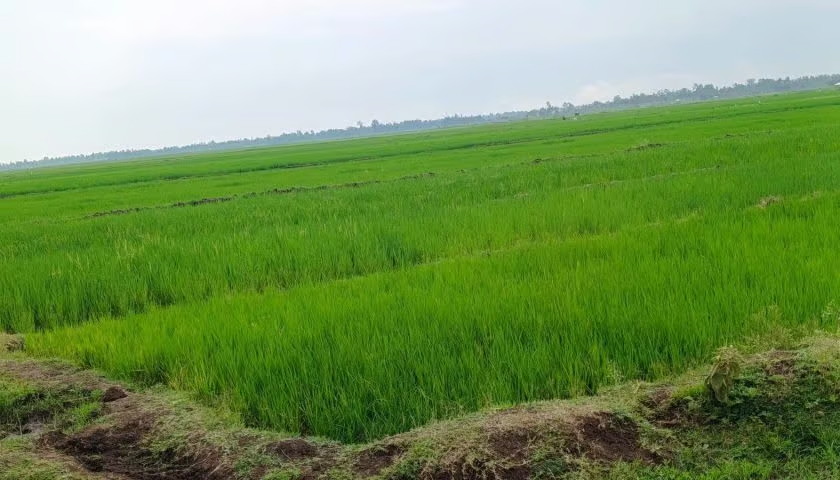
INDONESIA – Machinery manufacturer PT Yanmar Diesel Indonesia, decarbonization technology firm Faeger Co. Ltd., and IPB University have initiated a joint research project to evaluate low-emission rice farming practices.
Commencing at an experimental field facility operated by IPB University in West Java, the study investigates whether combining Alternate Wetting and Drying (AWD) irrigation techniques with soil-incorporated biochar can significantly suppress greenhouse gas emissions while preserving crop yields.
Rice cultivation forms a foundational pillar of food security across Southeast Asia, yet standard continuous-flooding methods generate substantial atmospheric methane due to prolonged anaerobic soil conditions.
Furthermore, agricultural residues such as rice husks generated during post-harvest milling remain widely underutilized or burned, contributing to local pollution and missing key circular-economy opportunities.
The field trial directly addresses these dual environmental bottlenecks by establishing an integrated management approach.
The primary technical framework relies on pairing AWD irrigation protocols with carbon-rich biochar derived from agricultural waste.
By periodically allowing paddy fields to dry rather than keeping them continuously submerged, AWD disrupts the activity of anaerobic methanogenic microbes, reducing methane production at the source.
Concurrently, adding pyrolyzed rice husk biochar into the soil structure sequesters carbon long-term, enhances water and nutrient retention, and improves overall soil resilience.
Researchers will generate comprehensive empirical data on methane mitigation rates, long-term carbon storage capacity, and agronomic yield stability.
According to representatives from IPB University’s Centre for the Development of Engineering Sciences for Tropical Agriculture, combining controlled water regimes with recycled crop residues provides a realistic pathway to lower agricultural carbon footprints without threatening farmer livelihoods or harvest output.
The project’s findings are intended to establish foundational standards for future agricultural carbon-credit verification models, which could eventually offer smallholders secondary revenue streams through carbon accounting.
Yanmar and Faeger confirmed plans to continue collaborating with Indonesian research bodies, private enterprises, and regional agricultural stakeholders to scale low-carbon farming solutions across broader tropical Asian growing regions.
https://millingmea.com/researchers-launch-low-emission-rice-farming-study/Published Date: August 27, 2026


 READ
READ