Downloads
 Login
Login
 Register

Tags
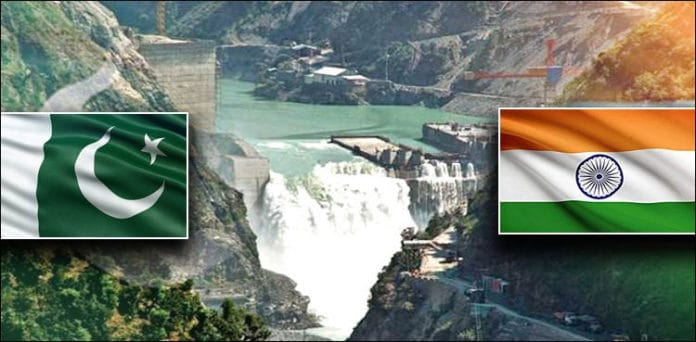
IWT continued violations by India threatens KP’s rice economy
By Fakhar-e-Alam PESHAWAR, Jun 21 (APP):As the first rays of sunlight spread across the fertile fields of Swabi district, 66-year-old farmer Zafar Ali wades through ankle-deep water, guiding labourers and family members as they sow rice seedlings on his five-acre farm amid uncertainty due to Indus Water Treaty (IWT) violations by India. Beneath the routine bustle of the planting rice season in Khyber Pakhtunkhwa lies a growing worries among farmers.
By Fakhar-e-Alam
PESHAWAR, Jun 21 (APP):As the first rays of sunlight spread across the fertile fields of Swabi district, 66-year-old farmer Zafar Ali wades through ankle-deep water, guiding labourers and family members as they sow rice seedlings on his five-acre farm amid uncertainty due to Indus Water Treaty (IWT) violations by India.
Beneath the routine bustle of the planting rice season in Khyber Pakhtunkhwa lies a growing worries among farmers about the future of one of Pakistan’s most valuable crops if IWT violations prolonged that threatened KP’s rice economy.
With demand for Pakistani Basmati rice rising in domestic and international markets, farmers in Khyber Pakhtunkhwa feared that any disruption in river flows resulting from continued IWT violations by India since April last year could jeopardize their livelihoods and threaten food security.
Standing near the banks of the Indus River, Zafar Ali watches the flowing water that has sustained generations of farmers like him in the region.
“This God gifted river is our lifeline as it feeds our families for centuries,” he said. “From sowing to harvest, rice depends on a reliable supply of water. If water availability becomes irregular, production will decline and farmers will suffer immensely.”
As temperatures climbed in Swabi, Ali wrapped a wet towel around his head to avoid heatstroke and urged workers to speed up planting before the afternoon heat intensified.
“People often see rice on dining tables, but they don’t realize how much effort and water goes into producing every grain,” he remarked.
“A shortage of water would not only affect thousands of farmers but also millions of people whose livelihoods depend on agriculture in Pakistan.”
Swabi, Nowshera and adjoining districts of KP rely heavily on irrigation fed water by Indus river system and the Tarbela dam, one of the world’s largest earth-filled dams.
Rice farmers said that dependable water supplies are essential for maintaining yields and meeting growing export demand of exporters.
“Pakistani Basmati rice is highly sought after in the Gulf, Europe and Central Asia,” Zafari Ali said. “Once harvesting begins, buyers come quickly because they know the quality of Pakistani rice.”
According to Dr. Abdul Rauf, Director General Agriculture Research Khyber Pakhtunkhwa, rice remains one of the most water-intensive crops grown in Pakistan and was being prefered in world due to its supreme quality.
“Water plays a vital role in every stage of rice development, from seed germination and nutrient uptake to flowering and grain formation,” he told APP, it also contributes in preventing stunting in children and lactating mothers.
“Without adequate water during key growth rice stages, both yield and grain quality can be significantly affected.”
Dr Rauf said that research studies showed that producing one kilogram of rice may require between 2,500 and 5,000 liters of water, depending on soil conditions, climate and farming practices.
“Rice cultivation traditionally relies on flooded fields, which consume considerably more water than most cereal crops,” Dr. Rauf explained. “Any prolonged disruption in water availability can directly impact rice production.”
Agricultural researchers are increasingly focusing on techniques that can help farmers use water more efficiently.
Dr. Rauf highlighted methods such as Alternate Wetting and Drying (AWD), the System of Rice Intensification (SRI) and precision irrigation, which have shown promising results in reducing water consumption while maintaining yields.
“We are also working on drought-tolerant rice varieties and improved soil moisture management practices amid IWT violations,” he said. “The objective is to strengthen farmers’ resilience against climate-related stresses and water shortages.”
Agriculture experts warned that climate change is already placing additional pressure on Pakistan’s water resources through changing rainfall patterns, temperatures and has increased evaporation.
“Climate change, global warming, rising temperatures and glaciers melt coupled with IWT violations, poses a serious challenge to sustainable rice production in the coming years,” Dr. Rauf said.
Rice remains a cornerstone of Pakistan’s agricultural economy, he said, adding recent annual harvests have averaged between 9.8 and 10 million metric tons, placing Pakistan among the world’s leading rice producers and exporters.
Punjab accounts for about 61 percent of the country’s rice-growing area, mainly producing premium Basmati varieties, while Sindh contributes around 31 percent through high-yielding rice cultivation.
He said Pakistan exports more than half of its rice production, generating billions of dollars in foreign exchange each year.
Senior agricultural economist and former Chairman Economics Department at University of Peshawar Dr. Muhammad Naeem, when contacted for comment, said protecting water resources amid IWT violations is essential not only for farmers but for the agro based national economy.
“Rice exports are a major source of foreign exchange earnings and any significant decline in production due to water shortages could have serious repercussions for farmers incomes, export revenues and food security of Pakistan.”
Dr. Ejaz Khan, former Chairman International Relations Department at University of Peshawar said that India was using water as a weapon of war under a derprooted conspiracy plotted to create reign of hunger and starvation in Pakistan.
“India cannot unilaterally place the historic 1960 treaty in abeyance. The latest landmark ruling of International Court of Arbitration (ICA) has reaffirmed that international commitments remain binding on India and that water disputes must be resolved through agreed legal mechanisms in the treaty,” he told APP.
“The dispute is not simply about construction of dams on western rivers. It is about ensuring that India must adhere to procedures and framework laid down in IWT that prevent unilateral actions and preserve mutual trust,” he explained.
He said that four wars were fought between the two countries, and consequences of another on water will not only destabilize the South Asia but its negative impact will go beyond of it.
Dr Ejaz Khan said that World Bank has obtained guarantee to protect the historic treaty, and great responsibility rest on it to force fascist Modi Govt to immediately reserve his illegal decision and restore the treaty.
For farmers like Zafar Ali, however, the issue is deeply personal. His relatives and labouers whom helps manage the family’s farm, said uncertainty over water supplies has become a recurring concern among thousands of agriculture crops growers, beekeepers, fishermen and livestock owners.
“Every planting season begins with hope, but now there is also worry,” he said while transplanting rice seedlings. “Farmers can handle hard work, but we cannot control the availability of river water.”
Nearby, labourer Nasir Khan echoed those concerns and said that agriculture feeds our families, he said. “If crops fail because of water shortages, it affects entire communities, not just farmers.”
As another day of planting continues under the summer sun, the green fields of Swabi stand as a reminder of both Pakistan’s agricultural strength and its dependence on a resource that farmers say must remain reliable and sustainable.
For now, the river water continues to flow, and with it, the hopes of thousands of rice growers across Khyber Pakhtunkhwa to live with dignity in society.
https://www.app.com.pk/featured/iwt-continued-violations-by-india-threatens-kps-rice-economy/Published Date: June 22, 2026


 READ
READ