Downloads
 Login
Login
 Register


Tags
Pakistan sets key summer crop targets amid global food, energy pressures
Arab News Pakistan
- Targets include rice 9.17 million tons, cotton 9.64m bales, sugarcane 80.3m tons
- Middle East crisis has fueled energy costs, raising risks to food prices, farm inputs, inflation
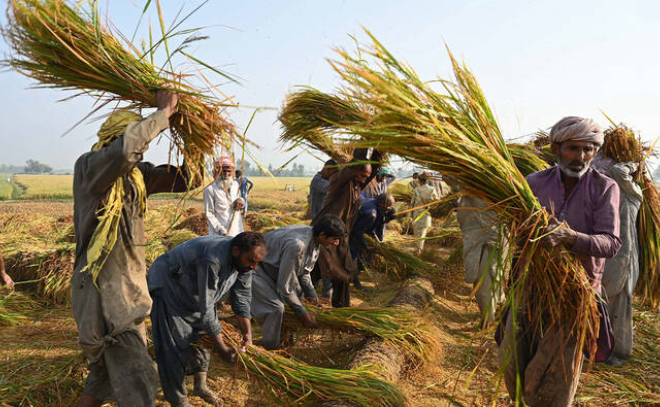
Pakistan has set production targets for key summer crops for the 2026–27 season, including 9.17 million tons of rice and 9.64 million bales of cotton, the national food security ministry announced on Tuesday, as the government looks to support agricultural growth and stabilize food supplies.
Agriculture is a cornerstone of Pakistan’s economy, and output levels are closely watched for their impact on food prices, rural incomes and exports, particularly for crops such as rice and cotton.
The new targets come as global food and energy markets remain volatile following the Middle East conflict, which has disrupted shipping through the Strait of Hormuz and raised fuel costs for import-dependent countries like Pakistan, feeding into fertilizer prices, transport costs and inflation. Pakistan has also faced periodic crop pressures from erratic weather in recent years, making output targets critical for domestic price stability and export earnings.
“Food availability in Pakistan is generally adequate, however affordability remains a key challenge, especially for low-income groups,” Federal Minister for National Food Security Rana Tanveer Hussain said in a statement after he chaired a meeting of the Federal Committee on Agriculture for the upcoming Kharif, or summer planting, season.
The government has set a rice production target of 9.17 million tons over 3.39 million hectares, while maize output is targeted at 9.77 million tons over 1.5 million hectares, the statement said.
Sugarcane production is projected at 80.3 million tons from 1.14 million hectares, and cotton output is targeted at 9.64 million bales over 2.16 million hectares.
Officials also reviewed input availability for the upcoming season, noting that water supply at canal heads is expected to reach 67.45 million acre-feet, while seed and fertilizer supplies are likely to remain adequate.
However, authorities warned that soil moisture remains under stress following earlier dry conditions, and that extreme weather events such as hailstorms and heavy winds could disrupt crop harvesting in some regions.
To support the sector, institutional agricultural credit is expected to rise to Rs3,062 billion ($10.9 billion) in fiscal year 2026, up 19 percent from the previous year, according to the State Bank of Pakistan.
The government said it would continue to focus on improving productivity, expanding access to finance and promoting modern farming practices to strengthen long-term growth in the agriculture sector.
https://www.arabnews.com/node/2639865/ampPublished Date: April 15, 2026


 READ
READ