Downloads
 Login
Login
 Register

Tags
Why are Indian farmers protesting trade deal with US?
FP Explainers
Samyukt Kisan Morcha, an umbrella group of farmers’ associations, has called for ‘Bharat Bandh’ on Thursday (February 12) to protest against the interim trade agreement between India and the US. Under the deal, New Delhi will reduce or eliminate tariffs on a wide range of US food and agricultural products. But why has this left Indian farmers anxious?
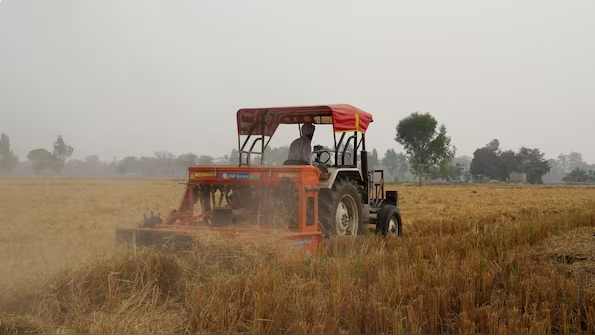
Farmer unions in India are planning to organise nationwide protests on Thursday (February 12) against the interim trade agreement with the United States. Samyukt Kisan Morcha (SKM), an umbrella group of farmers’ associations, has called for ‘Bharat Bandh’ amid fears that the trade deal threatens Indian agriculture, dairy and rural livelihoods.
While India has resisted the US pressure to broadly open its agricultural market, it has agreed to lower trade barriers on some farm goods. This has stoked worries among farmers and criticism by opposition parties.
We take a closer look.
What India-US trade deal says about agriculture
India and the US have released an interim framework for a trade agreement, which would lead to reduced tariff rates on Indian goods and deepen economic cooperation.
As per the framework, India will “eliminate or reduce tariffs on all US industrial goods and a wide range of US food and agricultural products.”
Under the agreement, India is expected to allow imports from the US of protein-rich distillers dried grains with solubles (DDGS), a byproduct of ethanol made from corn and other grains.
India’s tariffs on US agricultural products, which previously ranged between 30 and 150 per cent, will be cut to zero, reported Reuters.
India currently levies an 11 per cent duty on cotton imports, which could become duty-free.
How Indian farmers may be impacted
India importing distillers dried grains with solubles from the US is likely to benefit its nearly $30 billion poultry sector. However, domestic oilseed processors and soybean farmers could suffer if American imports increase.
India has surplus supplies of DDGS and a weakened demand for oilmeals such as soyameal. This has put pressure on Indian oilseed prices, forcing farmers to switch from soybean and peanuts to corn and rice, noted Reuters.
As the supply of DDGS will increase further, India’s ethanol producers may earn less from DDGS sales in the domestic market.
India’s allowing the entry of duty-free imports of soyoil from the US has also raised concerns. However, these imports will reportedly only be under a tariff-rate quota, meaning the amount above the quota will be subject to standard tariffs. This is being done with the aim of protecting domestic producers.
Duty-free imports of cotton from the US could influence domestic prices. But the impact is likely to be limited, as only shipments of extra-long staple cotton have been permitted, which are also under a quota.
Under the trade deal, India will allow imports from the US at a concessional duty of 25 per cent and a minimum import price of Rs 80 per kg. This would prevent shipments below Rs 100 per kg, which would help protect Indian farmers, reported Reuters.
Indian growers of tea, coffee, spices and fruits are set to benefit from the trade deal, as they will get duty-free access to the US.
?im=FitAndFill=(596,336))
The US reducing import duties on rice to 18 per cent is also expected to benefit exporters of both premium basmati and non-basmati varieties.
Farmers to go on strike
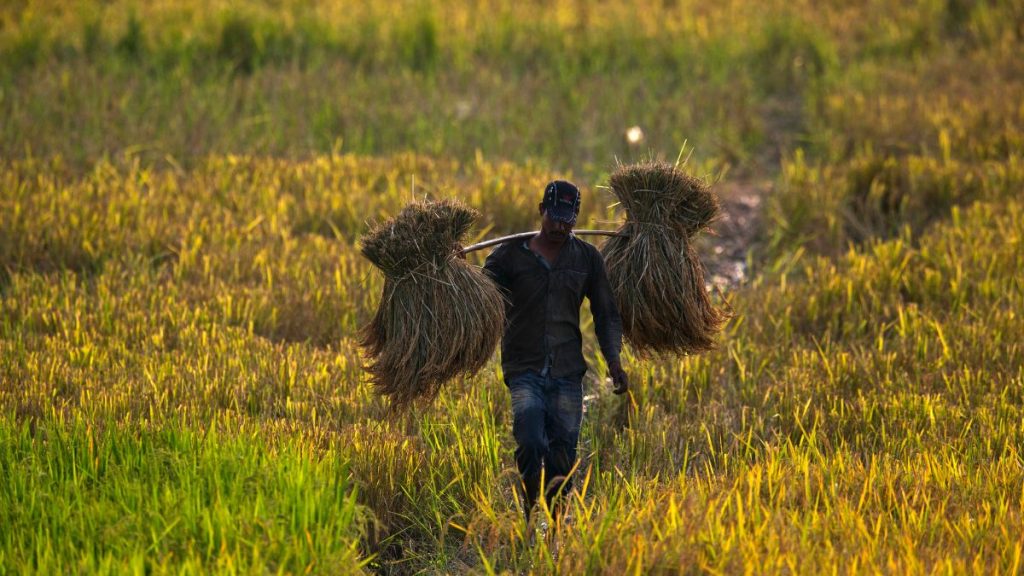
Indian farmers are concerned that removing or reducing trade barriers would lead to markets being flooded with cheap agricultural, milk and dairy products from the US.
SKM national coordination committee member Dr Darshan Pal told Indian Express, “Indian agriculture would be left hanging at the mercy of multinational corporations, undermining food sovereignty, rural employment and long-term sustainability.”
“Earlier restrictions on milk from animals fed with meat and animal by-products acted as safeguards. These protections are now being diluted, posing a direct threat to India’s vast dairy sector that supports millions of rural households,” he added.
In India, 86 per cent of farmers are small and marginal, with landholdings of less than two hectares (five acres) of land.
Farmer unions fear US corporations could monopolise control over India’s animal feed market. They also warn that the deal could lead to the entry of imports of GM foods and seeds, which pose a risk to soil fertility, biodiversity and domestic seed systems, reported Indian Express.
Imports of US wheat, soybean oil, ethanol, fresh fruits such as apples, pineapples and coconuts, and dry fruits, including cashew, could also impact Indian farmers, with those in Jammu and Kashmir, Himachal Pradesh, Arunachal Pradesh and the North-Eastern states among the worst-hit, according to SKM leaders.
The outfit has urged political parties, farmers’ organisations, agricultural workers’ unions, trade unions and mass organisations to oppose what it has described as an“anti-national” trade agreement.
SKM has warned that the current form of the agreement could trigger large-scale and sustained protests across India.
Bharatiya Kisan Union (BKU) leader Rakesh Tikait has said his organisation would support nationwide strikes on Thursday. Expressing fears that the US could dump subsidised goods in the Indian market, he warned, “Our farmers will not be able to sell their produce.”
Speaking to ANI, SKM convenor Hannan Mollah said Indian produce would not be able to compete with a potential influx of US goods. “They will flood our markets with cheaper goods. Our country will not be able to compete and our farmers will be finished,” he said.
Political parties also criticised the interim trade deal with the US, with Congress MP Jairam Ramesh claiming it allows a “backdoor entry” for US imports. “India will slash import duties to help American farmers at the cost of Indian farmers,” he posted on X.
Aam Aadmi Party (AAP) Rajya Sabha MP Sanjay Singh brought to light the spike in US tariffs on Indian goods, from around 3 per cent earlier to 18 per cent. “Opening the market for agriculture is like a death sentence for farmers,” he alleged.
The Indian government has allayed fears of the farmers, with Commerce Minister Piyush Goyal emphasising that sensitive agricultural products such as dairy and poultry have been kept out of trade talks. He also asserted that India made no concessions on imports of genetically modified crops from the US.
Goyal said the agreement would be “etched in golden letters” in India’s economic history. “I can say categorically that the interests of farmers and the dairy sector have been protected,” he said.
The minister said products such as milk, cheese, butter, ghee, yoghurt and whey, along with staples including wheat, rice, maize, millets, barley, oats and sorghum, have been excluded from tariff concessions.
In a post on X, Goyal said the deal would “safeguard the interests of domestic farmers, strengthen local agriculture through preferential access to a large market, and advance the goal of a self-reliant India.”
India will also phase out the elimination of tariffs on certain American agricultural products to help Indian farmers adapt.
“Phased elimination of tariffs over up to ten years has been adopted for certain intermediate products used by India’s food processing industry and sourced from multiple countries. These include albumins; certain oils such as coconut oil, castor oil and cotton seed oil; hoofmeal; lard; stearin; modified starches; peptones and their derivatives; and plants and parts of plants etc. This extended timeline provides adequate adjustment space for domestic stakeholders,” the Press Information Bureau said in a recent statement.
It added that the agricultural market access has been calibrated based on product sensitivity, following India’s approach in trade agreements with other countries or blocs.
With inputs from agencies
https://www.firstpost.com/explainers/indian-farmers-protest-trade-deal-us-tariffs-13978615.htmlPublished Date: February 12, 2026


 READ
READ