Downloads
 Login
Login
 Register

Tags
UAE: How Ras Al Khaimah farmer grows rice, yields 60kg a year
The rice cultivation process starts with planting seeds in a nursery for up to 45 days
By: Azza Al Ali
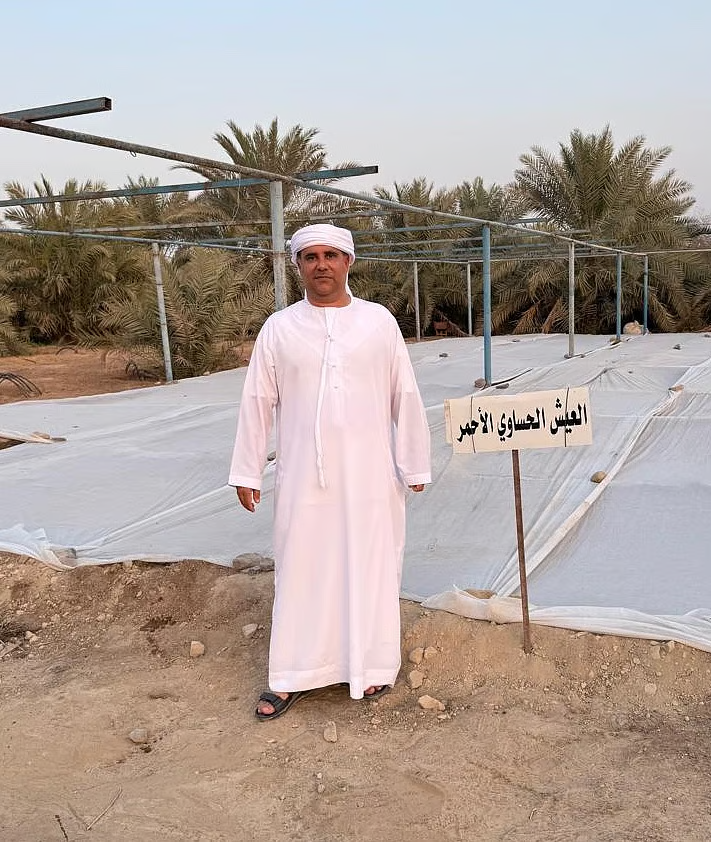
Despite the desert climate, Nasser Saeed Al Mazrouei has turned a farming experiment into a small but successful rice production effort, yielding 60kg annually and showing new possibilities for local agriculture.
The rice planting began as an experiment last year among a group of friends with experience in wheat farming. “We had been planting wheat for about eight or nine years. Then we decided to try rice. We planted on our farms and tested different methods,” Al Mazrouei said.
Although the idea started as a group effort, Al Mazrouei developed the project independently on his land. “I bought the seeds from fellow farmers Dr Ayoub Ahli, Salem Saif Al Yamahi, and Nasser Musbeh Al Qaydi, and the seeds were imported from India and Pakistan,” he said.
Rice growing process
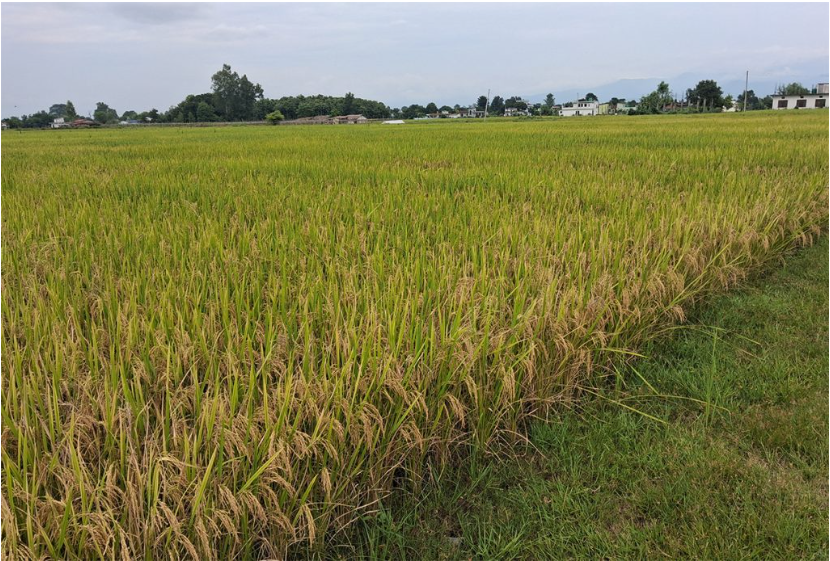
The rice cultivation process starts with planting seeds in a nursery for up to 45 days. Once ready, the seedlings are transferred to a larger field, where they are grown using organic fertilisers and fresh water. “No chemicals are used,” Al Mazrouei emphasised.
Al Mazrouei prepared the land using clay collected from nearby dams, which helps retain water for extended periods. “Yes, rice requires large amounts of water, but we managed to overcome this issue by using clay soil, as it retains water for a long time,” he explained. “I use desalinated water because rice does not tolerate salinity,” he added. “I also use only organic fertilisers.”
Watch the video of the first phase which with planting Basmati and Hasawi rice seeds:
The farm uses no chemical inputs and relies on a drip irrigation system. “The cost is lower because we use modern irrigation tools specifically drip irrigation,” Al Mazrouei explained.
It currently grows four rice varieties: Basmati, Hasawi, Anbara, and a dark brown type. A single kilogram of Basmati seeds can yield up to 30kg of rice. “The growing method is the same for all types,” he noted.
“The season typically lasts from 4 to 5 months,” Al Mazrouei said, noting that rice is usually planted in mid-June and harvested by October. His farm spans approximately 300×300 metres. Al Mazrouei also visits the farm early in the morning and again in the evening to check on all crops and ensure proper growth.
“With determination and perseverance, there were no challenges. I love farming, and farming gives back more than you can imagine to those who are passionate about it,” he said, summing up his mindset and the drive behind the project.
Al Mazrouei said he has seen growing interest from the local community and is planning to expand production. “Yes, we welcome all groups to visit the farm especially school students,” he said.
“If the harvest increases, I will look into selling the rice locally,” he added. After a successful first season, he now plans to introduce more varieties.
“Last year, I planted Basmati rice. I’ll add two more types of rice this year and see how well they perform,” he said.
He believes the UAE’s environment holds potential for crops not traditionally grown in the region. “There’s nothing impossible. We try, and the rest is up to God,” he said.
The farm remains an entirely private initiative. “It’s my land, my effort,” Al Mazrouei said. “I’ve succeeded so far, and we’ll keep working to develop it further.”
https://www.khaleejtimes.com/uae/ras-al-khaimah-rice-farmer?_refresh=truePublished Date: June 27, 2025


 READ
READ