Downloads
 Login
Login
 Register

Tags
The rice shield: Leveraging food security against the energy crisis
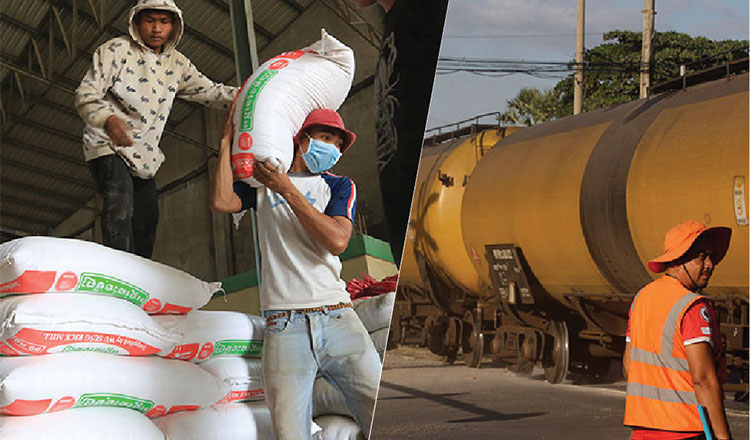
In 2026, the intersection of energy and agriculture has become a primary front for national security. While the Strait of Hormuz blockade is often viewed as a simple fuel supply disruption, for food-producing nations, it is more accurately a crisis of fertiliser, logistics, and irrigation.
Cambodia, however, stands in a position of unique strength. Guided by the natural law that people can stop travelling but cannot stop eating, the Kingdom can transform its agricultural abundance into a strategic shield.
As a major food producer, Cambodia possesses significant “soft power” to ensure national prosperity even as global energy markets fluctuate. The country’s current standing is formidable. In 2025, Cambodia exported a record 940,321 tonnes of milled rice—a 45.6% increase over the previous year. Reaching 75 international destinations through 68 companies, these exports generated $602.4 million. Primary markets included the European Union (36%), China, and various ASEAN member states.
To secure its future, Cambodia must move beyond cash transactions towards strategic barter. By engaging in “food-for-energy swaps,” the Kingdom can negotiate directly with energy-rich but food-poor nations—such as those in the Gulf and in Southeast Asian region—to trade rice for guaranteed, fixed-price oil contracts. Formulating rice-for-refined-fuel agreements in exchange for strategic reserves at pre-crisis rates would create a robust “hedge” against the current $2.4 billion fuel import drain. This ensures that even if global supply lines remain disrupted, Cambodia will possess sufficient fuel to move the 2026 harvest. Furthermore, within ASEAN, Cambodia’s role as a vital rice provider gives it the leverage to secure preferential access to regional energy grids and emergency reserves.
Beyond diplomacy, Cambodia must take internal action to mitigate the $2.4 billion annual drain on its budget caused by fuel imports. The strategy is clear: electrify the “Rice Bowl” by transitioning agricultural infrastructure to domestic renewable energy. This involves a partial utilisation of solar irrigation, instead of fully relying on thousands of diesel-powered water pumps in provinces like Battambang and Prey Veng.
In response to fuel vulnerability, the Ministry of Mines and Energy is fast-tracking renewable energy projects, most notably the 1GWh Battery Energy Storage System (BESS) launched in Pursat province in March. Featuring a 500 MW output and 1,000 MWh of capacity, this project uses grid-forming technology to allow for 24/7 solar power. By providing reliable energy for industry and rice milling, this initiative serves as a pillar for reducing the multi-billion-dollar fuel bill and reaching the 70% renewable energy target by 2030.
As transport costs rise, Cambodia must prioritise “crisis logistics” by shifting bulk transport from diesel trucks to energy-efficient rail and inland waterways.
The Royal Railway must level up its performance in transporting food stocks and agricultural produce for both domestic use and export.
Simultaneously, Cambodia should double down the development of inland waterway transport, including the construction of ports with actual technical know-how as opposed to ports that only have small, undeveloped areas beside rivers with licences that are only waiting to be sold through rent-seeking and speculation.
Domestic production of ships and barges for inland waterways should be an urgent task, and introduction of electric barges into the transport system should be an obvious choice. With advancements in lithium iron phosphate and semi-solid state batteries, electric barges can now reliably travel 150–300 kilometres on a single charge.
As an overarching logistic backbone, the ongoing development of Funan Techo Canal can stand as a critical survival asset.
Because water transport is significantly more efficient than road transport, shifting rice and agricultural produce exports to ships and barges will drastically reduce the energy footprint of Cambodian agriculture.
Finally, Cambodia’s path to prosperity lies in export value-addition. By shifting from raw grain exports to domestic processing, the country can retain vital economic value and jobs. This shift does more than boost GDP; it reduces the weight and volume of exports, saving the energy required for international shipping.
Through this combination of diplomatic leverage, rural electrification, partial solar-powered irrigation, and logistical modernisation, Cambodia can turn a global energy threat into a localised opportunity for enduring growth.
https://www.khmertimeskh.com/501872194/the-rice-shield-leveraging-food-security-against-the-energy-crisis/Published Date: April 1, 2026


 READ
READ