Downloads
 Login
 Register


Thailand and China Advance GI Protection for Thai Hom Mali Rice, Pomelo and Tamarind

Thailand and China are moving towards reciprocal geographical indication (GI) protection for six distinctive products, including three Thai agricultural commodities, as both countries seek to strengthen intellectual property cooperation and expand cross-border trade opportunities. The proposed registrations include Thung Kula Rong Hai Hom Mali Rice, Pak Phanang Siam Ruby Pomelo and Phetchabun Sweet Tamarind, with completion targeted for February 2027, subject to the outcome of the opposition process.
According to Thailand’s Department of Intellectual Property (DIP), the initiative is being implemented under the Thailand–China GI 3+3 pilot project, which involves three products from each country. The registration applications were simultaneously published by the Thai DIP and China’s National Intellectual Property Administration (CNIPA) on November 10, 2026, opening a 90-day period for objections.
If no valid objections are received, the registrations are expected to be completed in February 2027. The initiative would establish the first reciprocal GI registrations between Thailand and China, marking a significant development in bilateral intellectual property cooperation.
Three Thai Agricultural Products Seek GI Protection in China
The three Thai products selected for registration have established geographical identities and commercial potential, particularly in the Chinese market.
1. Thung Kula Rong Hai Hom Mali Rice
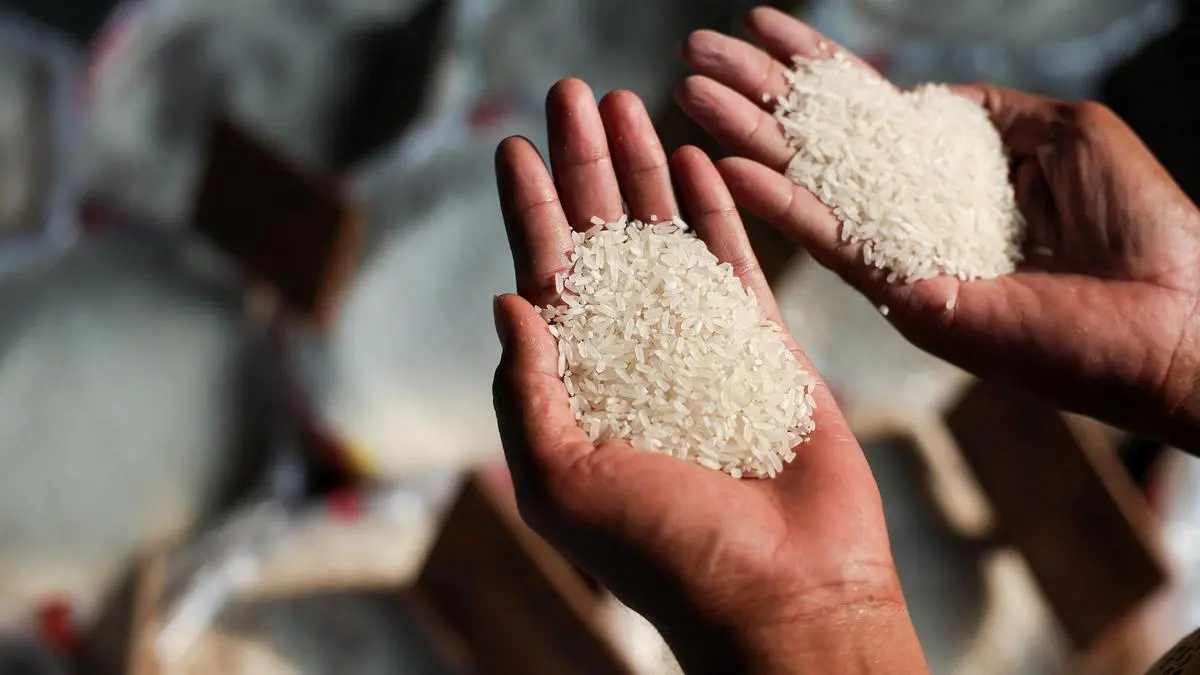
Thung Kula Rong Hai Hom Mali Rice is one of Thailand’s renowned premium jasmine rice varieties, recognized for its distinctive fragrance, slender grains and naturally soft texture after cooking.
The rice is cultivated across five northeastern provinces: Roi Et, Surin, Maha Sarakham, Yasothon and Si Sa Ket. Its distinctive characteristics are closely associated with the region’s geographical conditions, including its relatively dry climate and soil composition.
The product supports approximately 39,000 producers and generates an annual market value exceeding 2.39 billion baht, making it an important agricultural commodity for local communities.
2. Pak Phanang Siam Ruby Pomelo
Originating from Nakhon Si Thammarat province, Pak Phanang Siam Ruby Pomelo is distinguished by its sweet flavour and deep pink to ruby-red flesh.
The specialty fruit involves approximately 850 producers and generates an annual market value of more than 1.29 billion baht.
3. Phetchabun Sweet Tamarind
Phetchabun Sweet Tamarind is known for its thick, soft and chewy flesh, naturally sweet taste and distinctive aroma. It is one of the province’s signature agricultural products.
The industry supports approximately 13,800 producers, generating an annual market value exceeding 167 million baht.
Three Chinese Products Selected for GI Protection in Thailand
Under the reciprocal arrangement, China is seeking GI registration in Thailand for three products representing its traditional manufacturing and agricultural industries:
- Dehua White Porcelain: Originating in Fujian province, this traditional ceramic product is recognized for its white appearance, durability and intricate craftsmanship.
- Fenghuang Dancong Tea: Produced in Guangdong province, the tea is known for its distinctive floral fragrance, rich flavour and naturally sweet aftertaste.
- Kweichow Moutai Liquor: Originating in Guizhou province, this traditional Chinese spirit is produced using sorghum, wheat and water from the Chishui River, following a traditional fermentation, distillation and ageing process.
GI Protection Expected to Strengthen Farmers’ Income and Market Access
Thailand’s Department of Intellectual Property said the proposed registrations are intended to protect products whose quality, reputation and distinctive characteristics are closely associated with their geographical origins.
GI protection helps prevent unauthorized commercial use of registered geographical product names by producers whose goods do not meet the specified origin and production requirements. It also enables eligible producers to differentiate their products, strengthen brand recognition and potentially secure higher market value.
For Thai agricultural producers, obtaining GI recognition in China could strengthen consumer confidence, improve product positioning and create additional distribution opportunities in one of the region’s major consumer markets.
The three selected Thai products already contribute significantly to their respective local economies. International recognition could further support their commercial development while creating opportunities for farmers, processors and local businesses.
Thailand Seeks Further GI Recognition for Agricultural Exports
Thailand is also looking to expand the initiative beyond the initial six products. Representatives of China’s CNIPA are scheduled to visit Thailand on November 25, 2026, to discuss further cooperation and potential expansion of the GI partnership.
Future collaboration is expected to cover joint promotional campaigns, marketing initiatives and stronger connections between distribution channels in both countries.
Thailand’s DIP is also considering additional GI applications in China for other agricultural products, particularly aromatic coconuts and durian, which have established consumer demand in the Chinese market.
The Thailand–China GI initiative forms part of broader efforts to strengthen bilateral trade relations, protect distinctive agricultural products and improve international market access for local producers. For Thailand’s rice sector, potential GI recognition for Thung Kula Rong Hai Hom Mali Rice represents an important opportunity to strengthen the identity and commercial value of premium Thai jasmine rice in the Chinese market.
By RiceNewsToday | Sources: The Nation, Thailand’s Department of Intellectual Property (DIP)
Published Date: November 25, 2026



 READ