Downloads
 Login
Login
 Register


Tags
Thai rice exports seen at five-year low amid headwinds
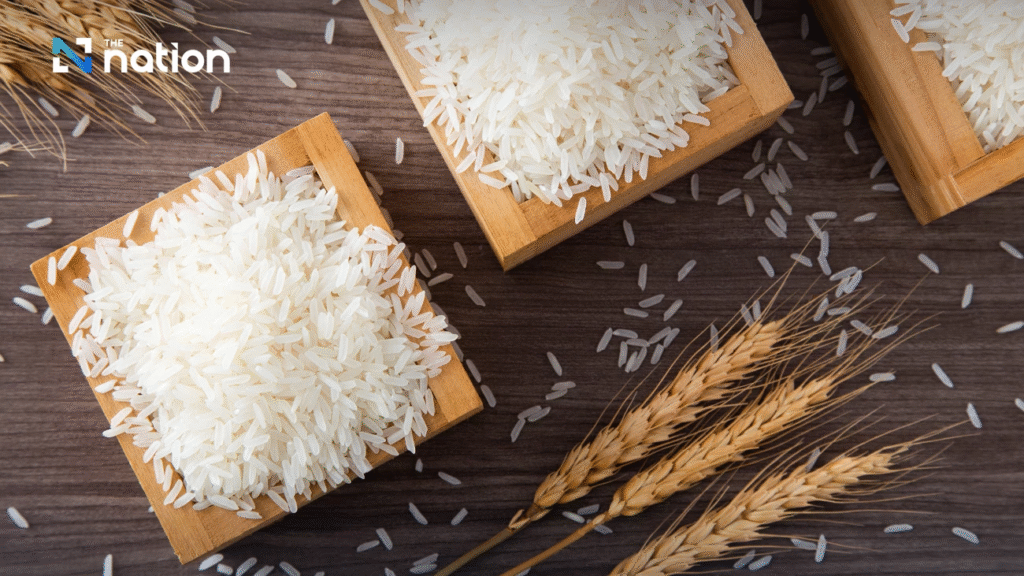
Thai rice exporters forecast 2026 exports at 7.03m tonnes, a five-year low, citing a stronger baht and potential US tariffs hitting competitiveness
Thai rice exporters are targeting 2026 rice exports of 7.03 million tonnes worth THB130 billion, urging the government to urgently address the exchange rate to reach 33–34 THB/USD, warning Thai jasmine rice could become the world’s most expensive and lose 15–20% of key markets.

Charoen Laothamatas, president of the Thai Rice Exporters Association, said Thailand’s rice exports in January 2026 totalled 530,287 tonnes, down from 643,144 tonnes in the same month a year earlier, a fall of 17.5%. Export value stood at THB9.707 billion, down 30.7%, or USD313 million, down 23.9%, reflecting price pressure in the global rice market and intensifying competition.
A key factor is the stronger baht, which has appreciated from around 33–34 THB/USD to about 31 THB/USD, making Thai rice more expensive than competitors and eroding competitiveness.
By rice type, white rice remained the main export, at 239,192 tonnes (down 14.8%), followed by jasmine rice at 120,913 tonnes (down 8.4%), parboiled rice at 72,462 tonnes (down 2.5%), and Thai fragrant rice at 29,390 tonnes (down 31%). Meanwhile, glutinous rice and jasmine broken rice expanded, reflecting niche-market demand that still has potential.
Key markets in January included Iraq, the United States, South Africa, Malaysia, Angola, Cameroon, Senegal, China, the Philippines, and Hong Kong. Imports by Iraq and the United States fell significantly, while Malaysia rose 116.9% and China rose 84.5%, pointing to a reshaping of markets and shifting demand across regions.
Charoen proposed that the new government urgently address the strong baht, arguing an export-friendly exchange rate should be around 33–34 THB/USD, alongside measures to cut production costs such as developing rice varieties with higher yields per rai and better alignment with global market needs.
For 2026, the association set an export target of 7.03 million tonnes, down 11% from 2025, when exports reached 7.9 million tonnes. Export value is estimated at about THB130 billion, or roughly USD4.0 billion, down 12.3% and 11.4%, respectively—marking the lowest level in five years if the forecast materialises.
By rice type, expected 2026 exports comprise: white rice 2.9 million tonnes, parboiled rice 1.3 million tonnes, jasmine rice 1.3 million tonnes, Thai fragrant rice 0.4 million tonnes, glutinous rice 0.15 million tonnes, plus broken rice and niche-market rice such as brown rice, organic rice, and coloured rice.
Chookiat Ophaswongse, honorary president of the Thai Rice Exporters Association, said the main factors behind slower exports this year include the stronger baht. Every THB1 appreciation makes 5% white rice USD12–15 per tonne more expensive and fragrant rice USD30–35 per tonne more expensive, making it harder to compete with Vietnam, India, Pakistan, and Cambodia. Thai jasmine rice has recently reached USD1,200 per tonne, higher than basmati at around USD970 per tonne, and higher than competitors such as Vietnam and Cambodia at USD800–830 per tonne.

He said a US import tariff measure under Section 122, allowing a temporary blanket import tariff of 15% for 150 days, would affect Thai rice exports, which previously faced little to no tariff burden. The association is also watching the possibility of trade retaliation under Section 301 in the future, after the US rice industry lodged complaints over price subsidies.
The tariff impact is expected to reduce Thai jasmine rice exports to the United States—Thailand’s top market for the variety—by 15–20% from the normal level of around 600,000 tonnes per year, accounting for roughly 50% of Thailand’s total jasmine rice exports.
Other pressures include rising global rice supply as many countries produce strong harvests; Indonesia’s announcement that it will suspend imports of all types of rice; and India’s output of 152 million tonnes, the highest in the world. Food security policies in many countries are also pushing more domestic production and reducing reliance on imports. The return of El Niño could be the only positive factor: if severe drought hits global output, some countries may accelerate imports.
The association therefore called on the government to address the strong baht and integrate work between the Ministry of Commerce and the Ministry of Agriculture and Cooperatives to ensure rice production and marketing move in the same direction, while keeping policy closely aligned with private-sector proposals.
Published Date: February 26, 2026


 READ
READ