Downloads
 Login
Login
 Register

Tags
Struggling farmers pin hopes on export of Wayanad rice varieties
Amid soaring input costs & wildlife incursions, farmers seek govt help to brand rice varieties.
Manoj Viswanathan
KOCHI: Struggling for survival due to multiple challenges, from erratic weather and labour shortage to soaring input costs and wildlife incursions, paddy farmers of Wayanad are now pinning hopes on the export potential of GI-tagged rice varieties like Gandhakasala and Jeerakasala.
Last month, M D Padmarajan, a farmer, exported six quintals of Gandhakasala rice to Dubai. The Agricultural and Processed Food Products Export Development Authority (APEDA) facilitated the export by introducing Padmarajan to Lulu Exports, which procured the rice.
Paddy farmers led by Vellamunda Haridasan, himself a farmer, had earlier formed the Wayanad District Aromatic Rice Producer Farmers Council, which obtained the GI tag for the two the traditional aromatic rice genotypes of Wayanad in 2010. The Kerala Agricultural University had provided technical support for the same. However, farmers were unable to rebrand the rice varieties.
In 2025, Gandhakasala was cultivated on 48.82 hectares of land and the yield stood at 58 metric tonnes.
Jeerakasala was cultivated on 11 hectares of land and the output was eight metric tonnes. This was significantly lower from a decade back when the area under cultivation of the two varieties stood at 327 and 22 hectares respectively.
The drastic drop was a result of paddy cultivation becoming unviable and the farmers’ collective turning defunct. Now, the APEDA’s intervention to explore the export potential of these two varieties have ignited farmers’ hopes.
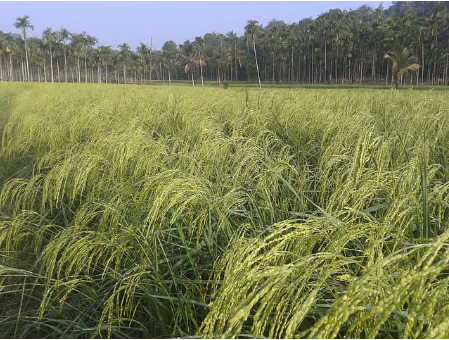
Cultivation of aromatic rice in Wayanad is majorly influenced by favourable environmental conditions like high altitude and the low temperature.
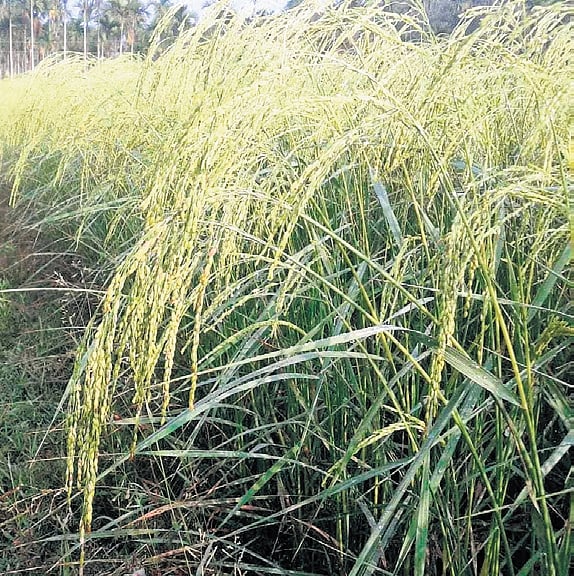
The Gandhakasala rice has a distinct sandalwood-like fragrance and has a soft, non-sticky texture. Valued in traditional medicine as the “Food of Gods,” its key health properties include blood sugar control, high digestibility, increasing immunity and rich minerals.
The Jeerakasala is celebrated for its unique fragrance and resemblance to cumin seeds (jeera). Its high fiber content and light texture make it exceptionally easy to digest and is often used in gruels for infants. Studies by the Kerala Agricultural University show it possesses a low glycemic index and has higher amylose content, helping to prevent sharp blood sugar spikes.
“The Lulu group had procured six quintals of Gandhakasala from us for export at `182 per kg. The input cost and labour shortage have dissuaded farmers from cultivating these varieties. Besides, there is only one mill in Pulpally that can process Gandhakasala and Jeerakasala. The milling rate is `14 per kg. Most of the farmers are unaware of the specialty of these varieties and they sell it to middlemen for lower rates. We need government help to brand the rice and market it internationally,” said Padmarajan.
Favourable climate
- Cultivation of aromatic rice in Wayanad is majorly influenced by favourable environmental conditions like high altitude and the low temperature
- The Gandhakasala rice has a distinct sandalwood-like fragrance and has a soft, non-sticky texture. Valued in traditional medicine as the “Food of Gods,” its key health properties include blood sugar control, high digestibility, increasing immunity and rich minerals
- The Jeerakasala is celebrated for its unique fragrance and resemblance to cumin seeds (jeera). Its high fiber content and light texture make it exceptionally easy to digest and is often used in gruels for infants
Published Date: June 11, 2026


 READ
READ