Downloads
 Login
Login
 Register


Tags
Saving haor rice before next flood
Niaz Md Farhat Rahman
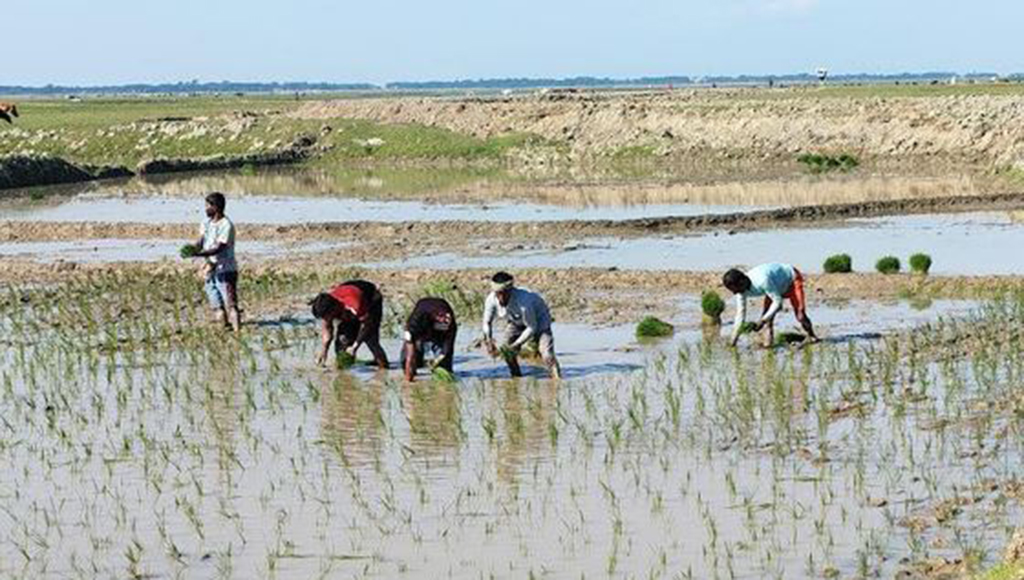
EVERY year, as the Boro harvest nears, anxiety returns to the haor basin. The fields turn golden, the crop is almost ready and national food security quietly depends on a narrow window of time. Then comes the familiar threat: heavy rainfall, upstream water flow, rising rivers, embankment failure, and the possibility that months of labour may be lost in a matter of hours. This is not an occasional setback but a structural vulnerability. Protecting haor rice requires moving beyond emergency response towards planned, climate-resilient preparation.
The haor basin is one of Bangladesh’s most distinctive agro-ecological systems. During the monsoon, these low-lying areas become vast water bodies; in the dry season, they transform into highly productive agricultural land dominated by a single Boro crop. Over decades, farming communities have adapted to this rhythm, cultivating rice within a narrow seasonal window before early floods arrive. This system plays a crucial role in national food supply. A significant share of Bangladesh’s Boro rice comes from haor districts, linking the region directly to food security, market stability and rural livelihoods.
The importance of this harvest is often underestimated in policy discussions. For millions of farmers, labourers and traders, the loss of a single crop cycle is not just agricultural damage but economic collapse. It means debt, lost wages, food insecurity and prolonged uncertainty. When near-mature rice fields go under water, the impact extends far beyond agriculture into household survival and regional stability.
Yet the sustainability of haor rice production is increasingly under pressure. The first and most visible threat is climatic. Flash floods triggered by intense rainfall and upstream inflows have become more frequent and unpredictable. The 2017 flood, which submerged more than one lakh hectares of nearly mature Boro rice, remains a stark reminder of this vulnerability. More recent pre-monsoon rainfall events suggest that the risk is not declining. Heat stress during crop growth can reduce yield, while rainfall near harvest disrupts timing, damages grain quality and increases post-harvest losses. In a mono-crop system, these shocks affect the entire production cycle.
A further concern is the increasing uncertainty linked to broader climate variability, including the influence of El Niño conditions. These shifts can intensify heat, alter rainfall distribution and increase drought risk in some periods, while producing excessive rainfall in others. For a system dependent on precise seasonal timing, such variability is highly destabilising.
The second major challenge lies in structural weaknesses. Embankments remain the primary defence against early flooding, yet their effectiveness is often compromised by delayed construction, weak maintenance and poor oversight. In haor areas, even a small breach can inundate vast tracts of farmland within hours. The issue is not only technical but institutional. Weak governance and lack of accountability undermine physical infrastructure, leaving crops exposed when water arrives earlier than expected.
The third challenge is informational. While forecasting systems have improved, their usefulness depends on how effectively they reach farmers and how actionable they are. Many farmers do not need technical meteorological data; they need clear, timely guidance — whether to harvest early, adjust fertiliser use, or delay field operations. The gap between forecasting and decision-making at the farm level remains a critical weakness.
Despite these challenges, the solutions are known. What is missing is coordinated implementation. A national haor resilience framework is needed, with clearly defined institutional responsibilities, timelines and monitoring mechanisms. Key agencies including the Bangladesh Meteorological Department, Bangladesh Water Development Board, Department of Agricultural Extension, Department of Disaster Management, research institutions and local administrations must operate within an integrated system of data sharing and coordinated response. The aim should be simple: reduce risk before floods, protect farmers during crisis and ensure rapid recovery after loss.
Embankment governance requires urgent improvement. Planning, construction and maintenance must be completed well before the risk season. Local community participation should be strengthened so that farmers can report weak points or delays early, reducing the likelihood of catastrophic breaches during peak vulnerability.
Post-flood response also needs reform. Rapid damage assessment using remote sensing and flood mapping can provide near real-time estimates of crop loss. This would enable quicker identification of affected areas, more transparent compensation mechanisms and better-targeted recovery support. Delays in assessment often translate into delays in recovery, deepening rural distress.
Financial protection is another critical gap. Crop insurance, emergency credit, interest-free loans and targeted recovery assistance can prevent farmers from falling into long-term debt after a single disaster. Without such mechanisms, climate shocks repeatedly translate into chronic poverty.
At the same time, long-term adaptation requires diversification. While Boro rice will remain central to haor agriculture, reliance on a single crop increases systemic risk. Short-duration crops, aquaculture, livestock and integrated farming systems can help spread risk and stabilise income. However, diversification must be carefully designed to fit the unique ecological conditions of haor areas rather than disrupt existing production systems.
Agricultural research must also focus on developing rice varieties suited to changing conditions — short-duration, high-yielding, submergence-tolerant and heat-resilient. Alongside genetic improvements, agronomic practices must evolve to reflect shifting rainfall patterns and temperature stress.
Finally, contingency planning for alternative seasonal production, including Aus and Aman rice, should be strengthened in the event of major Boro losses. This includes timely seed distribution, input support and extension services to help restore production cycles and protect national food supply stability.
The haor region has always been defined by uncertainty, and farmers have long demonstrated remarkable resilience in the face of it. But resilience should not mean enduring repeated and preventable loss. It should mean building systems that anticipate risk and reduce exposure before disaster strikes.
The future of haor rice will depend not only on weather patterns but on governance choices, institutional coordination and timely action. The fields will continue to turn golden each year. Whether they become a story of harvest or loss will depend on what is done before the waters rise.
Niaz Md Farhat Rahman is a principal scientific officer (weather and climate change researcher) of agricultural statistics division at Bangladesh Rice Research Institute, Gazipur.
https://www.newagebd.net/post/opinion/303049/saving-haor-rice-before-next-floodPublished Date: June 18, 2026


 READ
READ