Downloads
 Login
Login
 Register


Tags
Rice planting strategies for improved harvest management
RiceTec’s Garrison Hardke offers planting and harvest strategies to boost efficiency, improve quality.
Whitney Shannon Heckel, Staff Writer, Delta Farm Press
At a Glance
- Strategic planning at planting has potential to improve overall milling quality and profitability.
- Selecting hybrids of staggered maturities can widen the harvest window to boost efficiency.
- Drain timing at varied intervals may reduce likelihood of moisture fluctuations.
Despite the environmental risks associated with early planted rice, growers are often motivated by the fear of losing their planting window due to rain. That was certainly the case in 2025 across the Midsouth, as farmers were met with a unique set of weather-related challenges.
Those challenges not only had a negative impact on rice planted acres due to flooding but also grain fill and pollination when the wet spring transitioned into a hot, dry summer. Then, harvest revealed a lackluster milling quality, averaging 52-70 (52% head rice yield, 70% milled rice yield).
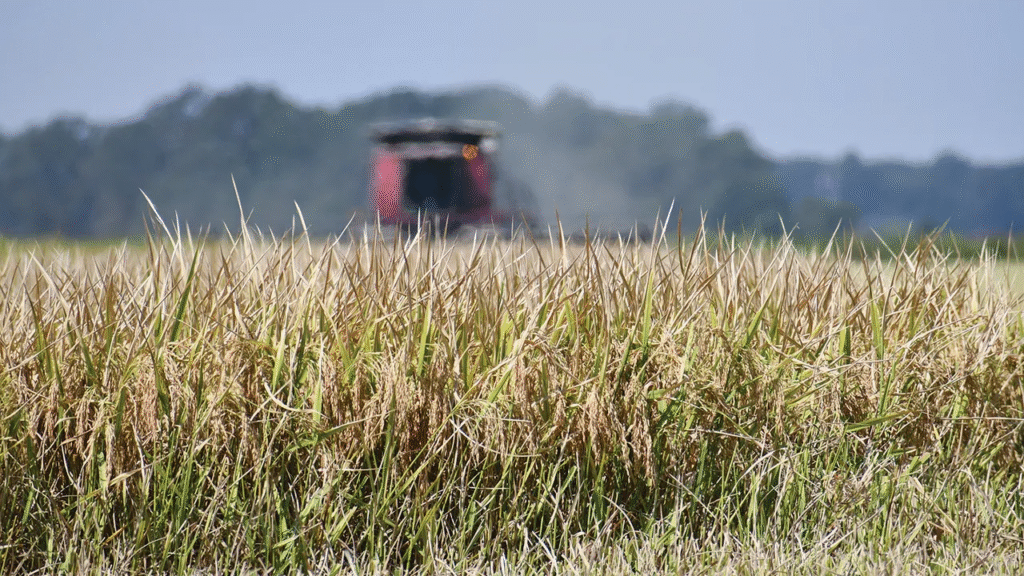
“One of the single biggest drivers of milling quality is harvest moisture,” said Garrison Hardke, U.S. marketing manager for RiceTec. “We plant early, and we can plant really fast, but we cannot harvest as fast as we plant.”
He added that while milling quality may start off good at the beginning of harvest, moisture can drop out rapidly. As that happens, milling plummets with it. Of course, weather challenges are unavoidable, but there are a few strategies farmers can put into practice at planting to help boost harvest efficiency and increase the likelihood of better milling quality.
Strategic planning for staggered harvest windows
To clear some of these hurdles, Hardke emphasized the importance of planting strategies that stagger the rice harvest window. This allows farmers to better manage harvest moisture and ultimately improve milling quality.
One effective approach involves selecting hybrids of differing maturities and planting them in the correct sequence. “We have different hybrids that have different maturities, so we can spread out our harvest window and maintain optimal harvest moisture,” Hardke said.
Planting the earliest-maturing hybrids first followed by hybrids with slightly later maturity windows helps build a natural buffer between harvest times, reducing the risk of all the rice reaching optimal harvest moisture simultaneously.
“For example, say I have three different hybrids on my farm, and each has a different maturity. If I plant the earliest maturing first, then move to a hybrid that is five days later, I’ve already got five days built in through plant genetics,” he said. If the third hybrid in this scenario matures five days after the second, then there are 10 days built into rice harvest.
This approach not only helps growers manage harvest capacity but also mitigates the risk of grain cracking, which is caused by moisture fluctuations. “We don’t want all of our rice to get dry at the same time, because we can’t harvest it all at the same time,” he emphasized.
Stagger drain timing to reduce moisture fluctuations
Another factor to consider is staggering drain timing that aligns with harvest capability to improve management. This also prevents rice from drying excessively before you can get it out of the field.
“[Often] we will plant a lot of acres in a short period of time, and then we drain all those acres at the same time, even though we cannot harvest them right then,” Hardke explained. “There may be some advantage to staggering our drain timing to help with harvest moisture.”
By staggering drain timing, growers can reduce the likelihood of extreme moisture fluctuations, preserve grain integrity and improve milling. That’s because excessive drying can lead to lodging issues and grain cracking, particularly when rewetting events occur. The goal is to maintain healthy plants and stabilize moisture while letting fields dry just enough to avoid rutting.
Hardke said that when rice gets really dry followed by a rewetting event, like rain or a heavy dew, fissures are created in the rice kernels. “Rice will go to 13% moisture pretty fast, then if you get a rewetting event and it gets back up to 20%, the wild swing in grain moisture will lead to grains breaking in the milling process,” he added.
Overall, these strategies not only improve the quality of the crop but also enhance profitability, ensuring a sustainable future for rice growers in the face of unpredictable weather and market dynamics. “It’s not difficult to do, but it is about developing a strategy going into the season. Thinking about that on the front end will certainly make life a lot easier and hopefully more profitable on the back end,” Hardke said.
https://www.farmprogress.com/rice/rice-planting-strategies-for-improved-harvest-managementPublished Date: December 27, 2025


 READ
READ