Downloads
 Login
Login
 Register


Tags
Rice in West Africa: $3 billion in imports despite 21.8 million tons produced
Auteur: Khady NDOYE
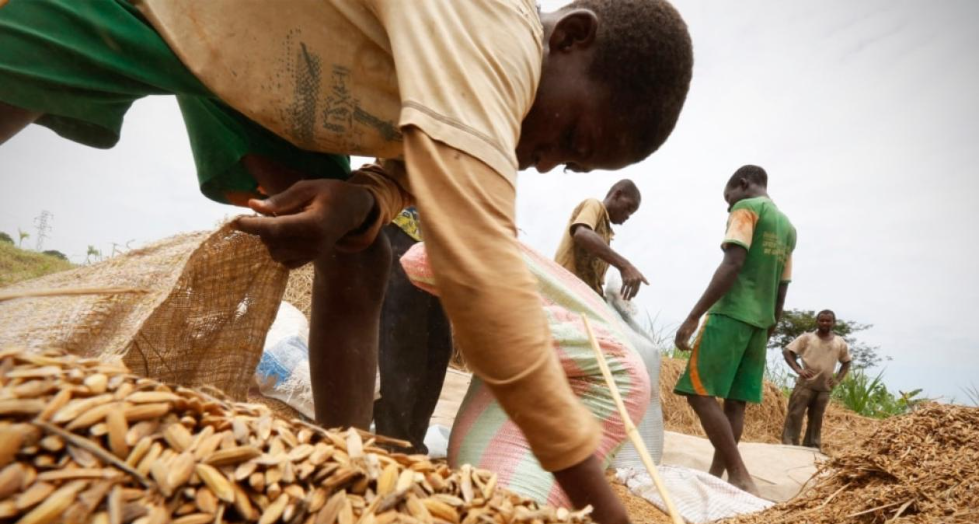
While West Africa imports billions of dollars worth of rice each year, Senegal is setting up the national chapter of the ECOWAS Observatory to strengthen local production and reduce a still significant deficit between supply and demand.
Led by the State of Senegal in partnership with the Economic Community of West African States (ECOWAS), this initiative aims to be an inclusive platform. It brings together public administrations, producers, the private sector, researchers, civil society organizations, as well as technical and financial partners, in a dynamic of enhanced consultation.
This initiative comes at a time in a regional context marked by a strong dependence on imported rice. In West Africa, imports exceeded three billion dollars in 2020, while local production covers only about 61% of needs.
Representing the ERO, Abdoul Karim Sanou emphasized the strategic role of this cereal in the region. “Rice is no longer a luxury food, but an essential staple. It plays a key role in food security, nutrition, and poverty reduction. It also constitutes an important source of income and contributes significantly to the gross domestic product,” he stated.
According to him, rice consumption in West Africa is now one of the highest on the continent, with energy intake increasing from 367 to 384 kcal per capita per day between 2009 and 2013.
In Senegal, despite the efforts made, the rice sector continues to face several challenges. These include low levels of mechanization, limited access to agricultural inputs, difficulties related to irrigation, and constraints related to financing and marketing.
For Alpha Ba, Secretary of State for Rural Development, a comprehensive approach is essential: “Rice development cannot be considered in a sectoral manner. It must be multi-sectoral and inclusive to be effective.”
Regional rice production has nevertheless seen notable growth, rising from 2.2 million tonnes in 1962 to 14.2 million tonnes in 2020. Between 2009 and 2022, average annual production reached more than 21.8 million tonnes, or 65.6% of sub-Saharan Africa’s production.
The main producing countries are Nigeria, Mali, Guinea and Ivory Coast, alongside Sierra Leone and Senegal.
Despite this momentum, dependence on imports remains high, representing 39% of total consumption in 2022, compared to 20% in the 1960s.
To address this situation, ECOWAS member states launched the “Rice Offensive” in 2014, with effective implementation from 2015. This was to achieve rice self-sufficiency in West Africa by 2025, while improving the quality and competitiveness of local rice.
Within this dynamic, the creation of the ERO is a key lever. The observatory’s mission is to coordinate public and private investments, harmonize agricultural policies, and facilitate access to financing across the entire value chain.
At the national level, the establishment of the Senegalese chapter of the ERO marks a major step forward. Following a preparatory mission held in Dakar in December 2025, authorities and stakeholders in the sector are continuing their consultations through a second consultative workshop.
Auteur: Khady NDOYE
https://www.seneweb.com/en/news/Afrique/riz-en-afrique-de-louest-3-milliards-dimportations-malgre-218-millions-de-tonnes-produites_n_488135.htmlPublished Date: April 1, 2026


 READ
READ