Downloads
 Login
Login
 Register


Tags
Rice breeding reduces methane emissions without lowering yield: New Study
Neel Kamal
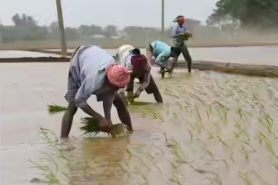
Bathinda: A new study, ‘A Global Synthesis Of Genotypic Variation In Crop Greenhouse Gas Emissions Under Variable Nitrogen Fertilisation,’ published in Frontiers in Agronomy, performed the first comparison of crop variety impacts on greenhouse gas emissions (GHGs) on a global scale. The analysis shows that the choice of crop variety (specifically rice) has a greater effect on methane (CH₄) emissions than fertiliser management – a critical finding given the importance of rice in the global food supply. Frontiers in Agronomy is an interdisciplinary journal that focuses on cropping systems for food, feed, fuel, and fibre production.
Conor Walthall, Research Associate at the University of Warwick, said, “This study looked across wheat, maize, canola, soybean, and especially rice. Rice is the staple food for more than half the world’s population, but rice paddies account for over 10% of global methane emissions – a greenhouse gas over 25 times more potent than CO₂. By selecting rice genotypes with lower methane emissions, without reducing yields, we can both increase food security and reduce agriculture’s climate impact.”
By analysing 180 crop genotypes from trials around the world, researchers discovered that nitrous oxide (N₂O) emissions are closely tied to nitrogen fertiliser inputs, regardless of genetic variety.
Methane (CH₄) emissions, by contrast, are strongly influenced by genotype, highlighting selective breeding as a key strategy for reduction. Yields also depend heavily on genotype, indicating opportunities to selectively breed to align productivity with sustainability. Rice plant traits such as root structure, nitrogen-use efficiency, and soil interactions all influence GHG emissions and can be selectively bred. The findings suggest that while fertiliser management remains essential, breeding programmes should prioritise genetic traits that reduce methane emissions.
Senior author Alice Johnston, lecturer in Environmental Data Science at Cranfield University, added, “Our analysis shows that genetics play a key role in methane emissions in rice, offering new opportunities to align breeding with climate goals. Breeding can help, but we also need more field trials measuring genotype impacts on GHGs in real-world farming conditions and a range of crop types to ensure gains translate to practice.” This is the first global synthesis to separate the effects of genotype and fertiliser on crop GHG emissions. The authors argue that plant genetics must be integrated into future greenhouse gas reduction strategies in agriculture.
MSID: 124360483 413
https://timesofindia.indiatimes.com/city/chandigarh/rice-breeding-reduces-methane-emissions-without-lowering-yield-new-study/articleshow/124369619.cmsPublished Date: October 8, 2025


 READ
READ