Downloads
 Login
Login
 Register

Tags
New rice variety emits 70 percent less methane
Scientists have developed a new rice variety that emits 70 percent less methane compared to regular rice. The new rice variety has been developed through traditional plant breeding and yields large harvests.
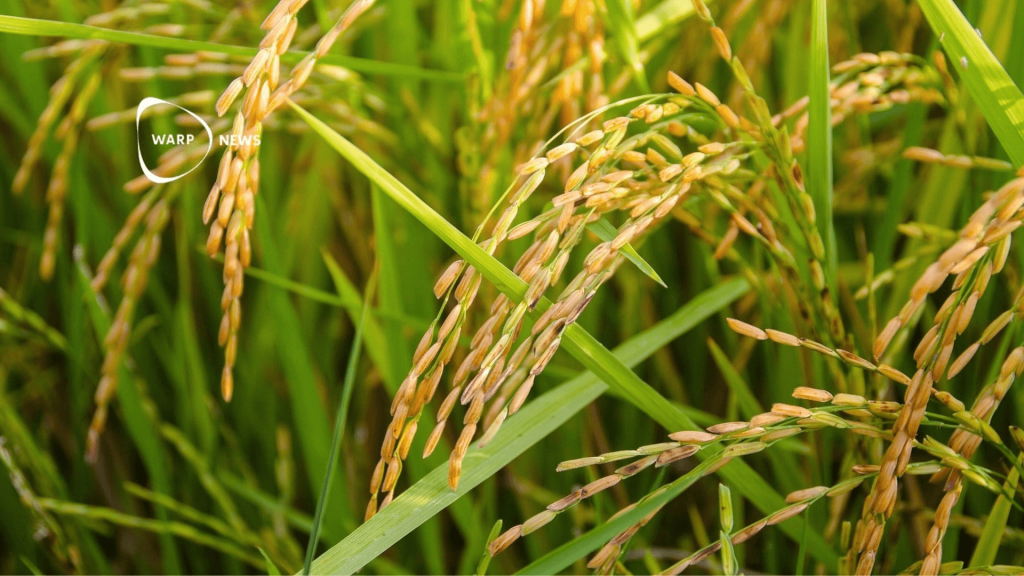
- Scientists have developed a new rice variety that emits 70 percent less methane compared to regular rice.
- The new rice variety has been developed through traditional plant breeding and yields large harvests.
- Field trials in China confirm that the new rice variety reduces methane emissions without negatively affecting the harvest.
Major climate impact
Rice cultivation accounts for about 12 percent of global methane emissions. Now, scientists at the Swedish University of Agricultural Sciences and collaborators have developed a new rice variety that can significantly reduce these emissions.
The new rice variety emits 70 percent less methane than regular rice. This has been achieved by identifying specific chemical compounds released by rice roots that affect methane production.
Traditional breeding yields results
The scientists used traditional plant breeding methods to develop the new rice variety. By crossing a high-yielding rice variety with one that naturally has low methane emissions, they managed to create a new variant that combines both traits.
The new rice variety produces an average of 8.96 tons per hectare, which can be compared to the global average of 4.71 tons per hectare in 2024.
Scientific explanation
The scientists discovered that two substances play a crucial role in methane emissions: fumarate and ethanol. The new rice variety produces less fumarate and more ethanol in its root exudates, leading to reduced methane emissions.
To confirm this, the researchers conducted extensive tests where they added fumarate and ethanol to the soil around the rice plants. The results showed a clear connection between these substances and methane production.
Field trials demonstrate effectiveness
The scientists conducted field trials at various locations in China to test the new rice variety under real conditions. The trials confirmed that the rice variety consistently produced 70 percent less methane than the standard variety.
They also tested a treatment with ethanol and oxantel in the field over two years. This treatment resulted in approximately 60 percent lower methane emissions without affecting the harvest.
The scientists are now working to register the new rice variety with Chinese authorities so it can begin to be sold to farmers. They are also collaborating with fertilizer companies to investigate the possibility of adding oxantel to commercial fertilizers.
https://www.warpnews.org/green-tech/new-rice-variety-emits-70-percent-less-methane-2/Published Date: March 10, 2025


 READ
READ