Downloads
 Login
Login
 Register


Tags
Monsoon rains push paddy plantation to 85.72 percent nationwide
Sudurpaschim leads paddy plantation with 98 percent completion rate while Madhesh lags behind.
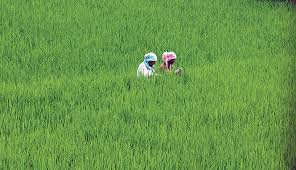
KATHMANDU, July 28: Paddy plantation across Nepal has gained significant momentum following the full activation of the monsoon system in mid-July, with 85.72 percent of the targeted rice fields now cultivated, according to the Department of Agriculture (DoA).
Officials said the pace of planting was initially sluggish due to insufficient rainfall until the second week of June, compounded by poor irrigation facilities in several regions. By that time, only 49.81 percent of the total cultivable land — 682,374 hectares out of 1.37 million hectares — had been sown. However, widespread rains beginning in the third week of June dramatically improved conditions, enabling farmers to accelerate plantation activities across the country.
As of the second week of July, 195,669 hectares, or 14.28 percent of the total rice fields, remain to be cultivated. Madhesh Province accounts for the largest share of uncultivated land, with 22.12 percent of fields still fallow. Government records show that out of 385,933 hectares designated for rice cultivation in Madhesh, 85,352 hectares are yet to be planted.
Province-wise data highlight varying progress. In Gandaki, 75,562 hectares out of 93,606 have been sown, leaving 19.28 percent of fields uncultivated. Koshi has completed plantation on 240,377 hectares out of 276,386, with 13.03 percent pending. Bagmati has achieved 87.09 percent plantation across 114,524 hectares, while Lumbini has cultivated 88.99 percent of its 314,372 hectares designated for paddy plantation. Karnali still has 11.78 percent of its land awaiting cultivation, equivalent to 43,290 hectares. Sudurpashchim Province has recorded the highest completion rate, with only 2.07 percent of fields unsown, reflecting the lowest proportion of pending plantation nationwide.
The DoA emphasized that this year’s progress represents a notable improvement compared to the same period last fiscal year. By the third week of July in FY 2025/26, only 78.84 percent of rice fields had been planted. The current figure of 85.72 percent demonstrates stronger monsoon support and improved farmer response, raising expectations for better yields in the upcoming harvesting season.
Agricultural experts note that timely rainfall remains the most critical factor for paddy cultivation in Nepal, where irrigation infrastructure is limited and heavily dependent on monsoon patterns. The accelerated plantation this year is expected to stabilize production levels, though regional disparities in rainfall distribution and irrigation access continue to pose challenges.
https://myrepublica.nagariknetwork.com/news/paddy-plantation-reaches-8572-percent-as-monsoon-rains-boost-cultivation-52-85.htmlPublished Date: July 29, 2026


 READ
READ