Downloads
 Login
Login
 Register


Tags
Ministry to buy back reserve rice to shore up prices despite inflation
THE ASAHI SHIMBUN
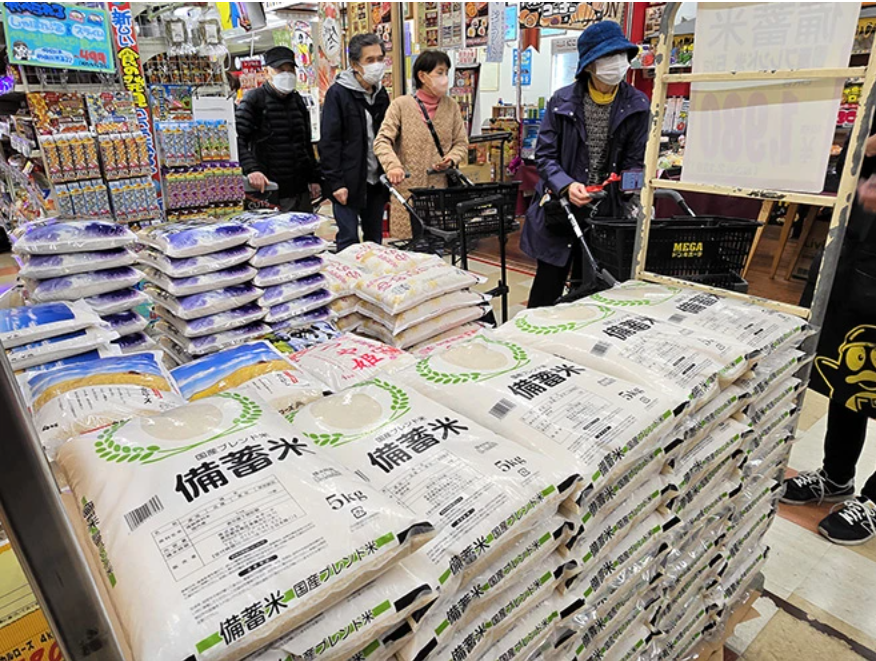
The agriculture ministry plans to soon purchase rice to replenish government stockpiles, part of which was released in response to soaring prices, sources said.
With prices now falling due to swelling private-sector inventories, the ministry concluded that buybacks are necessary to tighten supply-demand balance and prop up prices.
Ministry officials began the final step to coordinate these purchases with aides to Prime Minister Sanae Takaichi.
The ministry will present the buyback policy to an advisory council on rice policy on Sept. 2.
The initial budget for fiscal 2026 includes funds for 150,000 tons in buybacks.
The ministry intends to begin with about 150,000 tons and proceed in phases.
However, current retail prices are still higher than before supply shortages triggered sharp price increases around summer 2024.
If buybacks halt the decline in prices, the move will disadvantage consumers, raising questions about its consistency with government efforts to combat rising living costs.
Takaichi and her aides were initially cautious, saying an early repurchase program would run counter to inflation countermeasures.
Nevertheless, with a substantial drop in prices on the horizon, a senior aide to the prime minister said, “The government’s policy is to proceed with buybacks.”
A senior agriculture ministry official also said, “The prime minister has told us she will leave the decision (to the ministry’s judgment).”
The government purchases and maintains a certain stock of rice reserves in anticipation of food emergencies, such as natural disasters or poor harvests.
Since early last year, 590,000 tons have been released from these reserves to combat soaring prices amid a tight supply.
Agricultural organizations hope that buybacks will help put a brake on declining prices by reducing the supply of rice available on the market for staple-food consumption.
The government’s buyback decision is driven by the accelerating decline in prices.
While table rice production has sharply increased following the surge in prices from 2024, consumers have shifted away from rice, causing inventories to balloon.
Rice inventories reached the highest level on record at about 2.43 million tons as of the end of June, according to the agriculture ministry.
The figure is far above the appropriate range of 1.8 million to 2 million tons.
As inventories have increased, prices have continued to fall.
The average retail price rice was 3,191 yen ($20) per five kilograms during the week of Aug. 10-16, 30 percent below its peak, according to data compiled by the farm ministry.
Many agricultural cooperatives have presented to farmers low provisional purchase prices for this year’s crop before the harvest.
The government has received calls for an early repurchase program from farmers and agricultural organizations.
The harvest outlook for this year’s crop, scheduled to be released at the end of August, is also expected to be around the level of an average year. This indicates prices could see further downward pressure in the coming months.
This article was written by Shinya Takagi, Hirobumi Ohinata, a senior staff writer, and Junichi Kamiyama.
https://www.asahi.com/ajw/articles/16840321Published Date: August 27, 2026



 READ
READ