Downloads
 Login
Login
 Register

Tags
Making Nepal’s Paddy Economy Work
Government paddy procurement can support farmers, but lasting food security requires lower production costs, better market linkages, reliable storage and transparent policies that make domestic rice production profitable.
By REPUBLICA
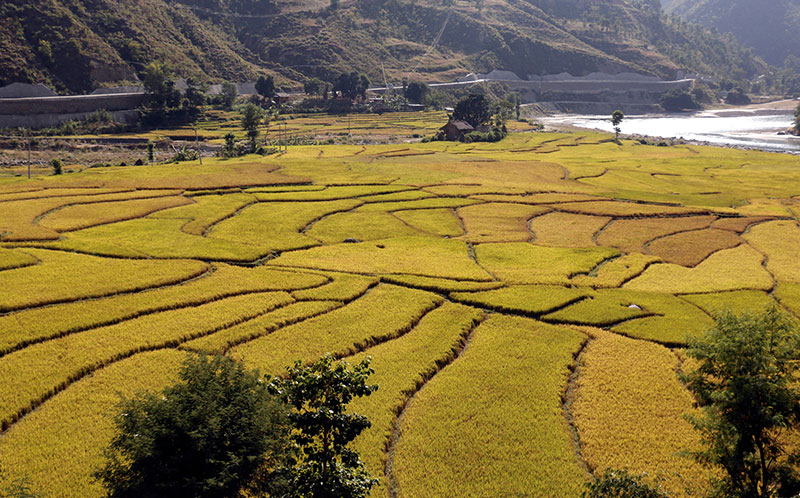
Farmers may receive some protection from declining prices thanks to the government’s plan to purchase 15,000 tons of paddy, with an allocation of Rs 675 million. Since rice is a staple food in Nepal, both producers and consumers benefit from promoting domestic paddy production. However, Nepal imported more than 106 million kilograms of rice and paddy worth Rs 5.61 billion during the first two months of the fiscal year. This highlights problems that cannot be resolved through a single procurement program. The timing is important. These imports do not indicate whether this year’s harvest will meet demand, as they arrived before the current monsoon crop was harvested. Moreover, a good national harvest has yet to be confirmed. Production forecasts remained uncertain, according to the Food and Agriculture Organization’s August estimate. Imports would not necessarily stop even if the harvest were abundant. It is also necessary to distinguish between paddy production and rice supply. Directly comparing paddy yields with rice consumption can make the available food supply appear higher than it actually is. Authorities need accurate annual accounts of production, milling yields, stockpiles, imports and consumption.
Consumer preferences also matter. Domestic production and milling do not always meet growing demand for fine and fragrant rice. Of the reported import expenditure, Rs 1.02 billion was spent on Basmati rice alone. Research has identified weak market linkages and inadequate milling equipment for locally produced fine rice varieties. Before planting begins, researchers, seed suppliers, cooperatives and rice mills should agree on suitable varieties and procurement arrangements. Otherwise, imports will continue to meet demand while domestic producers bear the risks. Meanwhile, farmers must control production costs. Delayed fertilizer supplies, unreliable irrigation and limited access to machinery and improved seeds reduce yields and profits. Operating machinery is also more difficult on small, fragmented plots. Voluntary cooperative farming and shared equipment could help farming families reduce costs without giving up land ownership. When farmers need to sell their produce, government procurement must begin promptly. Collection centres should be located close to farming communities, publish clear quality standards and ensure timely bank payments. Distant depots, delayed payments and ambiguous grading rules can undermine the benefits of a support price. Farmers could also be given access to loans secured against stored grain, allowing them to meet debt and household expenses without selling immediately at low prices.
The scale of the procurement target also deserves scrutiny. At 15,000 tons, the government’s planned purchase is equivalent to about 26 percent of the 57,690 tons of paddy imported in just two months. However, procurement should be expanded when market prices fall below the support price, provided storage capacity and demand permit. The procurement budget also needs clarification. Purchasing 15,000 tons would cost between Rs 549 million and Rs 579 million at the stated rates of Rs 3,660 and Rs 3,860 per quintal, respectively. Officials should explain how the remaining funds will be used for handling, storage and transportation. Purchased grain must reach mills and public food distribution facilities before it deteriorates in storage. Food supplies could be made more secure through regular stock rotation, better irrigation management and improved crop insurance. Abrupt import restrictions before domestic produce reaches the market could push up food prices. The government should also publicly disclose how much it purchases, what farmers receive, how much grain is lost and where the procured grain is distributed. Ultimately, the real test is whether households can afford rice and farmers can earn a decent livelihood. Unless authorities make domestic food production profitable, farmers will continue to bear the risks while the country spends heavily on imports of a staple food.
https://myrepublica.nagariknetwork.com/news/making-nepals-paddy-economy-work-68-23.htmlPublished Date: October 14, 2026


 READ
READ