Downloads
 Login
 Register

Tags
Getting the right rice seed to farmers
BANGLADESH has built an impressive capacity to breed new rice varieties.
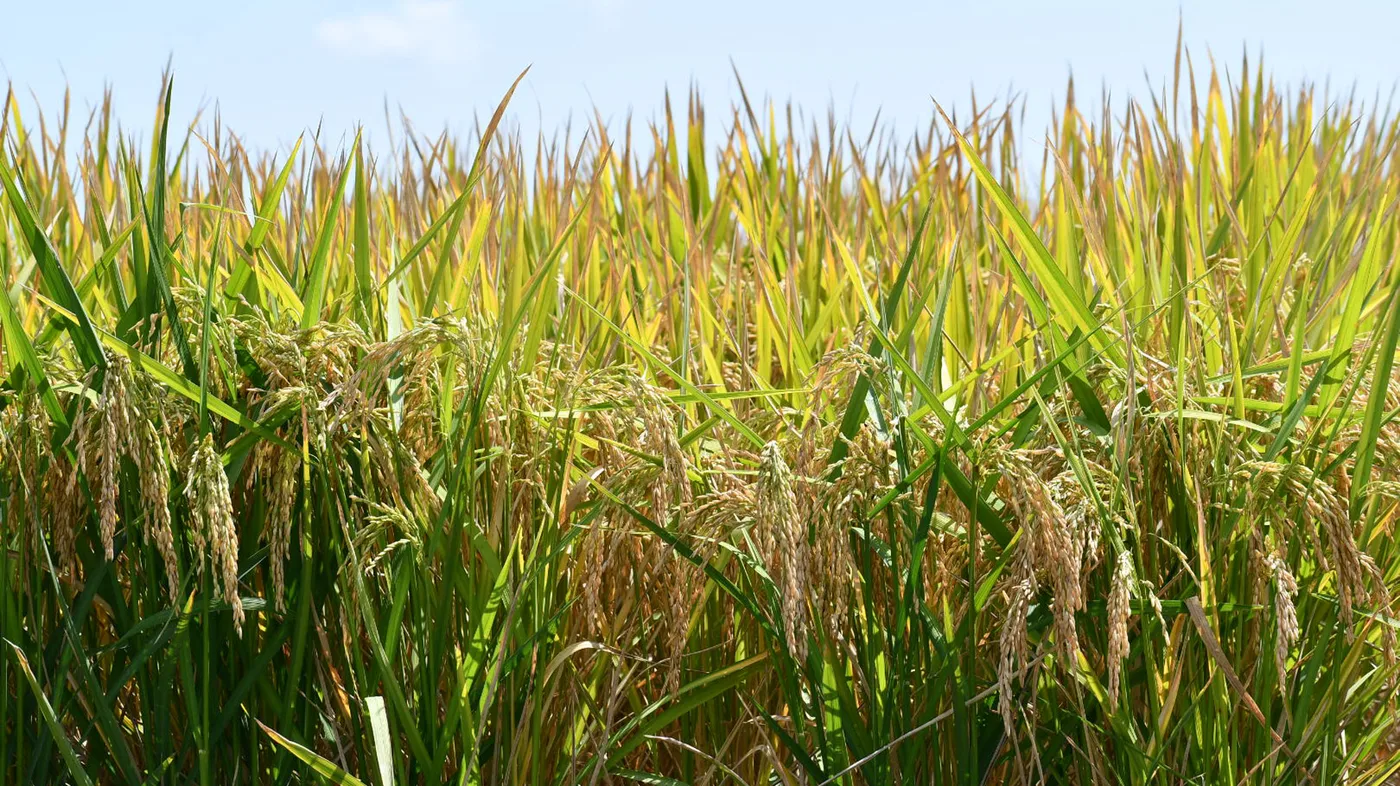
In February this year, six new varieties developed by the Bangladesh Rice Research Institute (BRRI) were approved for cultivation, bringing the institute’s total number of released varieties to 127. These include rice designed to address specific challenges, such as salinity, blast disease, cold conditions in the haor region and lodging, as well as varieties offering higher productivity and improved nutrition. That record deserves recognition, but it also raises a less celebrated question: what happens after a new variety is released?
Developing a superior variety and ensuring that farmers grow it are two different accomplishments. A seed may perform exceptionally well in trials yet have little impact if quality seed is not multiplied quickly enough, is unavailable locally, reaches the wrong places or arrives after farmers have made their planting decisions. Increasingly, the bottleneck comes after breeding is complete.
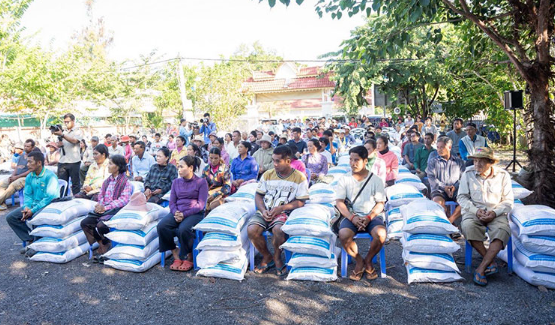
The International Rice Research Institute (IRRI) highlighted this challenge in its recent work in Bangladesh, noting that access to quality seed remains a significant concern, particularly when farmers need the right variety at the right time. IRRI is working across 15 districts to strengthen farmers’ capacity to produce and manage quality rice seed locally.
We therefore need to pay closer attention to the release-to-adoption lag: the period between the official release of an improved variety and its meaningful adoption in the areas where it is most useful.
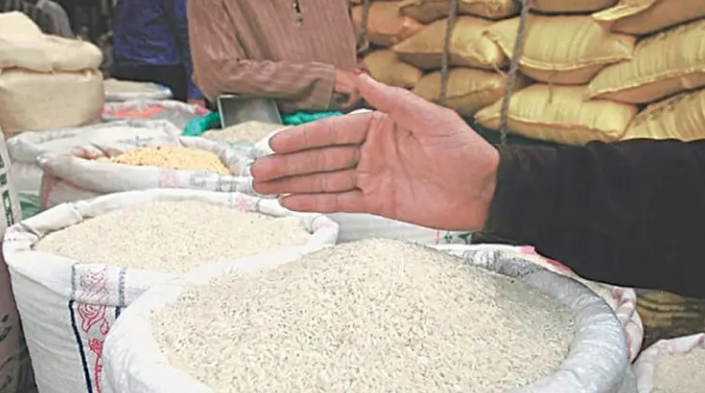
During this interval, breeder and foundation seed must be produced, multiplied on a much larger scale, certified or quality-assured, distributed through appropriate channels and introduced to farmers through demonstrations and extension services. Each link matters, yet public discussion tends to celebrate the beginning of this chain more than its outcome. How much seed becomes available one, two or three seasons after release? Where is it distributed? How many farmers in the intended areas adopt it, and where does the process slow down?
These questions become even more important as rice varieties are developed for specific environments and risks. A variety suited to saline coastal land has particular value where salinity constrains production, while a cold-tolerant variety intended for haor agriculture addresses a different set of risks. A short-duration variety may help farmers fit rice into a particular cropping calendar or escape an approaching climatic hazard.
In such cases, simply asking how much rice seed Bangladesh needs is no longer sufficient. We need to know which variety is needed, in what quantity, where and by when. Producing plenty of the wrong seed in the wrong district does little to address farmers’ actual needs.
On September 24, IRRI reported that the Bangladesh Agricultural Development Corporation (BADC) had participated in a Bangladesh-Tanzania knowledge exchange centred on SeedCast, a digital system for forecasting seed demand. The system uses data to estimate which varieties farmers are likely to need, in what quantities and in which locations. BADC plans to use lessons from Tanzania to adapt and scale the approach in Bangladesh.
If implemented well, this could help shift the seed system from responding to demand after it emerges to anticipating farmers’ needs before the planting season. However, forecasting cannot compensate for weak coordination. As the Tanzanian experience described by IRRI illustrates, such systems depend on research institutions, certification agencies, extension officials, seed producers, dealers and farmers sharing information and acting on it. That coordination may prove more important than the software itself.
Bangladesh should begin measuring what happens after a new variety is released. For major new BRRI varieties, authorities could publish a three-year deployment plan and track its implementation, covering target agro-ecological areas, planned seed multiplication, actual availability, districts reached, demonstration coverage and adoption across successive seasons. Such data would help identify whether promising varieties are being held back by insufficient seed multiplication, distribution problems, limited farmer awareness or other gaps in the process. It would also help distinguish a breeding success from a deployment success.
New varieties should therefore be accompanied by explicit deployment plans rather than treating official release as the finishing line. BRRI, BADC and the Department of Agricultural Extension already perform different parts of this process. Better data-sharing could connect breeding decisions with projected demand, seed multiplication and extension services before planting begins.
Local seed production can complement this national system. IRRI’s work across 15 districts, including proposals for community seed production groups, offers one possible approach to building local capacity and reducing dependence on long distribution chains. National forecasting can indicate where seed will be needed, while local production can help ensure that suitable varieties are available there.
None of this diminishes the importance of breeding new rice varieties. Bangladesh will continue to need rice that can withstand salinity, temperature extremes, disease and changing water availability, while meeting evolving consumer preferences. Rather, it recognises that successful innovation requires both the development of better varieties and their adoption by the farmers who need them.
Bangladesh’s rice scientists have already demonstrated considerable strength in breeding. The next frontier is to become equally effective at getting improved varieties into farmers’ fields. A variety fulfils its purpose not when it receives official approval, but when the farmer who needs it can obtain it, grow it and benefit from it. Next rice breakthrough may therefore come not only from shortening the breeding cycle, but also from shortening the journey between the laboratory and the field.
Shaikh Afnan Birahim is a writer and analyst.
https://www.newagebd.net/post/opinion/320844/getting-the-right-rice-seed-to-farmersPublished Date: November 4, 2026


 READ