Downloads
 Login
Login
 Register

Tags
Low-emission rice: A new competitive advantage for Vietnamese rice exports.
With its outstanding advantages meeting high requirements for food safety, pesticide residue levels, and environmental responsibility, low-emission rice is becoming a new competitive advantage for Vietnamese rice exports. This product line also promises to achieve high selling prices and many opportunities to expand market share in the future.
Hà Nội Mới
Rice prices surge thanks to the high-quality rice segment.
According to the Vietnam Food Association (VFA), since the beginning of May 2026, the export price of Vietnamese rice has been recovering positively thanks to a strong increase in market demand, especially in the high-quality rice segment. Vietnamese Jasmine rice is currently being offered at 513-517 USD/ton, an increase of about 30 USD/ton compared to the previous month; fragrant rice with 5% broken grains ranges from 510 to 520 USD/ton, an increase of about 25-30 USD/ton.
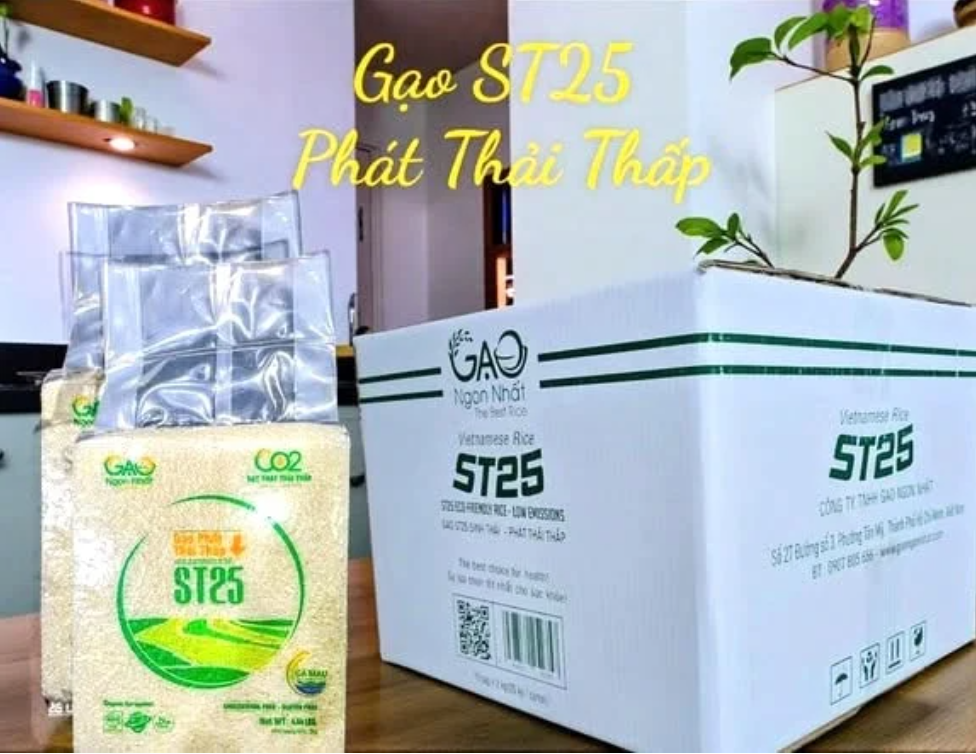
ST25 low-emission rice products command high prices in the market . Photo: gaongonnhat.vn
Notably, ST25 rice continues to maintain its position in the premium segment with an export price of approximately US$1,200 per ton, many times higher than regular white rice. This price reflects the increasing added value of Vietnamese specialty rice varieties in the international market.
Not only have export prices improved, but the structure of Vietnam’s rice exports is also undergoing a significant shift. Currently, about 89% of total rice exports are high-quality rice, with fragrant and specialty rice accounting for 60-70%. Products such as ST24, ST25, Japonica, and many other premium rice brands have gradually penetrated demanding markets such as the European Union (EU), the United States, and Japan.
According to the Ministry of Agriculture and Environment , the biggest competitive advantage of Vietnamese rice today is its ability to consistently supply high-quality rice varieties, especially fragrant rice and soft-cooked rice – products that suit the tastes of many Asian markets.
Compared to India, Vietnamese rice has a clear advantage in the fragrant rice and high-quality rice segments. Meanwhile, compared to Thailand, Vietnamese rice offers better flexibility in terms of supply, price, and order fulfillment speed. Besides traditional fragrant rice varieties, products aligned with sustainable development criteria are also making their mark.
Notably, more than a year after the first shipment of “Green, Low-Emission Vietnamese Rice” was exported to Japan, approximately 70,000 tons of this product have been consumed in the international market. This result shows that products that simultaneously meet quality and environmental requirements have many opportunities to expand their market share in the future.
Numerous market studies show that consumers are willing to pay higher prices for products that guarantee quality, food safety, and meet sustainable development criteria. This is a crucial factor in increasing the competitiveness of Vietnam’s premium rice lines in the context of an increasingly fragmented global rice market.
Applying digital technology to production management is key to long-term success.
According to a report by the Ministry of Agriculture and Environment, after two years of implementing the High-Quality Rice Project (1 million hectares), initial results show clear effectiveness. The implemented area reached 354,839 hectares compared to the initial target of 180,000 hectares, equivalent to 197% of the planned target.
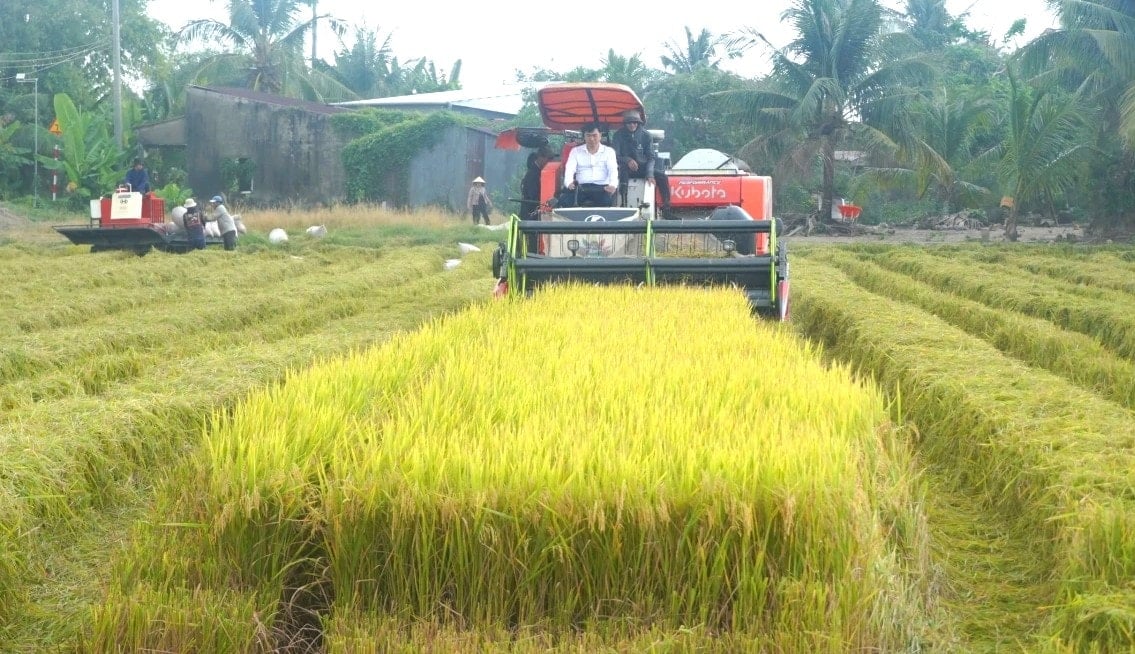
The entire area participating in the project applied advanced techniques in rice production: 100% of the area used high-quality rice varieties, the amount of seeds sown was reduced by 30%-50%, the amount of nitrogen fertilizer was reduced by about 30%, and the number of pesticide sprayings was reduced by 2-3 times.
To date, 7,493 hectares have been VietGAP certified, 246 hectares have achieved organic certification, and 5,659 hectares meet food safety standards. These changes have not only contributed to reducing production costs but also brought about significant economic benefits. The income of rice farmers in this model has increased by an average of 14% or more compared to traditional farming.
Notably, the Vietnam Rice Industry Association (VIETRISA) has granted the right to use the “Green Vietnamese Rice with Low Emissions” trademark to 8 businesses, with a total certified area of 18,048 hectares.
Commenting on the potential for development of low-emission rice, Do Ha Nam, Chairman of the Vietnam Food Association (VFA), said: The demand for high-quality rice is increasing worldwide, but Vietnam has not yet met the production volume for export.
Therefore, it is necessary to promote high-quality product lines, especially low-emission rice. This direction not only aligns with international consumer trends but also contributes to affirming Vietnam’s commitment to achieving net-zero emissions by 2050.
Regarding solutions, agricultural expert Hoang Trong Thuy stated: The application of digital technology in production management is creating a transparent foundation for the 1 million hectare high-quality rice project, paving the way for Vietnamese rice to conquer high-end markets.
To succeed, the key lies in transparency in the certification process. Regulatory agencies, cooperatives, and farmers need to commit to genuine practices, avoiding formality to protect brand reputation. More importantly, the domestic certification criteria system needs to be integrated with international standards as soon as possible to reduce the cost of hiring foreign organizations and increase competitiveness.
https://www.vietnam.vn/en/gao-phat-thai-thap-loi-the-canh-tranh-moi-xuat-khau-gao-viet-nam“Maintaining a strong position in the high-quality rice segment, especially low-emission rice, is crucial in the context of increasingly fierce competition in the global rice market. This not only helps increase export value but also lays the foundation for Vietnam’s rice industry to gradually build a national brand for Vietnamese rice.
Chairman of the Vietnam Food Association (VFA), Do Ha Nam
Published Date: June 3, 2026


 READ
READ