Downloads
 Login
 Register


Tags
Is White Rice Healthy? What It Does to Blood Sugar and Your Weight
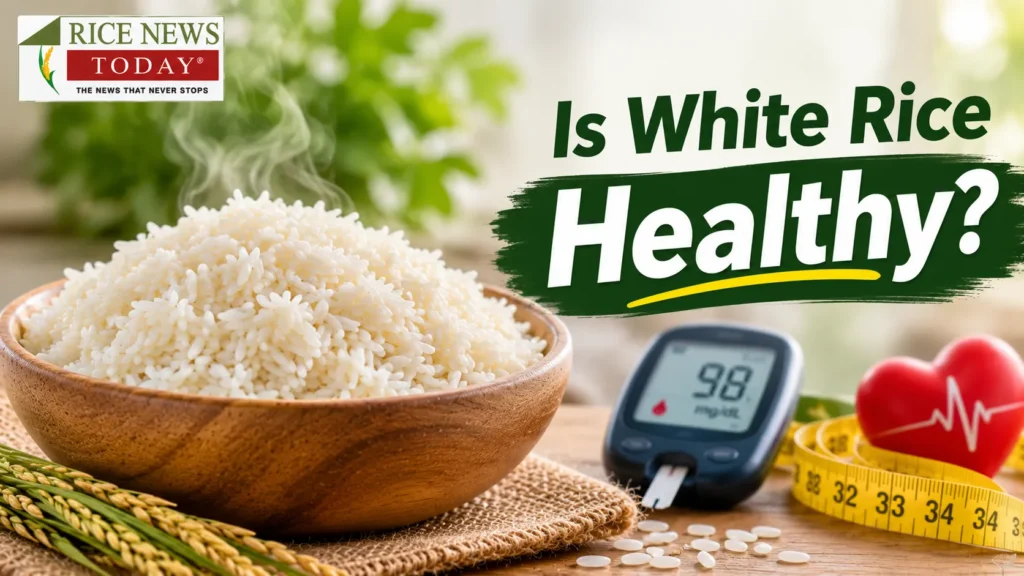
White rice is one of the world’s most familiar staples, yet many people still wonder whether it deserves a place on their plate. Dietitians say there is no simple yes or no. How healthy white rice is depends on who is eating it, how much, and what it is served with.
White Rice vs. Brown Rice: The Key Difference
The gap comes down to processing. White rice has its bran and germ removed, which makes it quicker to cook and longer-lasting on the shelf. It also strips out most of the fiber: a cup of white rice has about 0.5 grams, compared with about 3.5 grams in a cup of brown rice.
Brown rice counts as a whole grain because it keeps those layers, said Alison Neov, a registered dietitian and founder of Neov Nutrition LLC. Fiber helps people feel full for longer, which is relevant to weight management. Neov added, however, that portion size and the foods served alongside rice usually matter more than the grain’s color.
A Gentler Option for Some Digestive Conditions
White rice does have a practical advantage. Mirta Rodriguez, a registered dietitian at Vida Health, said its low fiber content makes it easy on the digestive system. She noted it can suit people recovering from bowel surgery or living with chronic kidney disease, Crohn’s disease, IBS or gastritis.
White Rice and Blood Sugar
The main concern is blood sugar. White rice appears on the American Diabetes Association’s list of foods to eat less often, and its glycemic index (GI) is generally put at 70 to 90. The GI ranks how quickly a food raises blood glucose.
Michelle Routhenstein, a preventive cardiology dietitian and certified diabetes educator, said that eating white rice as a daily staple can spike both insulin and blood sugar. Endocrinologist Reema Patel of Old Bridge Medical Center in New Jersey attributed this to processing, which removes fiber and other nutrients and leaves a high-GI grain.
Lower-GI Rice Alternatives
For people focused on blood sugar, Patel recommends whole-grain rice that keeps its bran and germ. The GI values cited:
- Black rice (forbidden rice): 35
- Wild rice: 45
- Brown rice: 50
- Red rice: 55
For those who prefer white rice’s texture, Rodriguez suggests mixing brown and white rice half and half to get extra fiber without a big change in feel. Cooking rice in broth rather than water adds flavor and a little protein.
The Cook-and-Cool Method
One kitchen technique can soften white rice’s effect on blood sugar. Cook the rice, refrigerate it for 24 hours, then reheat it before eating. Chilling converts part of the starch into resistant starch, which digests more slowly.
Tiffany Bruno, director of education at Switch4Good, said this means the rice raises blood glucose less, even after reheating. A study in the Asia Pacific Journal of Clinical Nutrition found that blood sugar rises were 31 percent lower after cooked-and-cooled white rice than after freshly cooked white rice. Neov added that resistant starch has also been linked to reduced hunger and increased fat burning.
Cooked rice should be cooled and refrigerated promptly rather than left out at room temperature, and it should be reheated until steaming hot.
Portion Sizes and Pairings
Portion size is where many people go wrong. For general health and weight loss, Rodriguez recommends half a cup to one cup of cooked rice per meal. For people managing diabetes, Patel suggests a smaller amount of one-third to one-half cup.
Pairings help too. Bruno recommends fiber-rich foods such as vegetables and beans, for example a chickpea curry or refried beans with roasted vegetables, to slow digestion. Protein from fish, chicken, tofu or edamame also helps limit blood sugar rises.
The Bottom Line
White rice can fit into a healthy diet. The experts’ advice is to watch portions, choose balanced pairings and consider how the rice is prepared. Anyone with diabetes or a digestive condition should check specific amounts with a doctor or registered dietitian.
Published Date: November 21, 2026



 READ