Downloads
 Login
Login
 Register

Tags
IRRI joins global effort to modernize GHG measurement guidelines for rice
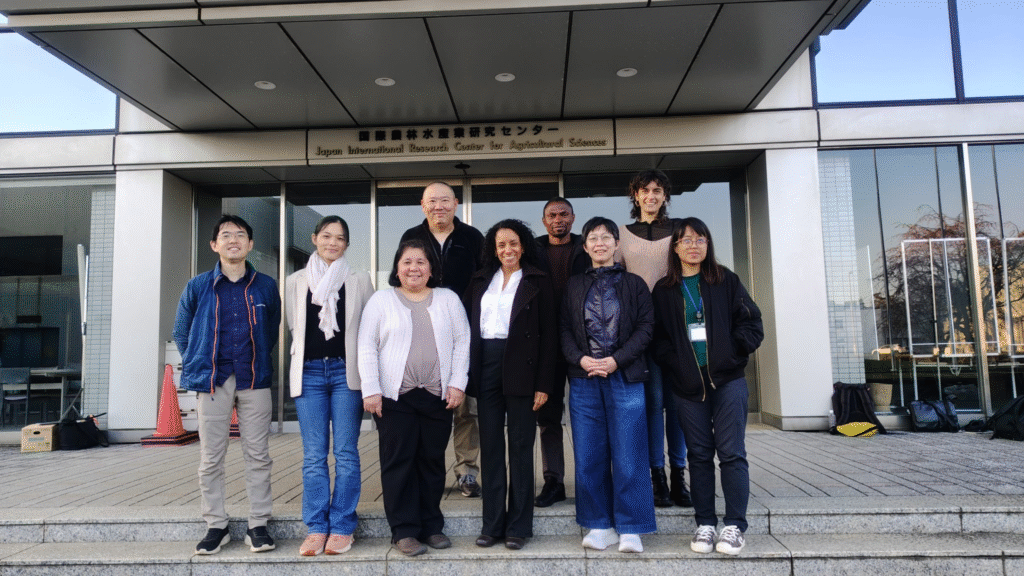
TSUKUBA, Japan (April 2026) – The participation of the International Rice Research Institute (IRRI) in a landmark GHG Measurement Practices in Rice-Based Systems writeshop is helping advance new global guidelines for measuring greenhouse gas emissions (GHG) from rice systems, positioning the institute to play a pivotal role in future climate mitigation and monitoring, reporting, and verification (MRV) initiatives for rice.
Last 7–10 April 2026, IRRI joined leading rice and climate researchers at a writeshop hosted by the Japan International Research Center for Agricultural Sciences (JIRCAS) in Tsukuba, Japan. Supported by the Global Methane Hub (GMH), the meeting assembled selected experts and practitioners to draft a consolidated technical document on GHG measurement and global guidelines for diverse rice ecosystems.
Contributors to the writeshop included representatives from the Food and Agriculture Organization (FAO), AfricaRice, the Institute of Agrifood Research and Technology (IRTA), Alliance of Bioversity International and CIAT, and the National Agriculture and Food Research Organization (NARO).
The writeshop builds on the 2025 workshop on GHG fluxes and modeling in rice systems, where the scientific community agreed to update the 2015 guidelines for Asian regions to incorporate new technologies and wider field experience from global rice producing areas. In Tsukuba, participants reviewed methodologies from Asia, the Americas, Europe, and Africa and identified major differences in chamber design, sampling, QA/QC, flux calculation, and metadata reporting that currently limit comparability across studies and national inventories.
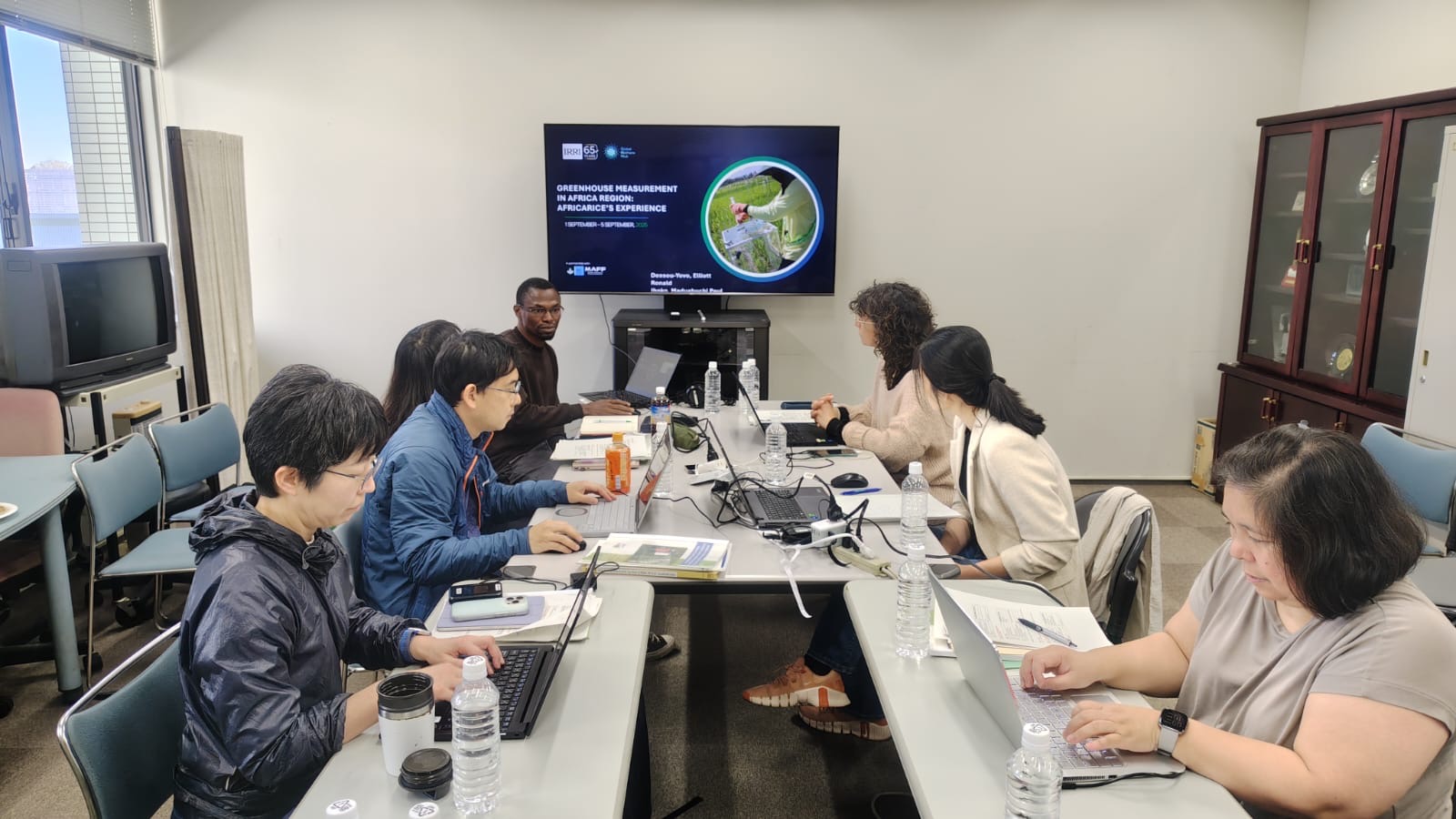
A key driver behind the new guidelines is the recognition that most national and regional GHG inventories still rely on Tier 1 approaches, which fail to capture the diversity of rice ecosystems and management practices. The writeshop underscored that access to accurate, comparable flux chamber techniques and clear guidance on their use is essential to build robust baselines, set realistic mitigation targets, and underpin credible MRV and carbon accounting systems for rice.
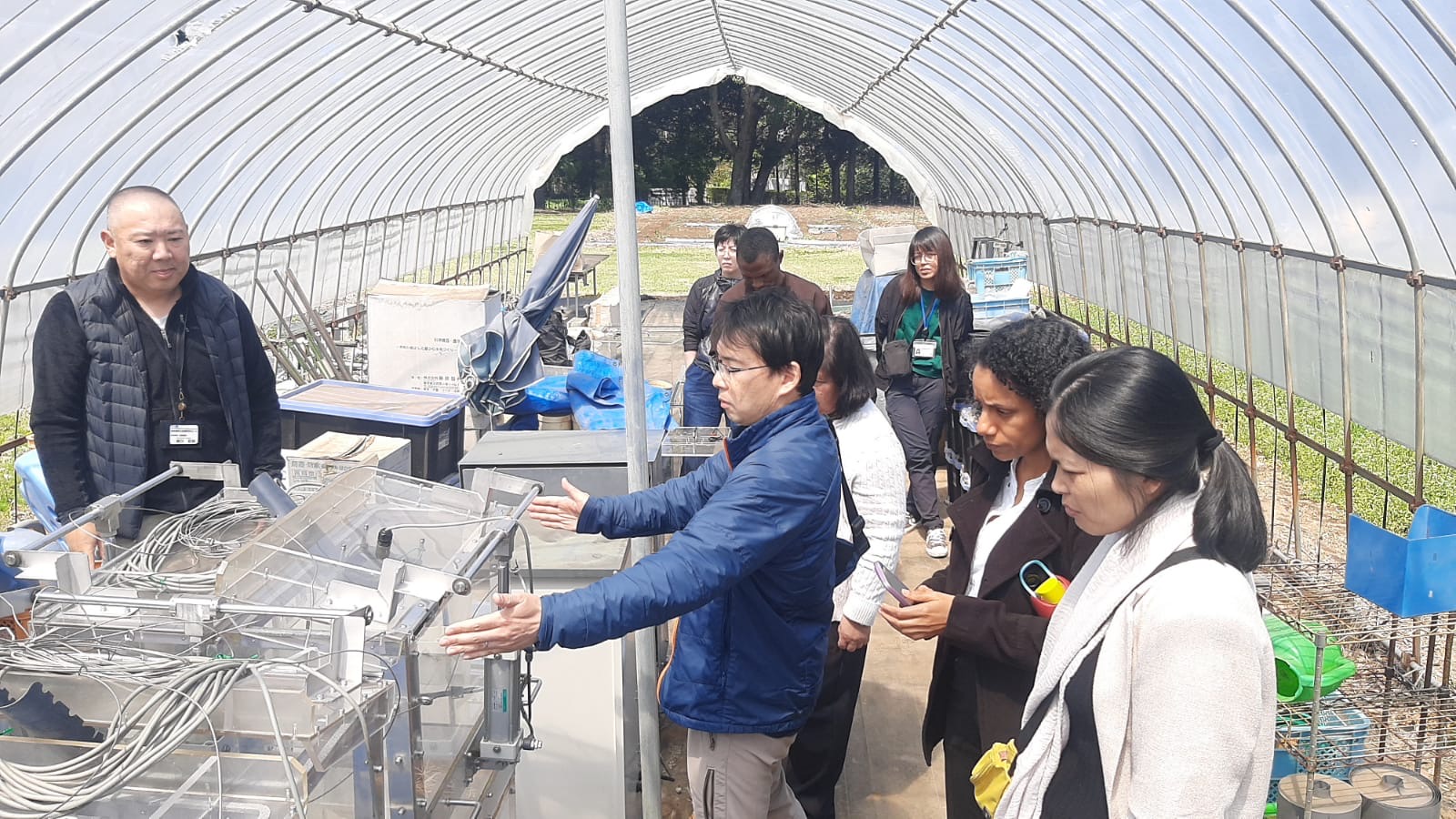
Over four days, participants engaged in detailed technical discussions on chamber operation, sampling intervals, closure durations, experimental design, and handling spatial variability in farmer-managed fields. The group compared linear and non-linear flux calculations, debated time-zero concentration approaches, and stressed standardized sampling and transparent reporting to improve comparability among datasets.
A forward-looking feature of the writeshop was its focus on alternative technologies in gas analyses such as trace gas analyzers, photoacoustic analyzers, and continuous monitoring systems. These tools are expected to complement established chamber-based methods and the conventional use of Gas Chromatography in GHG measurements in rice to support advanced and accessible MRV tools for national GHG inventory and carbon market applications in rice.
Day 3 of the writeshop was devoted to metadata requirements, FAIR (Findable, Accessible, Interoperable, Reusable) data principles, and unified reporting standards. Recommended metadata include site and soil information, water management practices, fertilizer applications, weather conditions, experimental design details, and chamber specifications, all of which are critical for modeling, MRV, international data sharing, and scientific publication.
Participants also converged on minimum sampling frequency guidance, agreeing that weekly sampling should be a baseline standard, supplemented by measurements around key management events such as fertilizer application and drainage periods. The group further explored how the guideline could serve as a reference document for publications and potentially be incorporated into future IPCC-related reporting.
One of the central challenges the group addressed was balancing scientific rigor with the realities faced by institutions in different regions, particularly in Africa where capacity, laboratory support, and equipment access remain major constraints. To address this, the draft guideline distinguishes between minimum and recommended measurements, aiming to ensure that even resource-constrained teams can implement scientifically sound protocols.
Participants emphasized that the final guidelines must be technically robust yet user-friendly, so that researchers, development projects, and future MRV initiatives can adopt it widely across irrigated, rainfed, and direct-seeded systems. This approach is especially important for expanding GHG measurement activities and regional collaboration in African rice systems.

For IRRI and the GMH, the writeshop’s outcomes directly support ongoing efforts to improve climate mitigation strategies and MRV systems in rice production. Harmonized methodologies and reporting standards will enhance the quality and comparability of GHG data, strengthen carbon accounting initiatives, and improve emission baselines and mitigation assessments across diverse rice environments.
The event also amplified the visibility of GMH-supported activities and reinforced IRRI’s role as a technical partner in global efforts to reduce methane emissions from rice. Enhanced collaboration among international institutions and researchers creates a stronger platform for coordinated climate mitigation in rice systems, where IRRI’s long-standing field presence and modeling expertise can add significant value.
https://www.irri.org/news-and-events/news/irri-joins-global-effort-modernize-ghg-measurement-guidelines-ricePublished Date: June 2, 2026


 READ
READ