Downloads
 Login
 Register

Green rice production no longer an option for Vietnam but a necessity, experts say
Although yields could decline by 5-12 per cent, profits increased by VND1.5-9.3 million (US$58-360) per hectare.
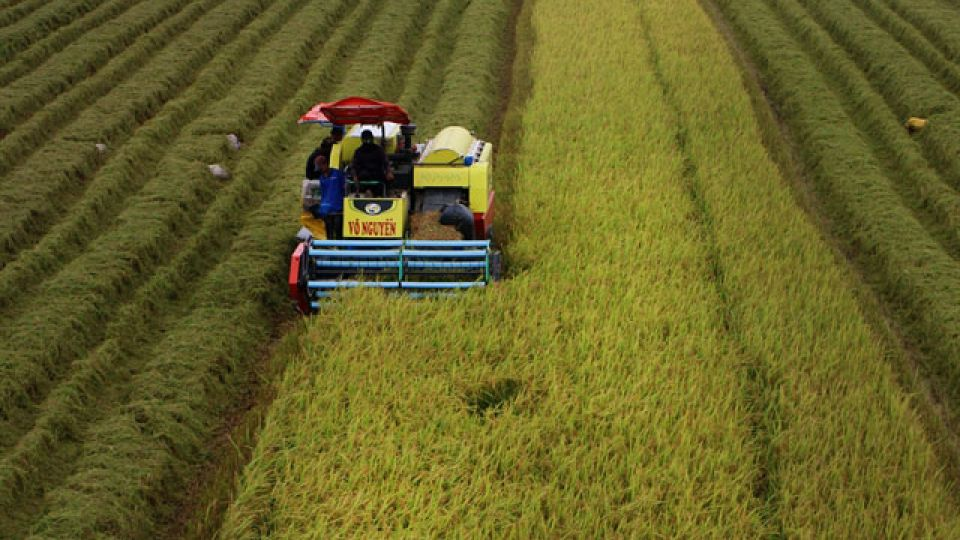
CAN THO – Việt Nam must accelerate its transition towards high-quality, low-emission rice production to meet increasingly stringent international standards, strengthen export competitiveness and improve farmers’ incomes, experts said at a conference in the southern city of Cần Thơ on Tuesday.
Speaking at the conference “Green Rice of Việt Nam – Creating Value, Reaching Global Markets”, held as part of the second Việt Nam International Rice Industry Festival, Đỗ Hà Nam, chairman of the Việt Nam Food Association (VFA), said green production was no longer an option but an inevitable direction for the country’s rice industry.
He cited growing international interest in Việt Nam’s acclaimed ST25 rice variant, with Japanese associations expressing appreciation for its quality during a recent working visit by the Ministry of Agriculture and Environment.
However, despite consumer interest, many Japanese buyers did not know where to purchase the product. Local supermarket chains were keen to distribute ST25 rice, but Vietnamese exporters faced stringent requirements, including checks against 614 criteria, alongside import tariffs.
Nam noted that markets such as the EU, Japan and Australia imposed strict requirements on product quality, pesticide residues and traceability, making even minor lapses potentially costly for exporters.
He also called for better access to green finance, saying businesses still struggled to obtain preferential loans because eligibility criteria and application procedures were unclear. The Government has encouraged banks to offer interest rates at least 0.5-1 percentage point lower than conventional lending rates for green production projects.
Nguyễn Phương Lam, director of the Việt Nam Chamber of Commerce and Industry’s Mekong Delta branch, said funding for the rice sector, particularly under the one-million-hectare project for high-quality, low-emission rice cultivation, remained limited.
Insufficient capital was hindering businesses’ efforts to develop raw material areas, strengthen production linkages, invest in technology and expand markets.
Dương Đức Huy, director of the Department of Crop Production and Plant Protection under the ministry, said the industry needed to shift from pursuing production volume towards improving quality, sustainability and reducing greenhouse gas emissions.
After nearly three years of implementing the one-million-hectare project, more than 420,000 ha in the Mekong Delta had adopted all or part of the recommended practices, including 68,000 ha fully meeting the project’s criteria.
The results included reducing seed use from 150-200kg to 75-80kg per hectare, cutting chemical fertiliser consumption by 20-30 per cent and irrigation water use by 20-40 per cent through alternate wetting and drying techniques.
Although yields could decline by 5-12 per cent, profits increased by VNĐ1.5-9.3 million (US$58-360) per hectare. In Cờ Đỏ, three-crop cultivation could generate net profits of around VNĐ50 million (over $1,900) per hectare annually while reducing carbon emissions by three to four tonnes.
However, climate risks remain significant. Nguyễn Anh Phong, deputy director of the Institute of Strategy and Policy on Agriculture and Environment, warned that El Niño could emerge in late 2026 and early 2027.
In the Mekong Delta, rainfall could fall by 20-40 per cent, reaching 50 per cent in some areas, while saltwater intrusion could extend 50-70 km inland. Around 350,000 ha of rice fields could face freshwater shortages.
Việt Nam’s rice export turnover reached US$3.1 billion in the first nine months of 2026, down 12.3 per cent year-on-year, despite improved international prices.
White rice accounted for 44.84 per cent of export volume, down from 58 per cent in 2025, while fragrant rice made up 31.21 per cent, glutinous rice 13.51 per cent and Japonica rice 9.25 per cent.
Participants called for stronger traceability, brand development, deeper processing, circular use of agricultural by-products and more diversified export markets.
They also stressed the need to link emissions measurement, reporting and verification systems with green finance and carbon markets, while strengthening cooperation among authorities, businesses, cooperatives and farmers.
https://asianews.network/green-rice-production-no-longer-an-option-for-vietnam-but-a-necessity-experts-say/Published Date: November 25, 2026


 READ