Downloads
 Login
Login
 Register


Tags
China’s know-how helps boost Uganda’s rice production
By Edith Mutethya in Kampala
In the quiet wetlands of Butaleja district in eastern Uganda where emerald-green rice paddies stretch across the horizon, Robert Sagula proudly walks among the swaying stalks. Farming has been his life since childhood, following in the footsteps of his father, who grew traditional rice varieties, first introduced to the area by the Chinese government in 1975.
For decades, the harvests were modest. From a hectare Sagula could only harvest 15 to 25 bags — about 2,000 kilograms of milled rice. It was enough to survive, but inadequate to thrive.
That changed in 2018, when FAO-China-Uganda South-South Cooperation project introduced hybrid rice to his community.
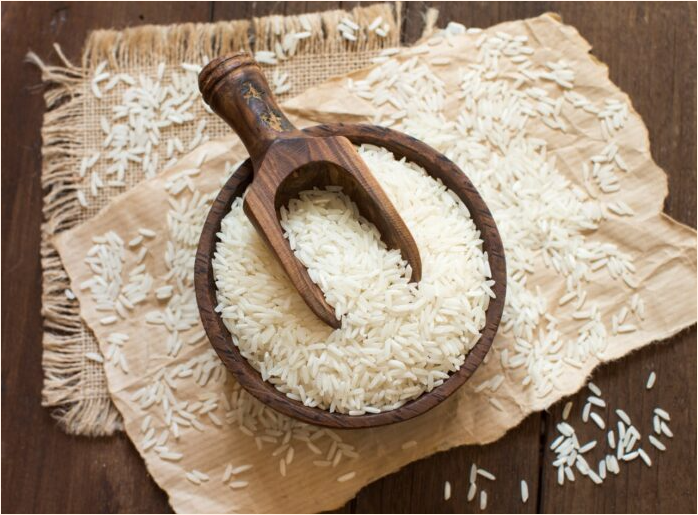
“The hybrid rice is high-yielding, has a nice aroma, long grains, and a golden color. It’s also heavy and fetches higher prices compared to the traditional rice,” he said.
Under proper management, Sagula currently harvests about 12 metric tons per hectare per season and he grows two seasons per year.
On his 1.2 hectares, he produces 7,500 kg of milled rice, earning around $8,348 per season. Across both seasons, his annual income now reaches roughly $16,697, more than six times that under traditional varieties.
“Through the boost in income, I have educated my children in good private schools, and some are now graduates. I have also built a modern home,” he said.
Beyond his own success, Sagula has become a mentor to other farmers. Word of his thriving hybrid rice farm has spread, drawing farmers from across eastern Uganda eager to learn his methods.
“Farmers often reach out to me for training and capacity-building and many have expressed interest in switching to hybrid rice,” he said.
Sagula credits his transformation to training from Chinese experts and support from the Ugandan government. “We appeal to the Ministry of Agriculture to negotiate for another phase of the project so that more lives could be transformed,” he said.
The FAO-China-Uganda South-South Cooperation project was launched in Uganda in 2012, to boost agricultural productivity through the transfer of proven Chinese agricultural technologies and expertise. Since then, it has gone through three phases, with the possibility of extension.
The first phase was fully funded by China, while in the third phase the Ugandan government contributed approximately 76 percent of the total budget.
Julius Twinamasiko, the program coordinator for FAO-China-Uganda South-South Cooperation project at the Uganda Ministry of Agriculture, Animal Industry and Fisheries, said the project has helped mechanize and commercialize agriculture in the country.
He said in addition to the hybrid rice, the ministry has released three varieties of foxtail millet and plans to introduce new chili and sorghum varieties.
Twinamasiko said training by Chinese experts has strengthened Uganda’s extension system, ensuring food security and better nutrition to meet the needs of the country’s growing population.
In Butaleja district, demonstration sites established in the second project phase proved a turning point, said Amina Dugo, the district production officer.
“From the initial demonstration site, we harvested about 2,800 kg of milled rice, which sparked farmers’ interest and led many to adopt the variety,” she said. “Visits to China also helped government officials better understand hybrid rice.”
Dugo said that while rice-fish farming can increase incomes by up to 50 percent, floods remain a challenge.
Thanks to the hybrid seeds and improved agronomic practices from Chinese experts, she said farmers can now harvest between 1,500 and 2,500 kg of milled rice.
https://global.chinadaily.com.cn/a/202602/28/WS69a241ffa310d6866eb3aab9.htmlPublished Date: February 28, 2026


 READ
READ