Downloads
 Login
Login
 Register


Tags
Can China massively reduce food imports with super-efficient unmanned rice farms?
An ancient but challenging harvesting technique could help China reach its food security goals with a new breed of smart rice farm
Victoria Bela
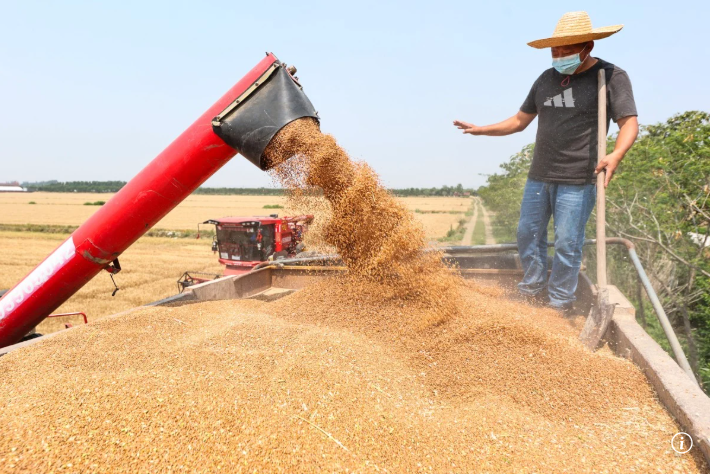
China’s drive to grow 90 per cent of its own grain by 2032 just gained a critical weapon: an unmanned ratoon rice farm that produces 50 per cent higher yields.
By harnessing smart seedling care, sowing, growing and harvesting, a Chinese biotechnology company and scientists from several institutes have built the world’s first smart farm for regenerated rice.
Located in the Datong Lake District in China’s central Hunan province, the smart rice farm has enabled an ancient but technically challenging technique of harvesting the second rice crop grown from the stubble of the first harvest.
“The agricultural machinery goes to the fields, but I don’t go to the fields,” Xiong Jiaojun, the founder of Hunan Hongshuo Biotechnology Co, which is leading the project, told the state-run China News Service (CNS) on March 15.
Built in 2023, the farm has nearly 33 hectares (82 acres) of experimental fields, with the entire intelligent, minimally staffed base covering 200 hectares.
This year, Xiong said they deployed 20 sets of unmanned machinery, which can cover 666 hectares of rice fields.
In recent years, the yield of their smart farm has reached more than 18 tonnes per hectare, or an increase of 6 tonnes per hectare compared with traditional two-season rice.
Two-season or double-cropping rice is a system in which two rice harvests are produced on the same field in a year, requiring replanting after each harvest.
Ratoon rice is a second-life crop grown from plant stubble left after the first rice harvest, and can be done with both annual and perennial rice varieties. This is considered a sustainable farming practice because it does not require replanting and allows for a higher yield on a single planting cycle.
Though the technique has existed for a long time, it has not been used in modern farming practices because manually driven mechanical harvesters often crush the rice stubble and compact soil during the first harvest, according to the Japan International Research Centre for Agricultural Sciences.
But by using smart, unmanned equipment, the rate of rice stubble trampling at the ratoon rice farm has been reduced to 18 per cent, compared with 45 per cent with traditional manual harvesters, according to CNS.
In 2020, Luo Xiwen, a professor at South China Agricultural University who is involved in the smart ratoon rice farm, built the world’s first unmanned rice farm in China’s southern Guangdong province.
Along with a team led by Luo, who is an expert in unmanned agricultural machinery, the ratoon rice farm also involved teams led by Peng Shaobing, a professor at Huazhong Agricultural University, and Tang Qiyuan, a professor at Hunan Agricultural University.
China plans to grow nearly 90 per cent of its own grain – including rice, corn, soybeans and wheat – by 2032, as the country pushes for a diversified food supply and food security.
Efforts to increase rice production in the country include planting salt-tolerant rice varieties in the desert of China’s western Xinjiang Uygur autonomous region, which is traditionally not a rice production base due to climate and soil conditions.
Xinjiang is a major cotton and fruit-producing region, and smart agriculture methods have already been applied in the region to harvest cotton and carrots, according to a report last year by the official Science and Technology Daily.
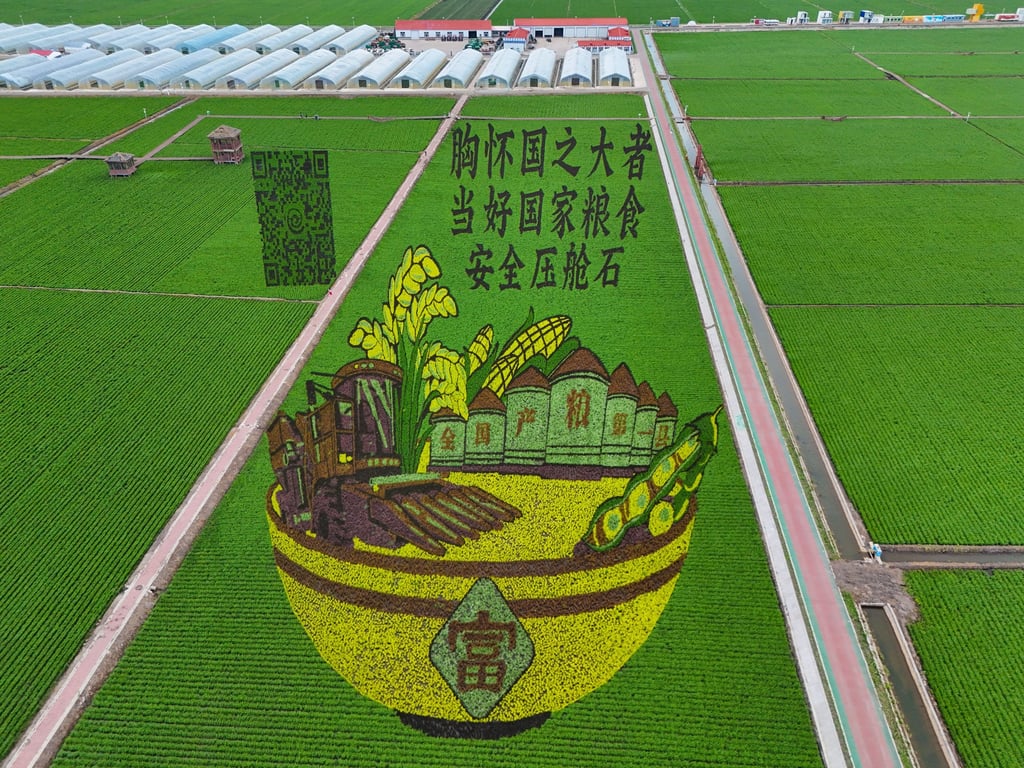
A combination of breakthroughs has made the smart rice factory possible, including in rice genetics, automated machinery and smart monitoring.
Peng, an expert in crop physiology and cultivation, was part of the team that made the landmark discovery that every nighttime temperature increase of 1 degree Celsius (1.8 degrees Fahrenheit) decreased rice yields by 10 per cent, according to his university profile.
Tang is an expert on crop genetics who has published research on hybrid rice systems and improving the yield and resource efficiency of ratoon rice.
This includes a paper published last year in the Chinese journal Rice Science – which also had Xiong as an author – on a rice hybrid with improved resistance to the fungal disease rice blast and “superior ratooning ability”.
The smart ratoon farm has automated operations that begin from the start of rice production, including germination and seedling raising. The sowing of seedlings is also completed with minimal workers using automated systems, according to CNS.
The farm is run by a cloud control centre “brain”, which monitors data including weather and pest forecasts, along with tracking irrigation and agricultural machinery.
Xiong told CNS that the farm used a combination of artificial intelligence, cloud computing and the Internet of Things to run unmanned rice transplanters and harvesters, and even relied on the BeiDou navigation system to operate the machinery on planned routes.
“Through these three years of trials, we have transformed from an experimental field into a replicable and scalable model for agricultural production in the lake area,” she said.
https://www.scmp.com/news/china/science/article/3347232/can-china-massively-reduce-food-imports-super-efficient-unmanned-rice-farmsPublished Date: March 22, 2026


 READ
READ