Downloads
 Login
Login
 Register


Tags
Bangladesh, once India’s close friend, forced to buy Indian goods from Dubai at much higher prices
Source: India.com

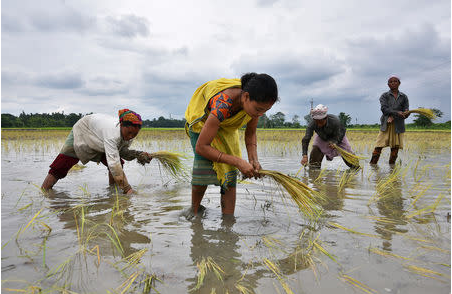
Dubai, a desert city in the United Arab Emirates (UAE), does not produce rice. It relies on imports for its rice. Consequently, questions are being raised about Bangladesh’s purchase of rice from the UAE. Bangladesh’s Food Department has stated that the rice coming from Dubai is Indian, but the supplier’s office is in Dubai. According to economists, importing rice through Dubai incurs additional costs, which is a waste of public money. Dubai is not a rice-producing country; instead, it imports rice from India and re-exports it. Although there is an opportunity to import rice directly from India, the Yunus government’s decision to purchase through an intermediary company has raised questions.
According to a report published on bddigest.com, Mohammad Moniruzzaman, Director of the Procurement Division of the Bangladesh Food Ministry, stated, “The rice supplier’s office is in Dubai, but the actual source of the rice is India.” On October 22, the Government Procurement Advisory Council approved the purchase of a total of 100,000 tons of rice from Myanmar and Dubai. 50,000 tons of Atap rice will be purchased from Myanmar, and 50,000 tons of non-basmati parboiled rice from Dubai. The total cost will be 446.23 crore taka.
Regarding the need to import rice, Moniruzzaman said, “We have sufficient rice reserves. However, we import to avoid risk. Last year, some rice had to be distributed after the floods. This time, imports are comparatively low, only 100,000 tons. Some rice is imported every year. The government’s policy is to avoid any risk. The country currently has a stock of about 1.5 million tons of rice, which is more than normal.”
The Mohammad Yunus government, which assumed power after the overthrow of the Sheikh Hasina government, began to boast of friendship with China and Pakistan. The Yunus government turned its back on India, the very country that liberated Bangladesh. This is causing economic and political losses for Bangladesh itself. These include increased export costs, a widening trade deficit, barriers to entry into the Indian market, and difficulties in reaching other countries through India.
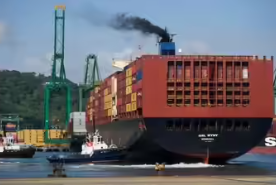
The reduction in the use of river routes connecting India’s crucial northeastern states could lead to problems for Bangladesh’s own logistics, and increased tensions between the two countries could also increase border unrest. With India’s closure of land ports, Bangladeshi products must now be shipped via seaports, further increasing their costs. Bangladesh’s trade deficit is steadily increasing due to its heavy dependence on imported goods from India and a decline in exports.
According to a story published in the Navbharat Times, Ajay Srivastava, founder of the think tank Global Trade Research Initiative (GTRI), stated that Bangladesh is harming itself and cannot harm India. India has not imposed any restrictions on Bangladeshi goods but has only restricted land routes. According to GTRI, this move by India will cause Bangladesh a loss of approximately $770 million, which represents 42% of bilateral imports.
https://ukragroconsult.com/en/news/bangladesh-once-indias-close-friend-forced-to-buy-indian-goods-from-dubai-at-much-higher-prices/Published Date: November 5, 2025


 READ
READ