Downloads
 Login
Login
 Register


Tags
Arkansas farm plants corn where ‘no corn had dared venture before’
Clay Smith pivots to corn on traditional rice ground as fuel expenses threaten to eliminate any hope of profit in rice on his family’s Crowley’s Ridge operation.
Raney Rapp, Senior Staff Writer, Farm Press
At a Glance
- Diesel costs $212 per acre for rice irrigation.
- Electric wells can save up to $100 per acre.
- Farm cuts rice acreage in half to plant corn.
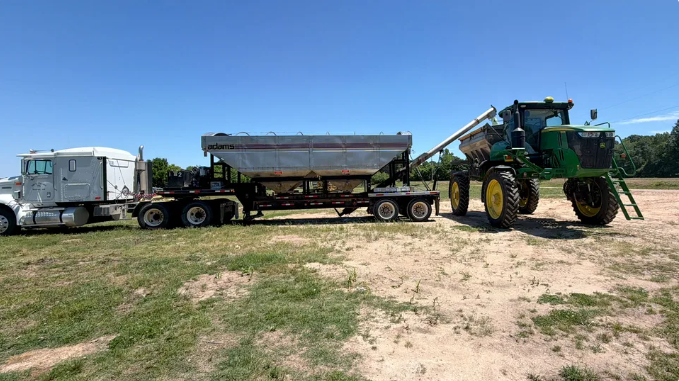
Arkansas farmer Clay Smith was fertilizing corn with a wobble in his voice from the air ride seat as he put tiny yellow kernels into Delta gumbo where no corn had dared venture before.
It might be a total loss history says it will be but they had to try something different when rice irrigation for the same land is expected to cost $212 an acre in fuel alone.
At $4 rice, the farm would need to produce 53 bushels per acre just to cover the cost of fuel, not counting seed, chemical applications, labor, equipment, time or even the water itself. There’s no hope for profit. It’s just not feasible at today’s prices, and with the timing of Iran war, the options for farmers to avoid fuel-price insanity were slim.
“When I was younger, probably around 2012, we had extremely high-priced diesel, and Arkansas was in drought,” Smith said. “My dad tells me it was totally different then than it is now because we sold corn for $7 or $8 a bushel, and we sold rice for $15 a bushel, and we sold soybeans for $14 to $15 a bushel. The price of commodities has not followed this time, so it’s double input for us, and that’s choking everybody out.”
When diesel expenses become overwhelming and long-term cost-saving methods can’t help in the short term, there’s nothing left for a farm to do but pivot.
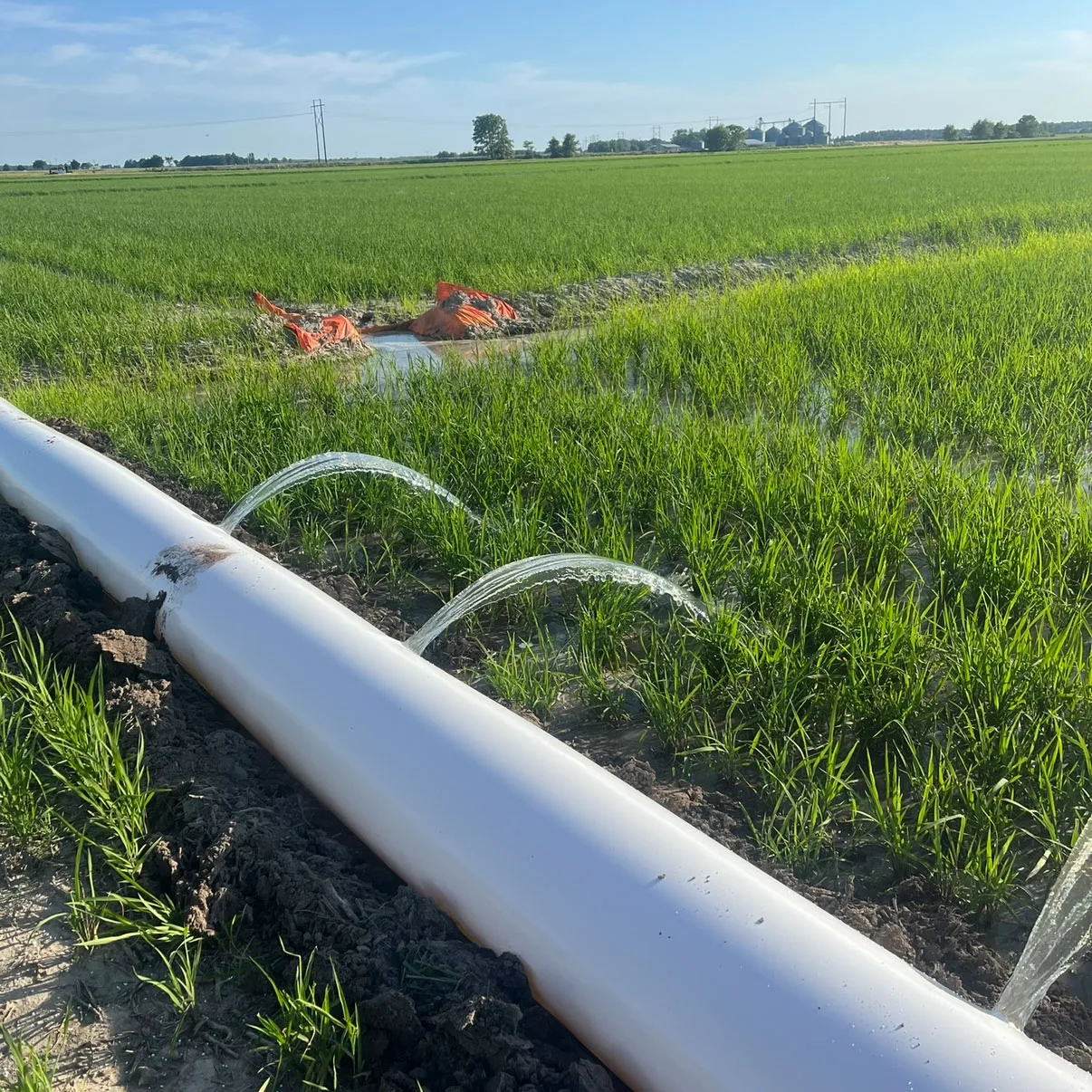
Irrigation systems like this one can cost Arkansas rice farmers $212 per acre in diesel fuel alone in 2026, prompting some Delta operations to shift rice production exclusively to fields with electric wells that can cut costs by up to $100 per acre.
Converting to corn
Most of the Smith family’s farm ground is on top of Crowley’s Ridge, with nice sandy loam soils, close access to the Cache River and an optimal growing environment for corn or soybeans. But on the low ground below the ridge, rice is often the only reasonable option, except when the cost of irrigation tops out the commodity’s price.
“We still have acres towards Cache River that are gumbo, as we call it — ground that we have to grow rice on because it’s hard to grow soybeans, and it will not grow corn. It would, but it just gets flooded out if you get a stand,” Smith said. “We took some of those rice acres where we would have maybe 900 acres of rice, and we cut it down to 450.”
With the remaining half of the available acreage, the family agreed to attempt a corn crop, prioritizing acres with the best growing conditions.
“Corn is on a few of those acres that’s never been in corn before,” Smith said. “But it’s good enough dirt and drains well enough that we can make a corn crop. Hopefully.”
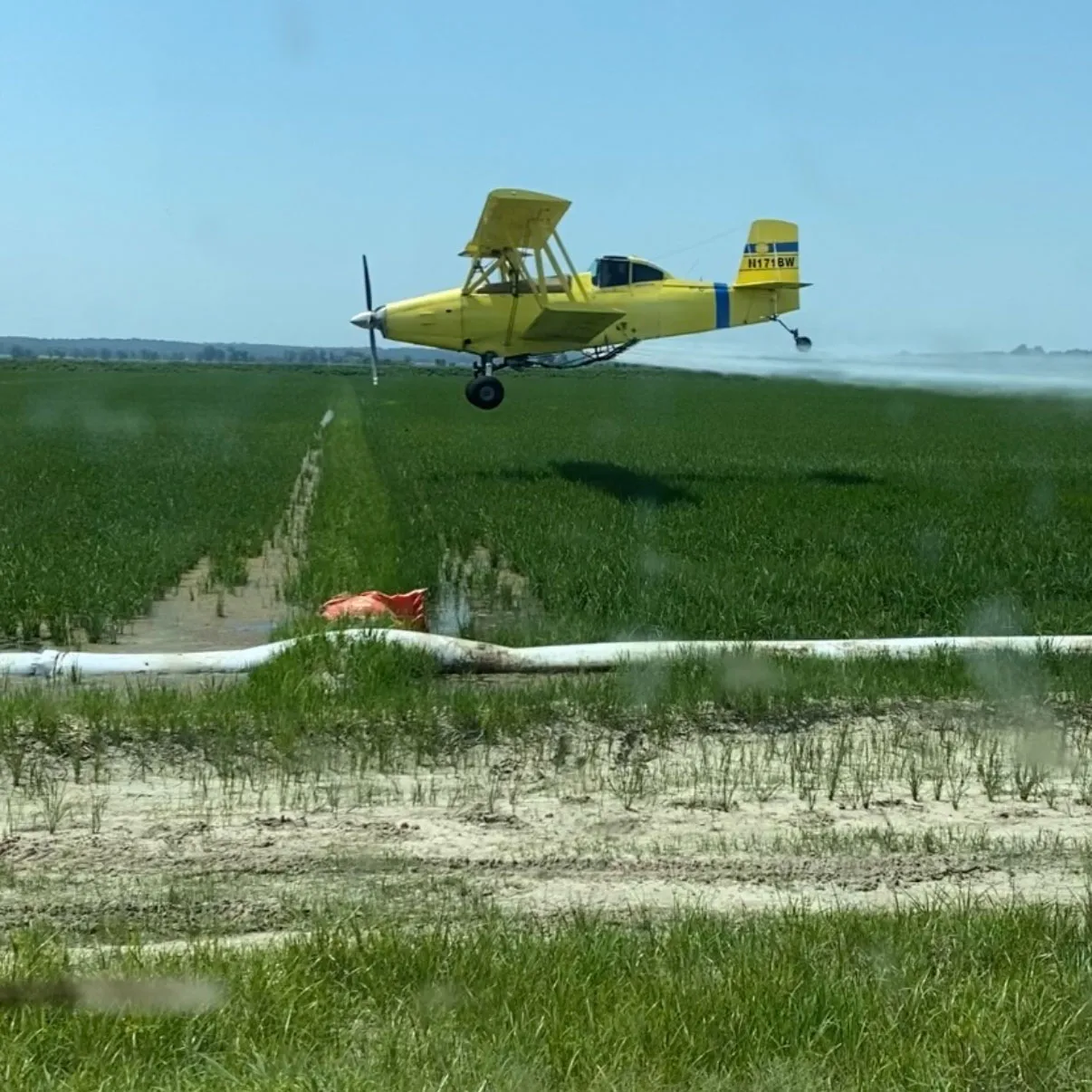
Aerial application continues on Delta farmland, where producers are making tough decisions about crop selection based on irrigation costs. Some Arkansas farmers are planting corn on rice ground for the first time as diesel expenses make traditional rotations economically unfeasible.
Swapping sites
Although all irrigation is expensive, choosing between electric and diesel wells can have a huge impact on profitability. Irrigation costs for diesel wells in 2026 are estimated at $212 per acre for rice, $116 per acre for corn and $96 per acre for soybeans, with values for electric wells as much as $100 per acre less.
On the Smith farm, only about 15 wells have electric pumps of the 45 total on the farm, meaning hard decisions for the growing season ahead.
“Wells are different for everybody,” Smith said. “There’s people that don’t farm near power lines, and they’re 100% of diesel, and there’s also spots in rural areas that have electric.”
The strategy to maximize profitability on the Smith farm given the electric-to-diesel-well ratio came from an unlikely place: a joke made during a farmers’ spitball and coffee session at the only county restaurant.
“My dad is a genius in my eyes, and probably in reality too, but he said we need to just grow rice on these electric well fields,” Smith said. “Cause everybody’s saying, ‘Where are you gonna grow rice this year?’ That was everybody’s topic. And he said, ‘Well, I’m just gonna grow rice on my electric well fields.’”
What began as a bit of a joke turned into a serious discussion as diesel prices began to rise. Why not just focus rice on the cheapest fields for irrigation and move the rest over to the less expensive corn or soybean options?
Sometimes the simplest options that can be employed quickly with common sense at the helm make the biggest difference on the farm.
https://www.farmprogress.com/corn/arkansas-farm-plants-corn-where-no-corn-had-dared-venture-before-Published Date: May 21, 2026


 READ
READ