Downloads
 Login
 Register

Tags
Ensuring the interests of rice farmers
Farmers in the Mekong Delta are changing their farming practices to adapt to climate change and protect the environment. However, to sustain these new production methods, support policies need to link technical requirements with income guarantees, infrastructure improvements, and risk sharing.
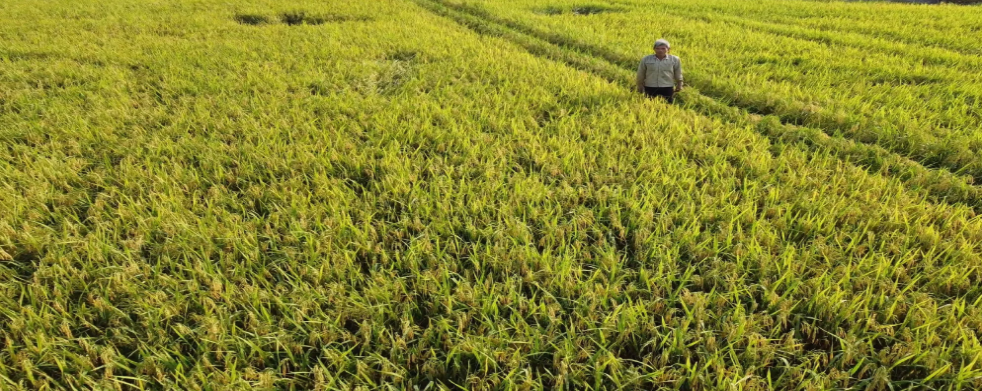
Changes stemming from the interests of farmers.
Mr. Ho Phuoc Minh, a rice farmer who grows three crops a year in the buffer zone of Tram Chim National Park, Dong Thap province, used to worry that changing his farming methods would reduce yields and affect his family’s income. For many years, he had been accustomed to burning the fields after harvest to clear the land, regularly spraying pesticides, and applying chemical fertilizers to maintain the green color of the rice leaves.
When participating in the STAR-FARM project, Mr. Minh began to learn about techniques to reduce chemical pesticides and use biological pesticides. The specific guidance helped him better understand the connection between rice cultivation methods and soil quality, water sources, and the ability to sustain production in the long term. From worrying about the yield of one crop, he gradually considered the farming conditions for subsequent years.
“But after receiving detailed guidance on techniques to reduce chemical pesticides and use biological pesticides, I realized that if we preserve fertile soil and clean water sources, our farmers will be the first to benefit. We should keep what is good, and learn from what is even better to gradually adapt. Now I’m not just looking at the immediate harvest anymore, but thinking long-term. I am committed to continuing to practice ecological rice farming to preserve the land and water for future generations,” Mr. Minh shared.
Mr. Minh’s story illustrates that changing practices needs to start with the issues that concern producers. When explained and guided in practice, farmers have a basis to consider the benefits of new methods instead of simply accepting a request to reduce the use of supplies. Protecting soil and water also becomes more relevant when directly linked to the farming conditions of their families.
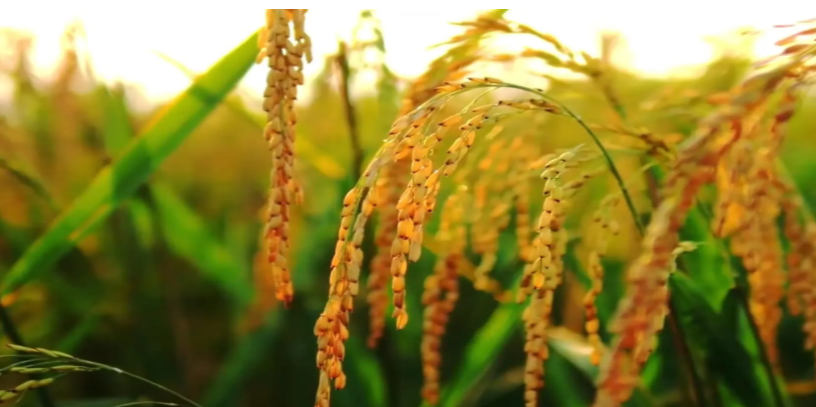
At the Nam Quy Agricultural Cooperative in Dong Thai commune, An Giang province, the transformation of production stemmed from the prolonged salinity intrusion. Mr. Pham Chi Thuong, Chairman of the Board of Directors and Director of the cooperative, along with 97 members, developed an organic shrimp-crab-rice rotation model on an area of 297 hectares.
According to Mr. Thuong, before 1990, this area had freshwater year-round, and people cultivated one rice crop followed by one fish crop. Water conditions then changed, and after 2020, the saline intrusion lasted up to eight months, making maintaining two rice crops unsuitable. The cooperative then switched to aquaculture during the saline intrusion period and rice cultivation when freshwater was available.
“By September, the rains pour down, and we flush out the salt from the shrimp farming land to plant organic rice, which lasts until December,” Mr. Thuong said. This cropping pattern, based on water availability, has helped the cooperative maintain organic rice production for the past nine years, with products exported to Germany, Japan, and the United States .
According to Mr. Thuong, profits from shrimp and crab farming reach 50-70 million VND/ha, plus an additional 20-40 million VND/ha from organic rice cultivation. However, the production efficiency has not yet resolved all the difficulties, as the cooperative still lacks infrastructure for transporting agricultural products and proactively responding to weather conditions.
“The current road is only 2.5 meters wide, so large trucks cannot reach the fields to unload agricultural products. We request investment to upgrade the road to 6 meters. The single-phase electricity supply is currently too weak; during heavy rain and floods, it is insufficient to power the pumping stations for flood control. We urgently need a three-phase power line,” Mr. Thuong suggested.
The cooperative also lacks an automated monitoring station to track water quality and the risk of pesticide contamination from surrounding fields. While organic rice has established a guaranteed purchase agreement, shrimp and crab are still mainly sold in small quantities to traders at fluctuating prices, so the cooperative hopes for businesses to participate in long-term procurement.
Experience in Nam Quy shows that changes in production methods must be accompanied by conditions to maintain the model. Farmers can proactively adjust cropping seasons, but upgrading roads, electricity, and water monitoring systems requires additional resources. These are also practical requirements that need to be considered when expanding sustainable farming methods.
Sharing risks and expanding opportunities for participation.
Besides infrastructure and markets, the transformation process also needs to ensure that producers have access to knowledge and participate in decision-making. If technical guidance does not reach all labor groups, the application of new processes will be difficult to implement effectively in individual households and cooperatives.
Mr. Nguyen Hung Cuong, representative of Oxfam in Vietnam, cited research from the Go-Rice project, stating that women account for 47% of the agricultural workforce, but their participation rate in technical training or decision-making meetings at cooperatives remains below 30%. The research also noted that men hold 87% of the director and deputy director positions in cooperatives, and 64% of men believe that women are not suitable for leadership roles.
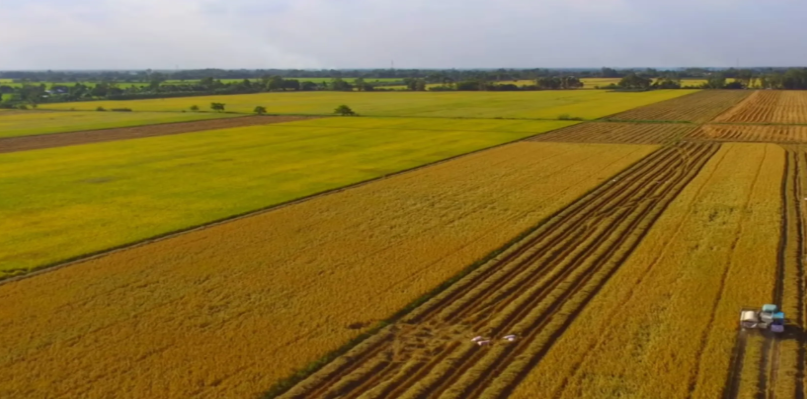
These figures highlight the need to expand opportunities for women to participate, who assume many roles in production and household management. Technical guidance should be linked to enabling them to contribute ideas on how to organize production, rather than simply participating in fieldwork.
Mr. Cuong also noted the situation of labor migration from the Mekong Delta, with approximately 200,000-250,000 people leaving each year, of which more than 70% are young people. Based on this reality, he proposed leveraging the network of grassroots Women’s Unions and training rural youth to form technology service groups, supporting the operation of drones, digitizing field diaries, and controlling emission monitoring systems.
This type of service organization aims to support farmers in meeting new demands in farming. When low-emission rice production requires monitoring and documentation, farmers need guidance tailored to their technological capabilities to sustain the work through each season.
Ms. Kate Wallace, Consul-General of Australia in Ho Chi Minh City, emphasized the need for coordination among all parties. “No single government or organization can achieve the enormous goals of sustainable agricultural transformation on its own. The collaborative model that Australia wants to promote is a close connection between the government, businesses, research institutions, and farmers to create tangible, visible value,” Ms. Kate Wallace stated.
According to Ms. Kate Wallace, Australia is committed to continuing to support Vietnamese farmers in building a climate-resilient rice value chain. Mr. Vinod Ahuja, Head of the Food and Agriculture Organization of the United Nations (FAO) in Vietnam, also emphasized that improving the livelihoods of producers is central to the transformation of the food system.
From the perspective of the regulatory authorities, Mr. Nguyen Hoang Hiep, Deputy Minister of Agriculture and Environment , emphasized the need to ensure the rights of farmers during the transition process. “Farmers cannot bear the costs of the transition alone, especially the costs of reducing greenhouse gas emissions. We cannot encourage farmers to grow low-emission rice while their rights are not guaranteed, or even their income decreases. Managing natural disaster risks and market fluctuations is the responsibility of the state; under no circumstances should the risks be shifted to the farmers,” Mr. Nguyen Hoang Hiep stated.
The Deputy Minister requested that local authorities and specialized agencies prioritize serving farmers. When the Government signs the decision to adjust the plan to expand the cultivated area, units under the Ministry need to coordinate with localities to review raw material areas, improve inland irrigation and logistics infrastructure, and identify key investment projects.
From Mr. Ho Phuoc Minh’s desire to preserve land and water resources to the Nam Quy Cooperative’s needs for electricity, roads, and market access, producers have identified specific conditions necessary to embrace new farming methods. Meeting these needs is also a way to put emission reduction goals into practice, enabling farmers to maintain their income while protecting their long-term production resources.
Memorial (News and Ethnic Groups Newspaper)
https://www.vietnam.vn/en/bai-cuoi-bao-dam-loi-ich-nguoi-trong-luaPublished Date: November 3, 2026


 READ