Downloads
 Login
 Register


Tags
When cooperatives lead farmers in sustainable rice farming
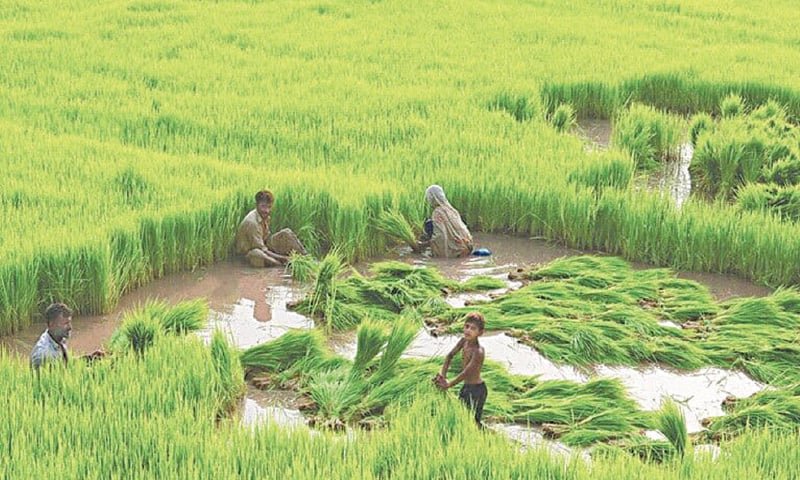
In the rice-producing areas of the southeastern part of the province, cooperatives are playing a key role in organizing production, transferring technology, and linking consumption, helping farmers gradually shift from production based on experience to an agricultural economic mindset, opening up avenues for improving economic efficiency and the value of rice grains.
Changes from old farming practices
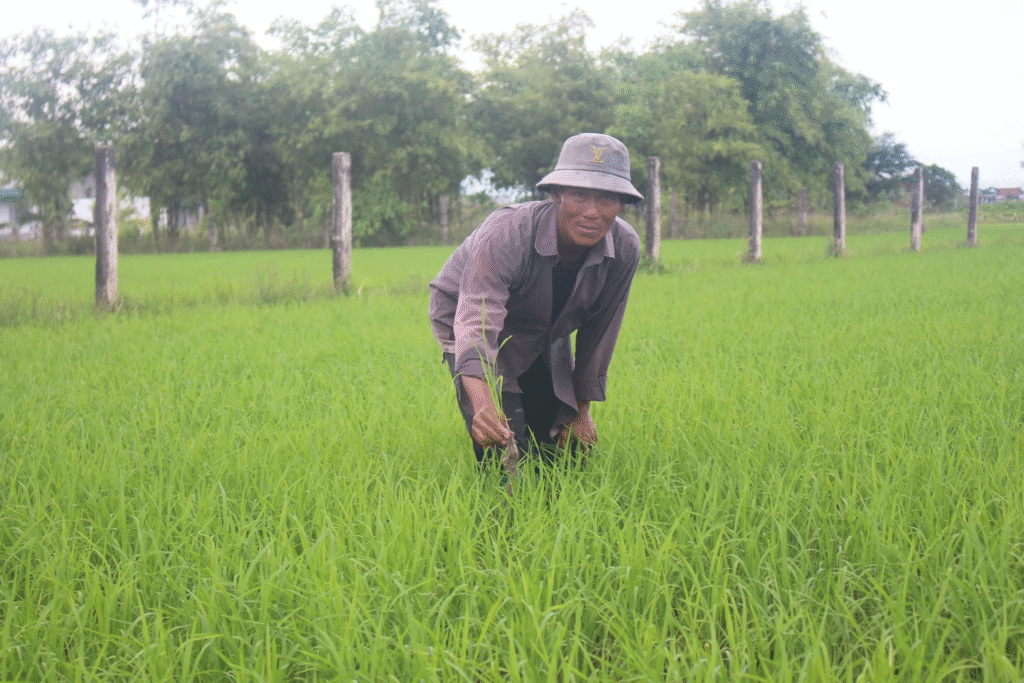
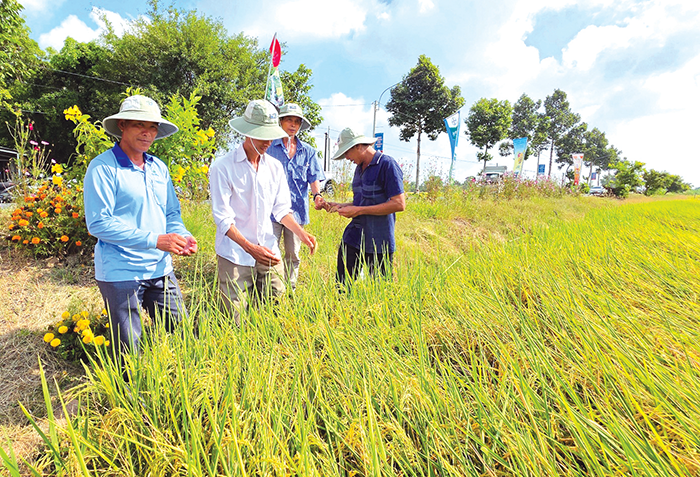
In the fields of Hoi Nhon village, Ham Liem commune, Mr. Truong Thanh Long – a member of Ham Chinh 1 Agricultural Service Cooperative – is inspecting his 20-day-old rice crop. As an early adopter of advanced farming techniques, Mr. Long focuses on mechanization from land preparation and sowing to pesticide spraying. This season, he continues to use drone spraying services, combined with sparse sowing to reduce seed costs and limit pests and diseases.
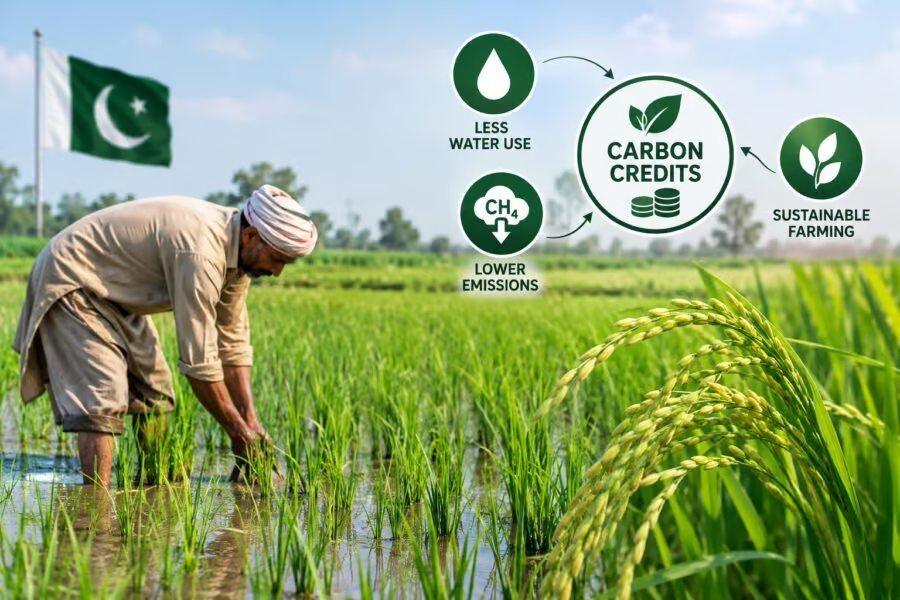
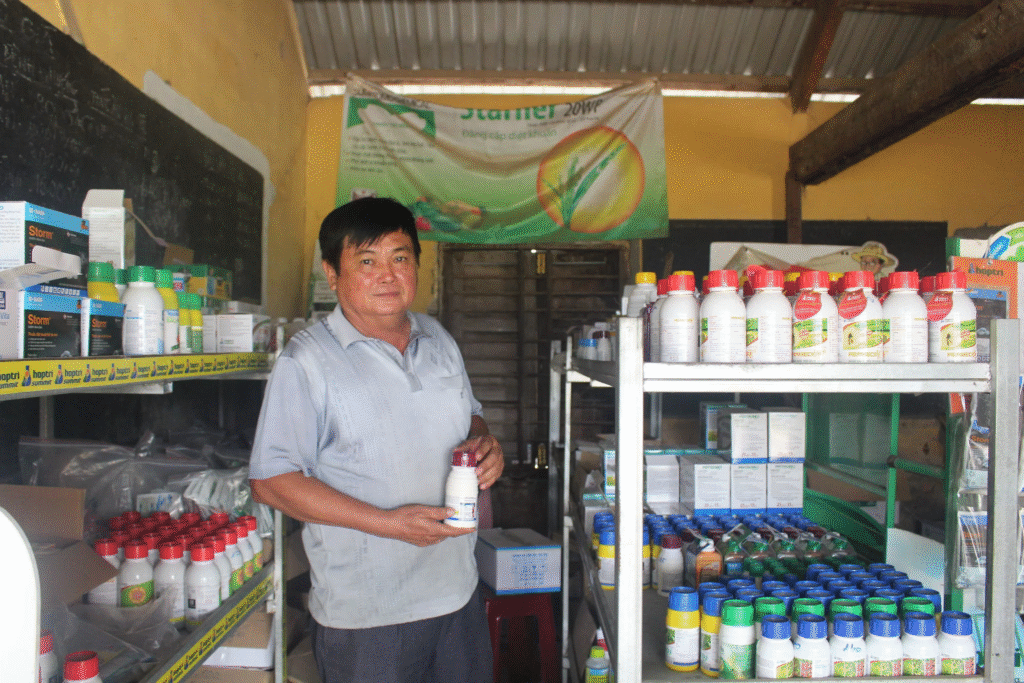
Mr. Long said that previously, many farmers believed that dense sowing would result in more panicles and grains, so changing this practice was not easy. However, when the price of agricultural supplies increased, dense sowing increased seed costs, and the overgrown fields were more susceptible to pests and diseases. Based on this reality, he encouraged cooperative members to reduce the amount of seeds from about 20 kg/sao to 15-18 kg/sao and strictly adhere to the “four correct principles” for using pesticides. When the locality implemented the Safe Rice Production model, reducing greenhouse gas emissions with 14 participating households, farmers had the opportunity to experience sparse sowing and mechanization.
Ham Chinh 1 Agricultural Service Cooperative currently has 171 members, cultivating over 100 hectares of rice. The OM18, PDR57, and VNR98 varieties are being cultivated effectively, and recently, some households have even experimented with the HG12 variety to reduce emissions. Mr. Tran Ngoc Tai, Director of Ham Chinh 1 Agricultural Service Cooperative, said that this year, the cooperative is encouraging members to register for drone spraying services on large fields, gradually replacing manual spraying methods. Along with this, they are encouraging a reduction in the amount of seeds sown to save input costs and help the rice plants grow healthier.
In Ham Liem commune, the annual rice production area reaches over 3,800 hectares. The commune has 4 agricultural cooperatives, and the locality is promoting the introduction of new rice varieties, certified varieties, and purebred varieties into production; at the same time, it encourages mechanization in land preparation, fertilization, spraying, and sowing.
Linking production to increase the value of rice grains.
In addition to guiding farmers in technical innovation, cooperatives are also gradually organizing production towards a commodity-based approach, linking rice quality with consumer markets. The Bac Ruong Agricultural Service Cooperative in Bac Ruong commune is implementing this direction.
The cooperative currently has 28 members, cultivating approximately 100 hectares. According to Mr. Cap Kim Thanh, a member of the Board of Directors and advisor to the cooperative, “The cooperative’s stable operation helps farmers feel secure in their production, effectively providing input supply services and linking output markets. The cooperative guides its members to change their farming methods from traditional to integrated, safe production, increasing productivity and product value…”

On its current land area, the cooperative plans to allocate 20 hectares for clean rice production, 30 hectares for rice seed production, and 50 hectares for safe commercial rice. The main varieties include OM18, ST25, and OS20. Currently, the clean rice is mainly supplied to regional distributors and supermarkets. Once the market stabilizes, the cooperative plans to expand clean rice production by an additional 10-15 hectares. According to the cooperative’s calculations, the profit of participating members could increase by approximately 15% per unit area compared to before.
The experiences from Ham Liem and Bac Ruong show that by promoting the role of cooperatives as the central hub for organizing production and connecting to the market, rice farmers will have more opportunities to reduce costs, improve rice quality, and increase income in a safe, efficient, and sustainable manner.
Source: Báo Lâm Đồng
https://www.vietnam.vn/en/khi-hop-tac-xa-dan-dat-nong-dan-canh-tac-lua-ben-vungPublished Date: October 21, 2026


 READ