Downloads
 Login
Login
 Register


Tags
From farmers to shopkeepers, India counts the cost of a weak monsoon
Rice yields have fallen after erratic monsoon rains, while higher farm input costs threaten rural incomes and spending during the key wedding and festival season.
Bloomberg
By Pratik Parija and Anup Roy
For Ajay Kumar Chutani, whose family has run a sari shop in the north Indian market town of Karnal since the 1970s, the months after the monsoon are always his busiest. During these cool weeks he sells enough lengths of silk and embroidered cotton to tide him over the leaner seasons, as farming families prepare for weddings and the frenetic festival season.
This year, after erratic rains through the wet season and the country’s weakest rainfall since 2015, Chutani is keeping a close eye on the till.
“The next three months decide our annual profit,” said Chutani, adding he is hopeful for a sales increase.
Across India’s northern grain belt, including here in the breadbasket state of Haryana, farmers are bringing their harvest to market — a time of frenzied activity when seasonal windfalls dictate spending on special items from tractors to wedding gold.
But this year, rice yields are down and costs are rising. Farmers say more chemicals and fertilisers are required to limit production losses.
The monsoon is one of the world’s most important weather events, delivering about 75 per cent of India’s annual rainfall and determining livelihoods in a country where only about half of farmland is irrigated. But meager harvests are not just bad news for hundreds of millions of rural dwellers — they also augur poorly for the rest of the nation, as the knock-on effects of weak rural consumption and rising prices spread, a headache for the Reserve Bank of India when it meets next week.
India is also among the world’s biggest producers and consumers of wheat, rice and sugar, meaning shortfalls come with global implications at a time when large importing markets are also battling other inflationary pressures, including higher fuel prices.
“The monsoon shock is now less about rainfall and more about its income effects,” said Madhavi Arora, economist with Emkay Global Financial Services Ltd. “The risk is that a weaker crop outcomes translate into softer farm incomes and hence slower rural consumption.”
Cumulative precipitation during the June to September monsoon period was 12.6 per cent below the long-term average, the India Meteorological Department said Wednesday. It comes as the current El Niño weather phenomenon, which is linked to weak rains across swathes of Asia, is expected to be one of the most powerful on record.
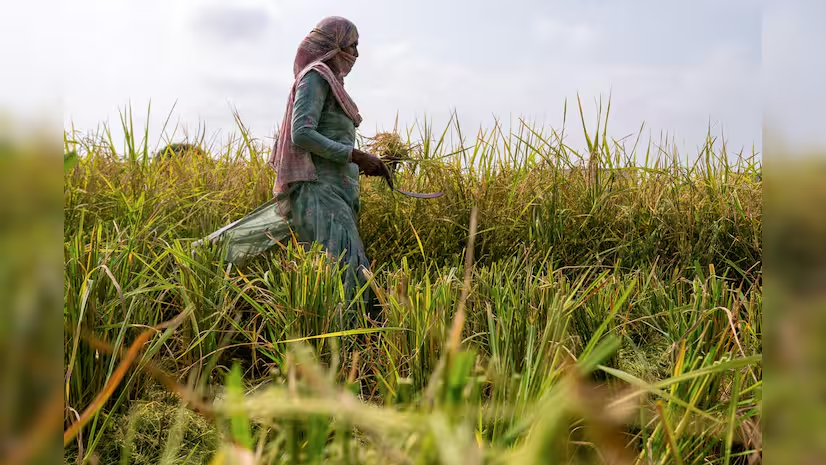
Rice is one of the first monsoon crops to be harvested, and the grain market in Gharaunda — a 20-minute drive from Karnal along the historic Grand Trunk Road that cuts across northern India — was bustling last week with farmers bringing in their initial hauls. Jitender Sandhu waited for more than an hour for his grain to be unloaded, returning later to watch it be bagged and sold.
It’s been a weak harvest, he said, with yields on the 125 acres he farms in Haryana running about a fifth below last year. Crop diseases also thrived in the dry weather, forcing him to buy more pesticides — on top of extra fuel to keep irrigation systems running.
The pumps at his farm typically run off the grid, but overnight outages forced him to hire a diesel alternative. A weak monsoon typically means hotter weather and stronger demand for cooling, but also crimps hydropower generation. India’s electricity deficit surged to the highest for September in nearly a decade.
Even as rice prices rise, it won’t fully cover Sandhu’s production loss.
“We’ve had to spend extra on repairing and maintaining water pumps and other farm equipment,” he said. “Diesel costs have also increased because we’ve had to run the pumps more often.”
The erratic nature of the rainfall has also wrongfooted farmers. Mumbai recorded its wettest start to July in decades, but Maharashtra — the state where the city is located and a sugar production hub — has since declared a drought. In the north, heavy rain during the crucial grain-filling stage in Uttar Pradesh sharply cut rice yields.
“When my crops needed water, it didn’t rain, but during flowering, it rained continuously,” said Jaipal Singh, a farmer in nearby Haryana, as fertiliser was loaded on to his tractor at the Gharaunda market after selling his rice. His yields were about 10 per cent below last year.
Weaker harvests mean less cash in farmers’ pockets, much of which must go toward seeds and inputs for the next crop.
It also leaves less money for big-ticket purchases typically made at this time of year — and fewer customers for shopowners like Satpal Rana, who sells refrigerators, televisions, washing machines and other household appliances near the market.
In the first three weeks of September, he sold five to six fridges and TVs. In the festival period, that typically rises to five or six a day. Many customers have recently made inquiries, but he is now waiting to see whether the purchases will come through when harvests are concluded.
While the link between rural wage growth and agricultural growth has weakened over the past decade, consumption typically takes a hit when rainfall is deficient, said Aurodeep Nandi, Nomura Holdings’ India economist.
Big purchases like motorbikes or tractors are often seen by economists as an indicator of sentiment, prompting them to watch brands like Hero MotorCorp Ltd., whose motorcycle sales dipped in August. According to the RBI, year-on-year growth in tractor sales slowed to 0.8 per cent in August from 28.1 per cent in July, while two-wheeler sales growth eased to about 20 per cent from 28 per cent the previous month.
The other concern for farmers is that a bad monsoon ripples out over months. The rains irrigate fields but also replenish reservoirs that provide water for crops grown in winter, when rainfall is lower. Many farmers sow wheat and rapeseed soon after the rice harvest, and the weak monsoon poses a threat to those plans, India’s farm secretary said earlier this week.
Some areas have the benefit of healthy water levels from last year, but southern states — with lower reserves and relatively weaker irrigation networks — have been more vulnerable, said Rajni Thakur, economist at L&T Finance Ltd., one of India’s largest non-bank lenders with a significant rural presence. Rain in what the IMD refers to as the south peninsula region was nearly a quarter below the long-term average.
Even in the north, reservoir storage in most major wheat-producing states is at three-year lows, Goldman Sachs Group Inc. economist Santanu Sengupta said in a recent note. “El Niño-related weather conditions remain a key source of uncertainty,” he said.
The full economic impact of the shortfall over the monsoon months will only become clear later this year, when winter crops are growing and more produce has reached the market.
But it is unlikely to improve the outlook for already rising prices. Food accounts for more than a third of the retail inflation basket, and higher prices later in the year could spill over into other goods and services. Even before the full effect of the monsoon was felt, inflation rose to 4.82 per cent in August, its third straight month above the central bank’s 4 per cent medium-term target, driven by food prices.
Most economists expect the central bank to attempt to contain the threat, raising interest rates as early as its next policy review on Oct. 7, after holding steady throughout the year. In its monthly State of the Economy report, the bank identified “geopolitical tensions and weather-related uncertainties” as key downside risks to an economy that expanded at a faster-than-expected pace in the quarter through June.
For farmers like Sandhu, near-term concerns dominate. He remains focused on finishing the second half of his rice harvest and will turn to wheat sowing next. His neighbors, he says, are similarly focused on battling through falling yields and rising costs.
“Farming is our livelihood,” he said. “Almost every farmer in my village is facing the same situation.”
https://www.business-standard.com/economy/news/from-farmers-to-shopkeepers-india-counts-the-cost-of-a-weak-monsoon-126100100384_1.htmlPublished Date: October 1, 2026


 READ
READ