Downloads
 Login
Login
 Register


Tags
Why farmers growing paddy have to incur losses
Neil Ray
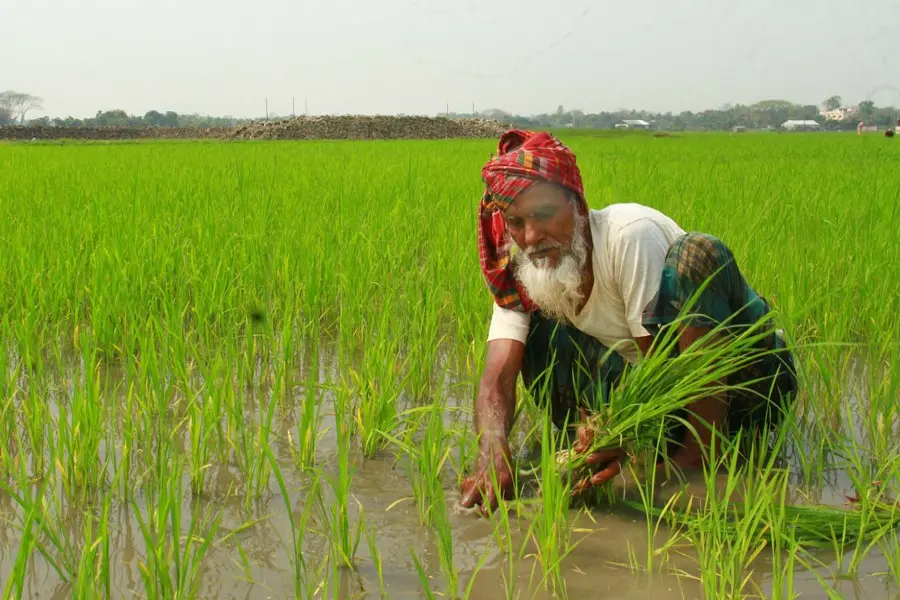
Farmers in this country, more often than not, are given a raw deal. The crops they grow feed the nation but in return they are subjected to intrigues and guile of a nexus of millers, traders and middlemen. Aware of the market manipulation, successive governments still have done little to change the situation; rather stood a silent spectator. The result is deprivation of fair prices for both farmers and consumers. Right now, farmers are confronting such a hostile market situation with their just harvested Aus paddy. A report on paddy market in Naogaon carried in a contemporary reveals how farmers are counting losses while this has no reflection on the rice market.
According to the report, a maund (a little over 37 kilogram) of paddy is priced between Tk800 and Tk950 depending on varieties. Although there was a bumper yield, farmers cannot enjoy it because the selling prices are lower than the production costs. Last year the prices were higher by Tk300-400. This year production costs have gone up on account of higher prices of all kinds of inputs and increased labour wages. If the going rate for a maund of paddy would be in betweenTk1,200 and 1,300, farmers could get some profit.
It is, however, not with Aus paddy alone, Boro paddy cultivated before across the country is experiencing a similar sluggish market and price fall. Its production cost was higher than the regular market price. But when paddy was damaged in the haor areas due to flash floods, there was speculation of a sizeable shortfall of rice. Also prices of all varieties of rice registered an unexpected rise during the harvesting period. Then what has exactly happened to cause this market slump? Ironically, paddy is cheaper but rice is costlier now.
In fact, the prices of paddy were higher about a fortnight before but then those registered a drop by Tk 200-300 a maund. This is because demand for the newly harvested paddy is dull in the market. Millers claim that Boro paddy had a bumper harvest and excessive import of rice during the interim government led to a sufficient stock of the staple in the country. If this argument is right, why did the prices of different varieties including the coarse register a rise by Tk 2.0-4.0 a kilogram only recently?
In order to manipulate rice market, the syndicate advances flimsy excuses. Its objective is clear: deprive growers of the staple of fair prices by maintaining the demand for paddy low. By the time most farmers have sold their stocks, syndicate members build up their own stocks to a level where they can dictate terms. This way they raise prices from time to time and it so happens that the small farmers who sold their paddy to meet emergencies have to buy rice at a much higher rate later. In the process, both consumers and farmers fall victim to a manipulated market.
In developed countries, cultivation of cereals has long ceased to be a profitable business. Farmers are pampered to stick to the profession by offering a slew of opportunities and assistance including subsidies. At the moment farmers busy preparing rice field and planting seedlings here cannot even procure fertilisers at the government-fixed prices. Fertiliser dealers are taking farmers for a ride. Dealers do not sell fertilisers directly to farmers but this input is available in the open market at much higher prices. After long wait and repeated appeals for releasing fertilisers, hundreds of angry farmers broke into the warehouse of a dealer at Dhaldanga Bazar under Bhurungamari Upazila and took away 225 sacks urea and muriate of potash (MOP).
This incident speaks volumes for the mismanagement of the distribution system. Farmers deserve better. The stake for ensuring food security is high not only for farmers alone, but it is also a national priority. There is a need for developing a policy framework under which their interests have to be protected. The entire system from cultivation to marketing of their produce should be facilitated in way that protects their interests.
https://thefinancialexpress.com.bd/views/opinions/why-farmers-growing-paddy-have-to-incur-lossesPublished Date: September 7, 2026


 READ
READ