Downloads
 Login
Login
 Register

Tags
Pakistan’s agriculture sector economy faces a growing crisis
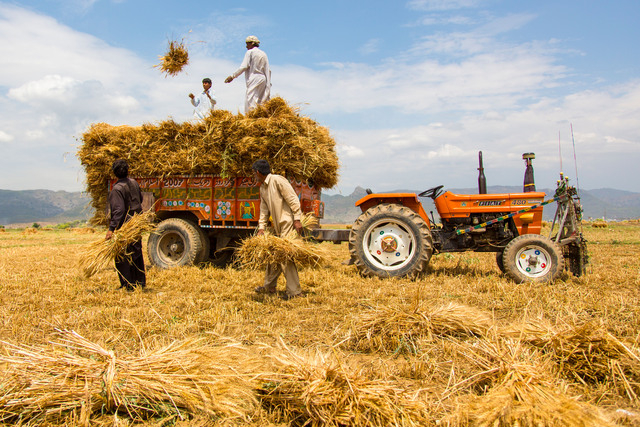
Pakistan’s agriculture sector is facing a deeper crisis beyond the ongoing wheat price dispute. Farmers are struggling with rising costs for fertiliser, electricity, diesel, machinery and labour. Meanwhile, prices for several crops have failed to provide adequate returns. Cotton, sugarcane, potatoes and other crops also face weather damage, pests and market uncertainty. As a result, small and medium-sized farmers are finding it increasingly difficult to remain profitable.
Meanwhile, Pakistan’s food trade figures show growing pressure on the economy. Food imports rose 11.66 percent to $9.15 billion in FY26. However, food exports fell 29.49 percent to $5.02 billion during the same period. Consequently, the food trade deficit widened sharply to $4.13 billion. Palm oil alone accounted for more than $3.8 billion in imports. Sugar imports also increased significantly as domestic supply failed to meet requirements.
Rice exports have also suffered from stronger international competition. Pakistan’s rice export earnings dropped 31 percent to $2.29 billion in FY26. India’s return to global markets added pressure on Pakistani exporters. However, meat exports increased 7.1 percent to $530 million. Fish exports also rose slightly to $482.08 million. Despite these gains, vegetable exports plunged by more than 55 percent. Overall, Pakistan continues to rely heavily on exporting agricultural surpluses rather than developing targeted international markets.
Furthermore, weak productivity remains a major structural problem. Farmers face outdated farming methods, limited mechanisation and inadequate access to improved seeds. Poor storage and transportation also cause major post-harvest losses. These losses can reach between 20 and 40 percent, depending on the crop. Low returns then prevent farmers from investing in better technology and equipment. This creates a cycle of low productivity, weak supply and increasing dependence on imports.
Therefore, Pakistan needs a long-term strategy to strengthen its food economy. The government should promote oilseed cultivation and climate-resilient seeds. It should also improve irrigation, mechanisation, agricultural research and extension services. Modern storage and cold-chain facilities could reduce significant food losses. Moreover, export policies should encourage food processing, quality certification and value-added products. Such reforms could improve farmer incomes while reducing import dependence and strengthening Pakistan’s agricultural competitiveness.
https://dailytimes.com.pk/1539576/pakistans-agriculture-sector-economy-faces-a-growing-crisis/Published Date: August 17, 2026


 READ
READ